



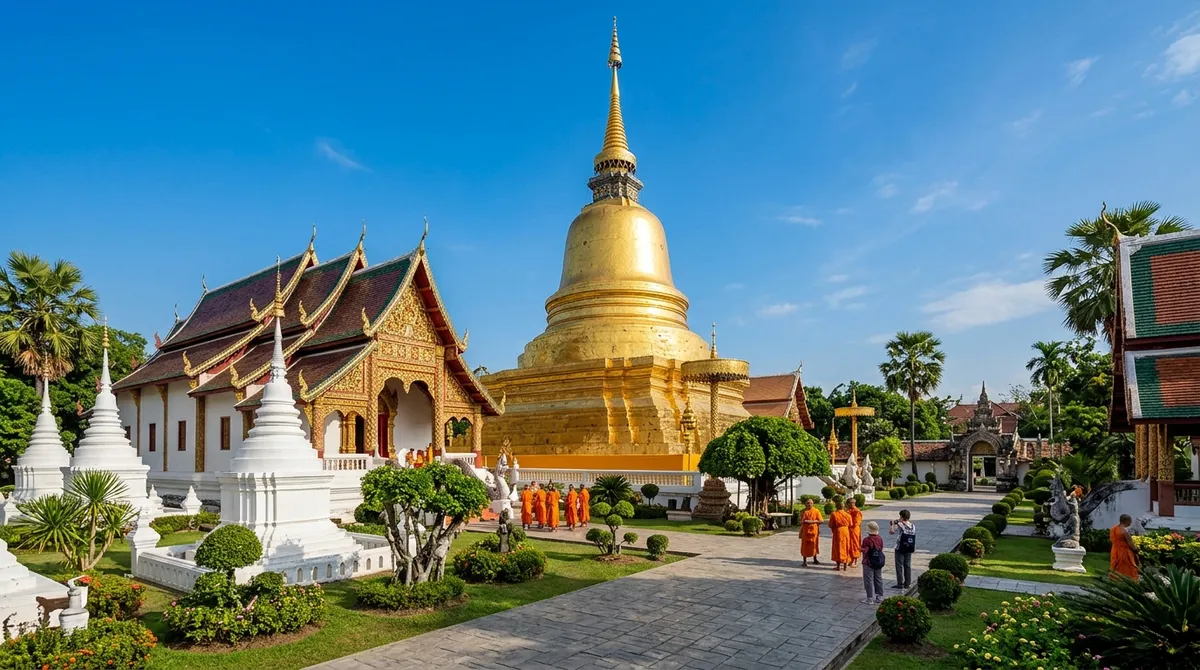
Wat Suan Dok in Chiang Mai (officially Wat Buppharam), located on Suthep Road just 1 kilometer west of the Old City's Suan Dok Gate, is one of northern Thailand's most sacred monuments. Commissioned in 1371 by King Kuena on the grounds of a royal flower park, the temple features a 48-meter golden bell stupa enshrining half of a miraculously split Buddha relic (the other half resides at Doi Suthep). It is internationally famous for the Royal Cemetery of Chiang Mai — an ethereal forest of whitewashed mausoleums housing the ashes of northern royalty. The temple opens daily from 06:00 to 18:00.
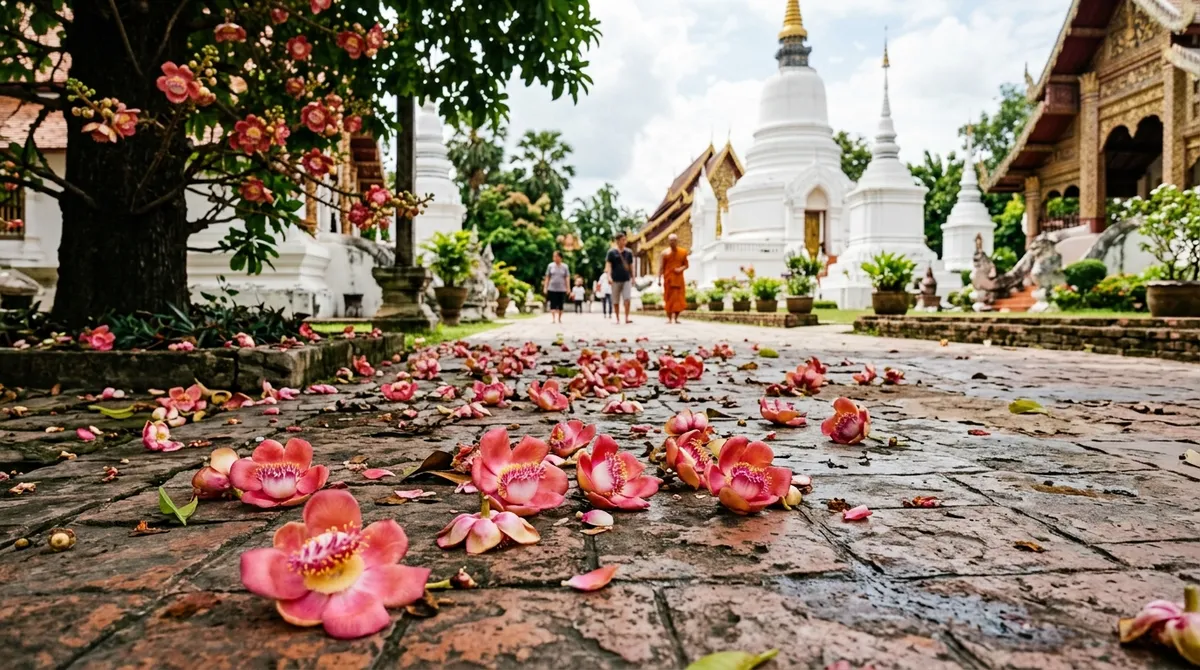
650 Years of History: From Royal Flower Garden to Monastic Sanctuary
Before becoming a monastery, this fertile terrain served as the royal pleasure garden (Suan Dok Mai) of the early Mangrai monarchs. In 1371 CE, King Kuena invited Phra Maha Sumana Thera, an eminent monk from Sukhothai, to establish the strict Langkawong (forest-dwelling) monastic order in Chiang Mai. To accommodate the monk and his disciples, the king deeded his royal botanical grounds to the Sangha, christening it Wat Suan Dok ("Flower Garden Temple").
Lanna chronicles record that Phra Maha Sumana Thera brought with him a holy Buddha relic. Upon arrival, the relic miraculously duplicated. King Kuena enshrined one relic in the central stupa at Wat Suan Dok, while the second was mounted onto a sacred royal white elephant that climbed Doi Suthep, determining the site of Wat Phra That Doi Suthep. Read the full legend and climbing route in our Doi Suthep complete guide.
4 Architectural & Spiritual Highlights
1. The Royal Cemetery of Chiang Mai (Kuv Chao Nai Fai Nuea)
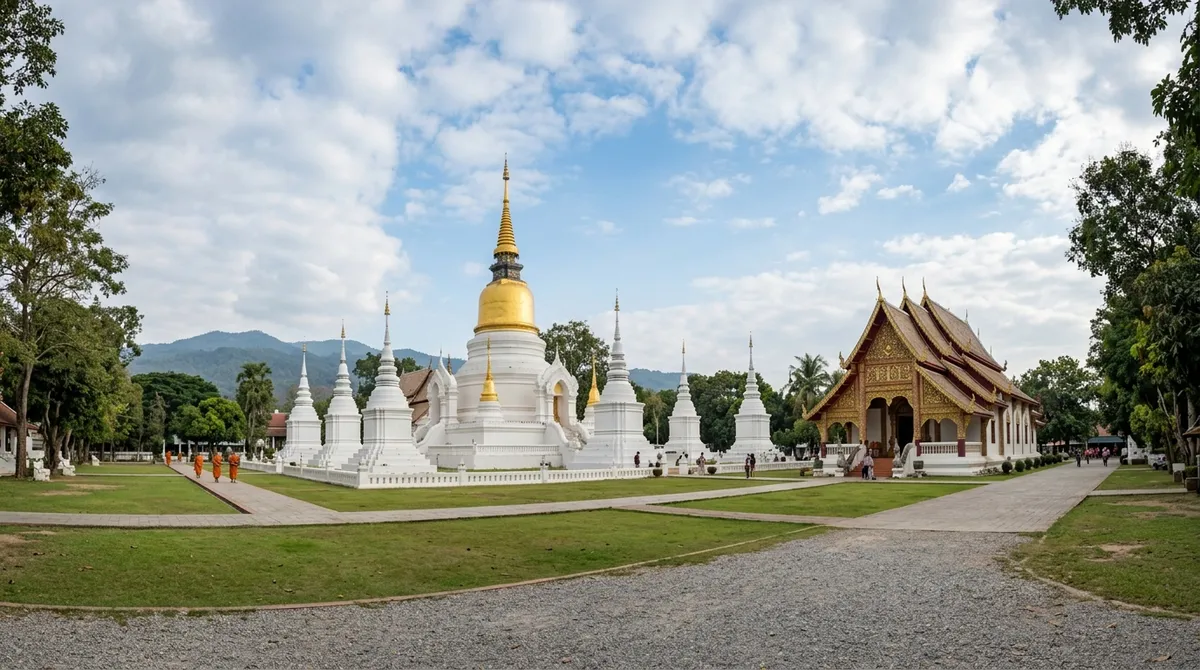
Occupying the western courtyard, this gathering of dazzling white stupas serves as the necropolis for the House of Na Chiang Mai. In 1909, Princess Dara Rasmi, a royal consort of King Chulalongkorn (Rama V), ordered the cremated remains of Chiang Mai's past rulers and royal family members relocated from their original cremation grounds on the banks of the Ping River to Wat Suan Dok, unifying the dynasty's lineage in a permanent, dignified sanctuary.
2. The Golden Great Stupa (Phra Maha Chedi)
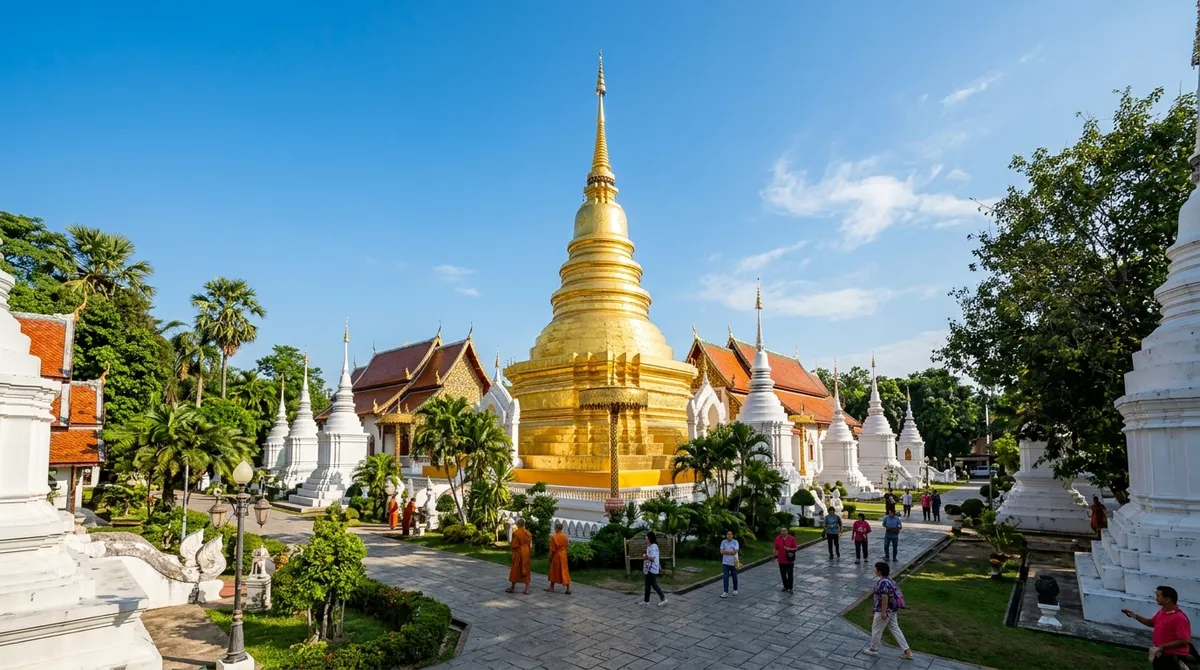
Rising 48 meters into the skyline, this bell-shaped stupa was completed in 1373. Blending early Lanna masonry with Sukhothai and Sri Lankan elegance, its multi-tiered square base transitions into a golden bell chamber housing the sacred relic.
3. The Open-Air Royal Assembly Hall (Viharn Luang)
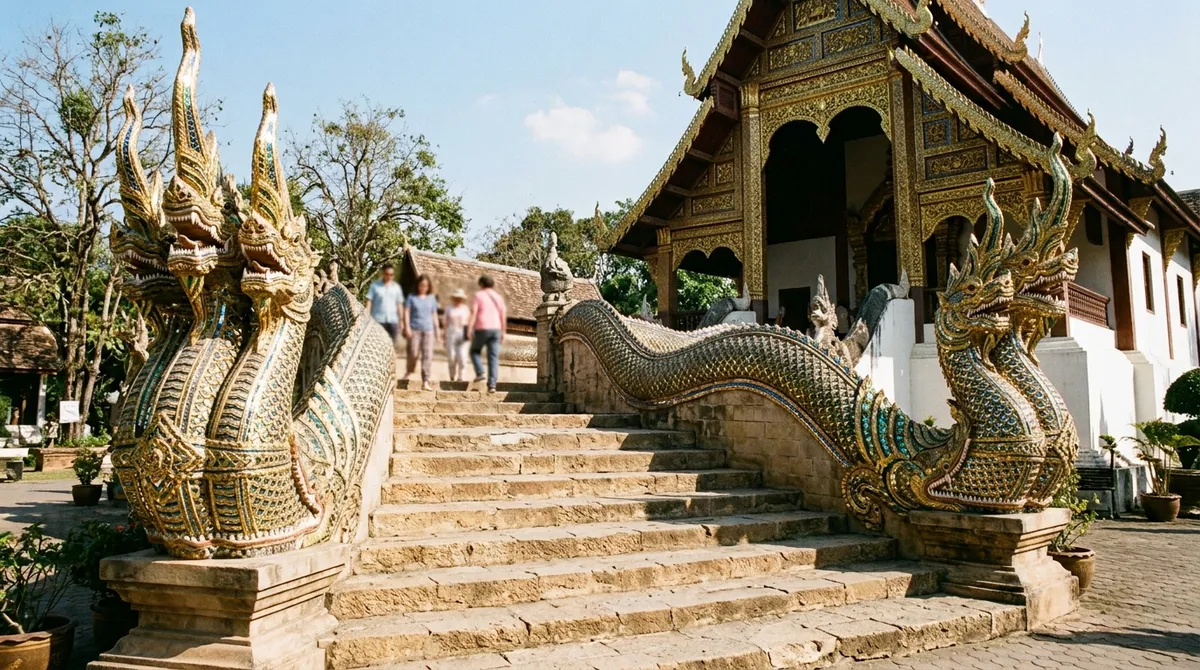
Reconstructed in 1931 by the legendary monk Kruba Srivichai, this is one of Thailand's largest prayer halls. Built without solid exterior walls, the open-sided pavilion allows mountain breezes to circulate freely beneath soaring teak beams. It houses two massive Buddha statues set back-to-back, facing east and west.
4. Phra Chao Kao Tue (The Nine-Thousand-Kilogram Buddha)
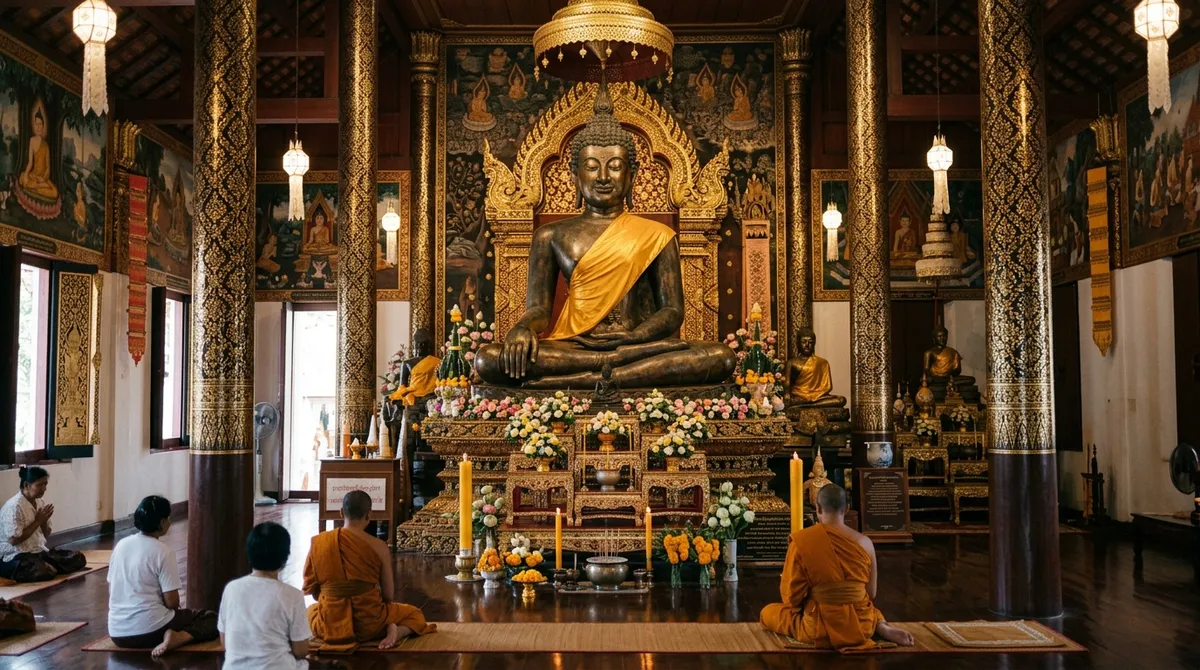
Housed within the neighboring ordination hall (ubosot), this bronze seated Buddha was cast in 1504 under King Mueang Kaeo. The word tue is an ancient northern unit of weight equal to 1,000 kilograms; this magnificent Chiang Saen-style statue weighs approximately 9 tons (9,000 kg).
Landmark Directory & Visitor Information
- Phra Maha Chedi — 1373 CE, Sri Lankan-Lanna golden bell stupa, enshrines the twin Doi Suthep relic
- Royal Cemetery — Consolidated 1909 CE, whitewashed brick funerary stupas, houses ashes of Chiang Mai royalty
- Viharn Luang — Rebuilt 1931 CE, colossal open-sided teak pavilion, assembly hall built by Kruba Srivichai
- Phra Chao Kao Tue — 1504 CE, masterpiece 9-ton bronze Buddha, sacred Chiang Saen-style icon
Local Insider Tips
- The Golden Hour: The best photography window is between 16:30 and 17:45. The setting sun casts a soft amber glow over the whitewashed royal mausoleums, with the golden main stupa contrasting against the Doi Suthep mountain backdrop.
- Monk Chat & Meditation: Wat Suan Dok houses the Chiang Mai campus of Mahachulalongkornrajavidyalaya Buddhist University. Foreign travelers can participate in informal English-language "Monk Chat" sessions and short meditation retreats held on campus.
- Royal Etiquette: Because the white stupas hold the physical ashes of northern kings, queens, and princes, visitors must dress respectfully (covered shoulders and knees) and refrain from sitting or stepping onto the raised platforms of the tombs.
Wat Suan Dok is only 1km from the Old City — easily combined with our Old City walking guide for a single-morning temple circuit.
Explore Royal Lanna History with Terra Lanna
Experience the spiritual legacy of northern Thailand with effortless sophistication. Reserve your stay at our curated boutique Lanna-style hotels near Suthep Road and the Old City, or book a private cultural tour with licensed heritage historians through Terra Lanna.