







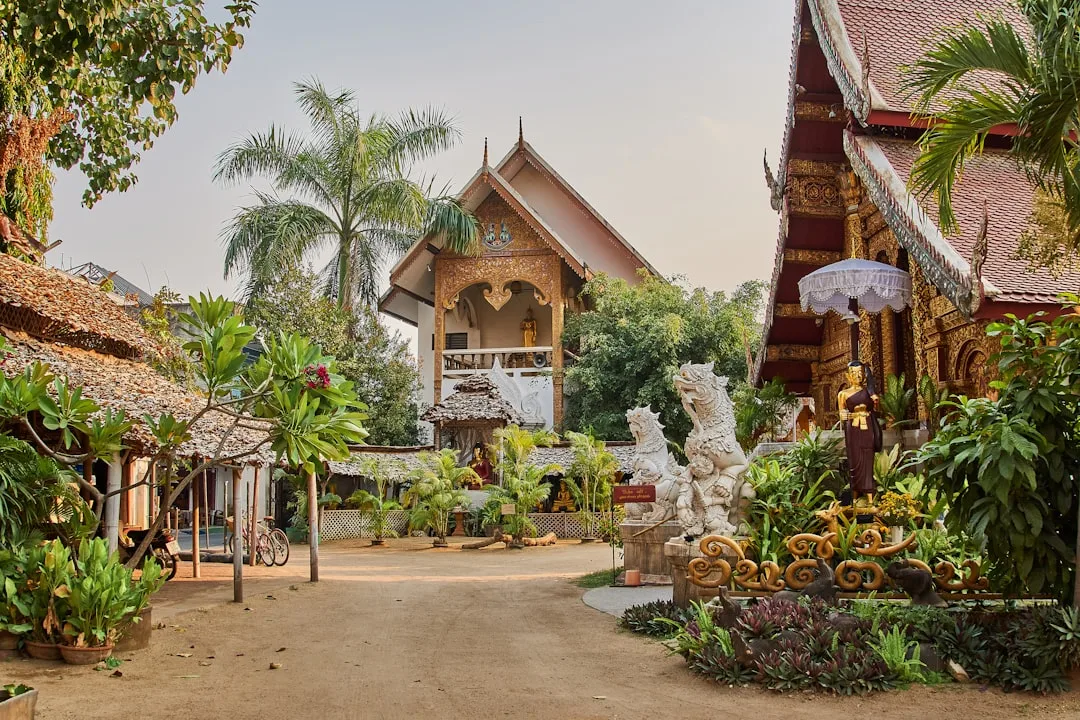







Wat Umong Suan Phutthatham is a 700-year-old forest meditation monastery located at the foothills of Doi Suthep in Chiang Mai. Commissioned by King Mangrai in the late 13th century, this sacred sanctuary is famous for its unique subterranean vaulted brick tunnels designed to provide silent, thermally regulated chambers for meditation. Atop the earthen mound sits a monumental bell-shaped stupa reflecting early Lanna and Bagan architecture. The temple grounds open daily from 05:00 to 20:00.
Historical Origins: King Mangrai and the Forest Hermitage
Established around 1297 CE, Wat Umong was initially christened Wat Welukattharam (The Bamboo Grove Monastery). King Mangrai, the founding monarch of Chiang Mai, built it specifically for Thera Jan, a highly revered monk who excelled in Buddhist scriptures but preferred secluded forest contemplation.
Decades later, King Kuena restored and expanded the complex, commissioning master masons to construct vaulted subterranean tunnels (Umong) covered with thick earth. This allowed monks to practice walking and sitting meditation in absolute isolation from worldly noise.
3 Core Architectural Elements
1. The Subterranean Vaulted Brick Tunnels
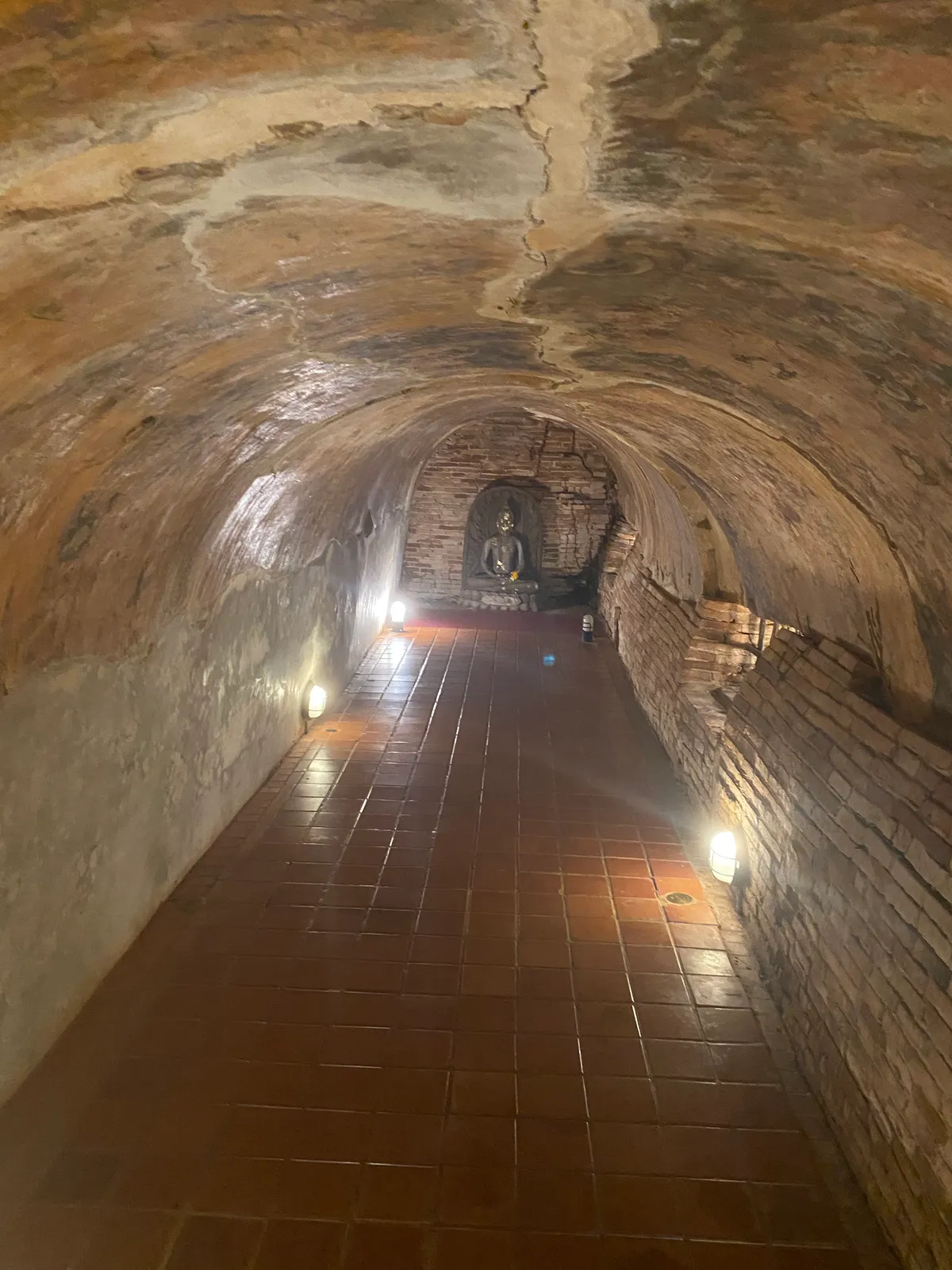
The tunnel complex consists of three main interconnected corridors built directly into a natural earthen hill. Masons utilized ancient load-bearing brick arches without internal wooden supports. The tunnels measure 20 to 30 meters in length, with brick walls specifically engineered to keep interior temperatures naturally cool (22°C–25°C) year-round while keeping out external jungle humidity. Small niches carved into the walls house ancient bronze and stucco Buddha statues.
2. 14th-Century Lanna Frescoes
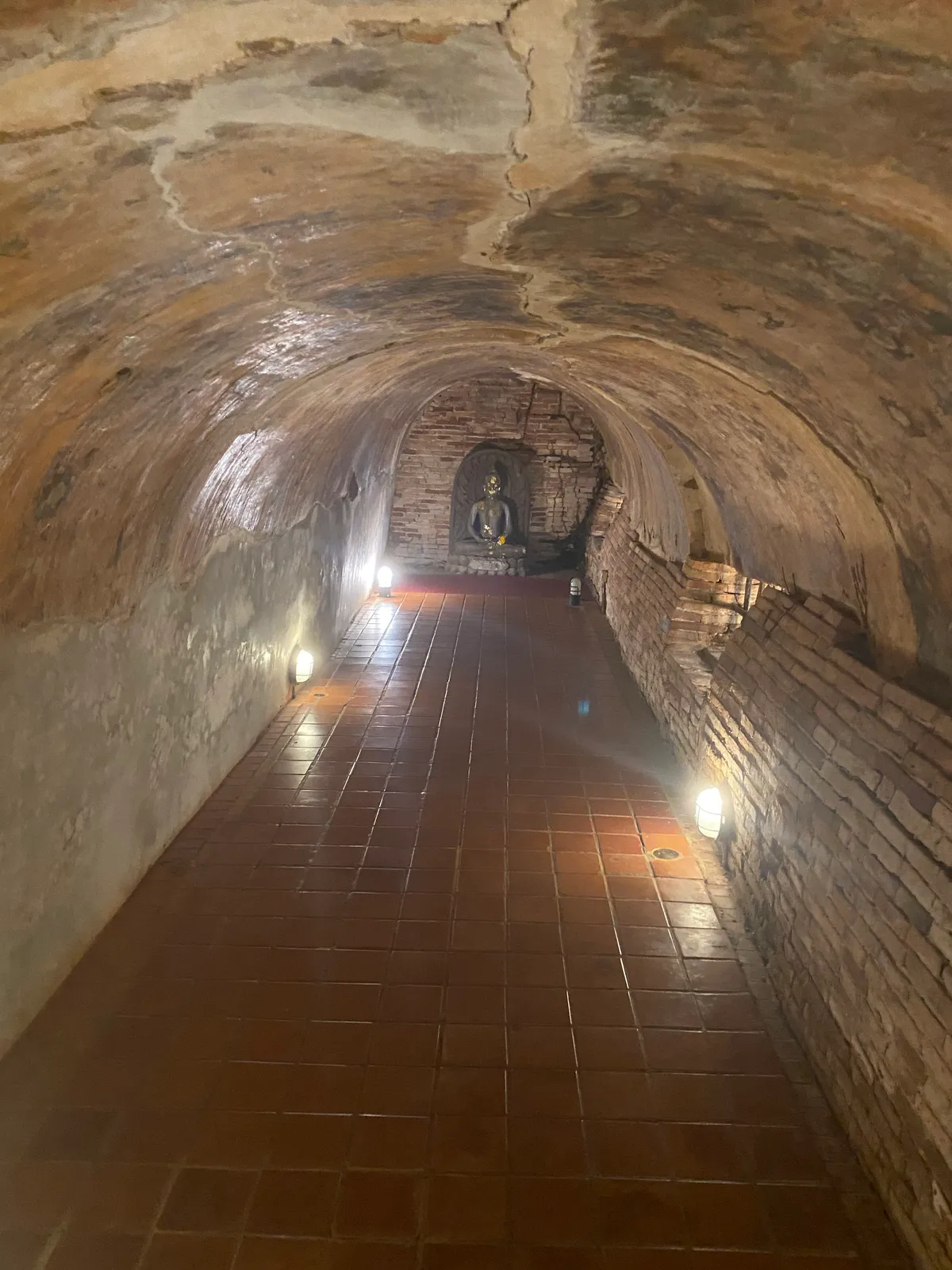
Along the vaulted ceilings of the central corridors are the faint remnants of ancient vegetable-dye frescoes dating back to the 14th and 15th centuries. Depicting wild birds, sacred lotus flowers, and Jataka folklore motifs, these murals represent some of the rarest surviving examples of early Lanna pictorial art in northern Thailand.
3. The Bell-Shaped Stupa (Chedi)
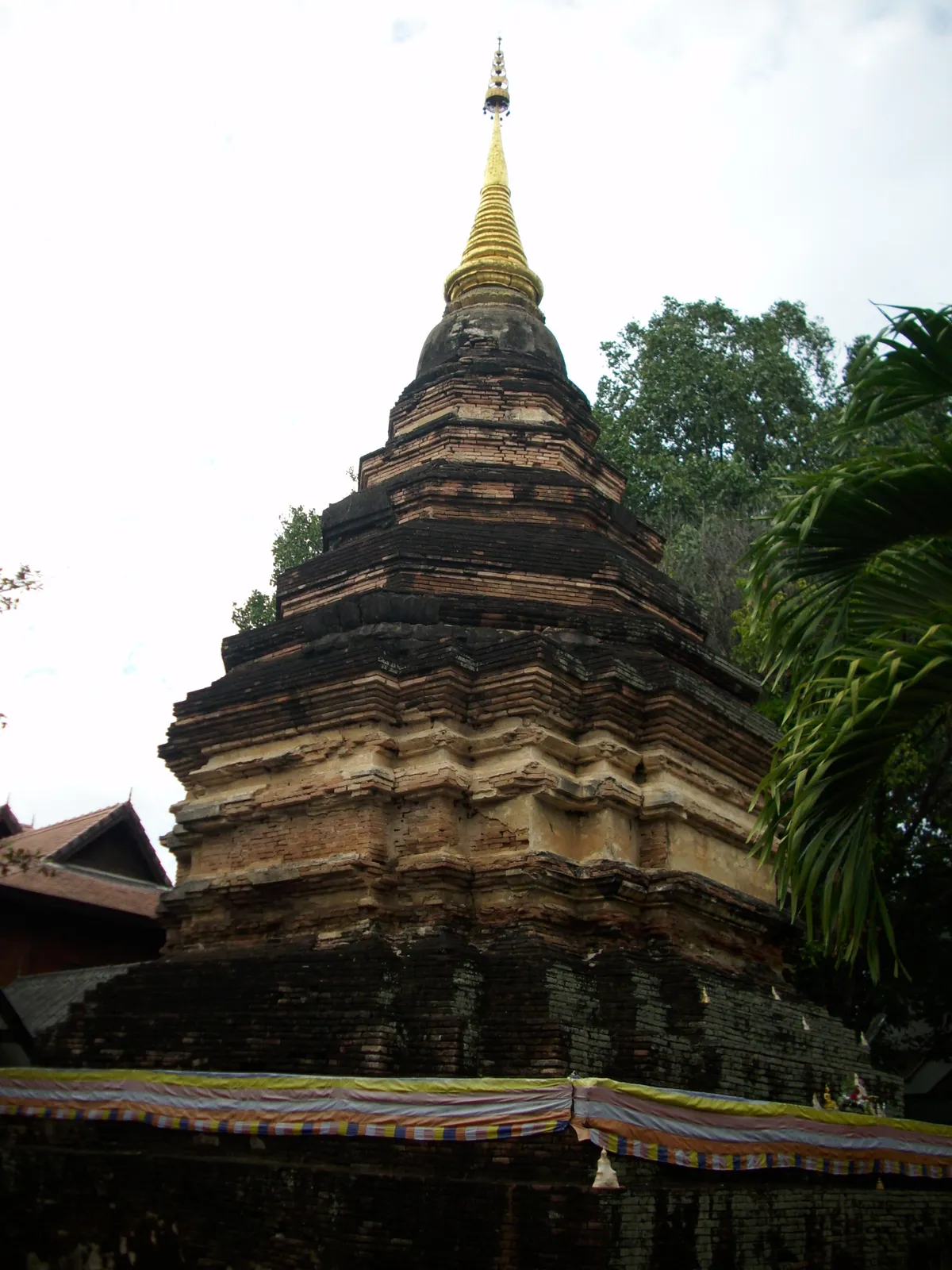
Climbing a stone stairway behind the tunnels leads to a cleared clearing atop the mound, dominated by an enormous weathered brick stupa. Its circular bell design atop multi-tiered square plinths reveals direct structural influences from the ancient Burmese empire of Bagan, standing as an unplastered testament to early regional masonry.
Field Specifications & Visitor Information
- Year Established — Circa 1297 CE (Reconstructed tunnels circa 1370s)
- Opening Hours — 05:00 – 20:00 Daily
- Admission Fee — Free for Thai citizens / 20 THB for foreign visitors (Tunnel entrance)
- Location — 135 Moo 10, Suthep, Mueang Chiang Mai (2 km southwest of CMU)
- Ground Highlights — Forest walking path with proverbs, sacred fish feeding lake, deer sanctuary
- Dress Code — Shoulders and knees fully covered. Shoes must be removed before entering tunnels
Local Insider Tips
- Best Time for Meditative Solitude: Arrive between 06:30 and 08:30 AM. During these early hours, morning mist filters through the mahogany trees onto the stupa, and the tunnels are completely free of tour crowds.
- Footwear Etiquette: You must remove your shoes before stepping onto the tiled and brick floor of the tunnels. Bring a pair of clean socks if you prefer not to walk barefoot on cool earthen tiles.
- Combined Itinerary: Pair Wat Umong with a morning visit to the nearby Baan Kang Wat artist village or the Monk's Trail to Wat Pha Lat, both situated within a 7-minute drive.
Continue exploring the same foothills: Wat Umong sits close to the Monk's Trail to Wat Pha Lat hiking route — just minutes apart by car, and an easy pairing for one half-day trip.
Discover Sacred Lanna Heritage with Terra Lanna
Experience the quiet depth of northern Thailand's spiritual traditions. Book your stay at our handpicked boutique Lanna retreats near the foothills of Doi Suthep or arrange an exclusive private historical temple tour curated by the cultural experts at Terra Lanna.
Learn more: Chapter 3 (I): Natural Heritage & Temples