








Chapter 1: The Northern Dhammayut Chronicle: The Odyssey of Phra Maha Kham Ping, Chao Khun Upali's Historic Train Expedition, and the Dawn of Lanna Forest Asceticism
Chapter 1: Northern Dhammayut Chronicle: The pioneer monk Kham Ping, Chao Khun Upali's 1928 28-hour train mission, and Luang Pu Mun's ascetic wanderings.
Tripartite Documentary Historiography
To reconstruct the historic advent of the Dhammayut Nikaya (the reformed monastic fraternity) in Northern Thailand, Phra Winai Koson (later elevated to the monastic dignity of Phra Phuttha Photchanawaraphon / Jan Kusalo) critically synthesized three primary archival sources: the Autobiography of Phra Upali Gunupamacariya (Jan Siricando); the Oral Testimonies of Nai Ueam Uppanno (son of Phraya Muninthrasena, royal director of religious affairs in the Chiang Mai Court of Prince Inthawarorot Suriyawong); and the 1928 Chiang Mai Mission Chronicle recorded by eyewitness Phra Maha Thong (Mosito). These records demonstrate that the Dhammayut presence was not an overnight metropolitan imposition, but an organic, dramatic transmission pioneered by an extraordinary Tai Lue monk.
Phra Khru Napheesiphisankhun (Kham Ping): The First Northern Dhammayut Monastic and the Kengtung Enigma
The foundational pioneer of Northern Dhammayut was Phra Khru Napheesiphisankhun (Maha Kham Ping). Born in Ban Luang Nuea, Doi Saket District, Chiang Mai, he descended from ethnic Tai Lue clans that had migrated from the Shan state of Kengtung. Born on a Monday full moon (Duan Peng), he was named "Kham Ping" in accordance with Lue phonetics. Endowed with a commanding presence and an expansive cranial structure traditionally interpreted as a mark of profound intellect, he was ordained as a novice at Wat Sri Mung Mueang, subsequently studying at Wat Hua Khuang near Chiang Mai's northern Chang Phueak Gate.
During an imperial tour to Chiang Mai, HRH Prince Svasti Sobhana (Krom Phra Sawatdiwatthanawisit) observed Novice Kham Ping collecting morning alms, captivated by his disciplined monastic etiquette. The Prince sponsored his relocation to Bangkok, presenting him directly to Somdet Phra Maha Samana Chao Krom Phraya Wachirayanawarorot at Wat Bowonniwet Vihara. Kham Ping was ordained as a monk, achieved the prestigious academic rank of Parian Tham 3, was invested with the title Phra Khru Napheesiphisankhun, and was assigned to reside at Wat Chedi Luang in Chiang Mai under northern royal patronage.
His intellectual renown was sealed when In-ta-kho, a scholarly Burmese layman and master of the Abhidhamma and Paramattha metaphysics residing at Chiang Dao Cave, visited him. In-ta-kho had interrogated monks across the north without finding anyone capable of resolving his philosophical queries; yet upon conversing with Phra Khru Naphee, he prostrated at his feet in tears of devotion, declaring himself a lifelong disciple. In-ta-kho subsequently led northern aristocrats to his sermons, culminating in Phra Khru Naphee's transfer to Wat Ho Tham (then an independent monastery bordering Chedi Luang). There, he recruited gifted northern novices — most notably Novice Muen, later known as Phra Maha Muen Vuddhinyano, the legendary Lanna historian — and sent them to study at Wat Bowonniwet in Bangkok.
Soon, Prince Inthawarorot Suriyawong (8th Ruler of Chiang Mai) and Princess Thipphanet became so devoted that they built a residence for him at Wat Chiang Man, with the Prince decreeing that "anyone slandering Phra Khru Naphee shall suffer public flogging." However, with Prince Inthawarorot's passing in 1909 (B.E. 2452), political tides turned and his patronage collapsed. Phra Khru Naphee retreated to Kengtung, disrobed, married a Shan royal princess, and was appointed "Chao Fa Mayura" of Mueang Len. In a tragic political denouement, he was later executed at Ban Hong Luek on charges of sedition and rebellion against the British-Burmese colonial administration.
Phra Upali Gunupamacariya and the 28-Hour Train Odyssey (1928 CE)
Following Phra Khru Naphee's departure, Wat Ho Tham was maintained by Phra Samu Boonpan and Phra Maha Muen. The permanent institutionalization of the Northern Dhammayut order took place under the towering leadership of Phra Upali Gunupamacariya (Jan Siricando) of Wat Boromniwas.
Chao Khun Upali had visited Chiang Mai twice previously: first by riverboat between 1909 and 1914; and second in 1922, when he was temporarily stripped of his ecclesiastical rank by King Rama VI due to his treatise Dhamma Vichayanusat (which critiqued state militarism during World War I), an exile he converted into a wandering forest pilgrimage (Dhutanga) to Kengtung and Mueang Yong. During his third visit in the blistering summer of 1927 (B.E. 2470) atop Mount Suthep, Major-General Chao Kaew Nawarat (9th and final Prince of Chiang Mai) and Princess Chamari heard his sermons, prompting the royal family to petition King Prajadhipok (Rama VII) and Supreme Patriarch Prince Chinaworasiriwat to formally install Chao Khun Upali as Abbot of Wat Chedi Luang.
The historic rail expedition departed Bangkok Station on Sunday, 27 May 1928, at 16:00. The mission comprised 35 monks and novices (including three senior scholars: Phra Maha Thong, Phra Maha Phiw, and Phra Maha Phon) and 50 lay disciples. They chartered an entire wooden rail car for 950 Baht, incurring total logistics costs of 1,062 Baht. Rattling through Ayutthaya, Phitsanulok, and the darkness of Khun Tan Tunnel, the train completed its 28-hour journey, arriving at Chiang Mai Railway Station on Monday, 28 May 1928, at 18:00, where they were received with royal pomp by Prince Kaew Nawarat and thousands of northern citizens.
Phra Acharn Mun Phuritatto and the Forest Hermitages
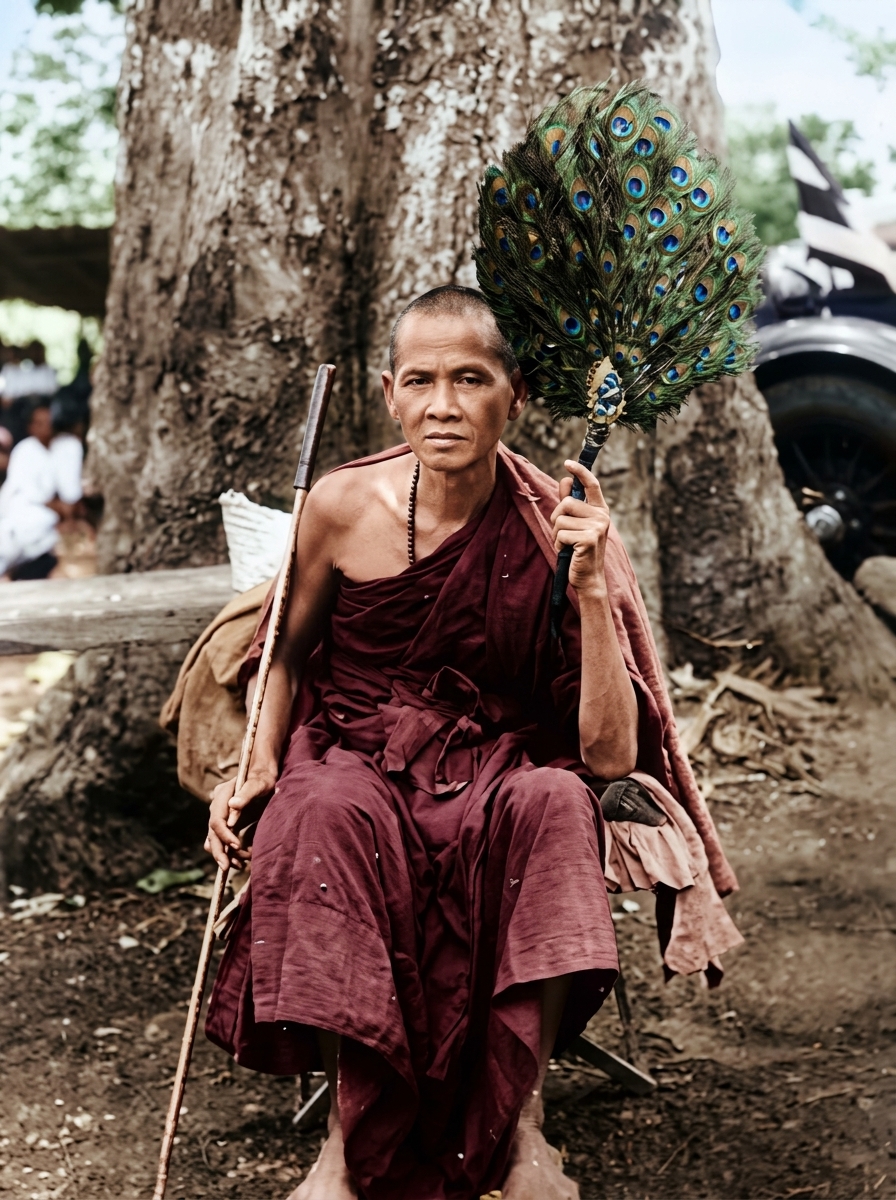
Establishing his headquarters at Wat Ho Tham within Wat Chedi Luang, Chao Khun Upali immediately integrated the compound, opened scriptural academies, and dispatched missions into Kengtung. Concurrently, he entrusted the contemplative wing (Vipassana-dhura) to Phra Acharn Mun Phuritatto, appointing him as Second Abbot of Wat Chedi Luang in 1932.
True to his forest calling, Acharn Mun resigned administrative office after just one rainy retreat, embarking upon an eleven-year wandering ascetic odyssey (1928–1939) through the mountains of Mae Rim, Mae Taeng, Phrao, and Chiang Rai. This epic pilgrimage seeded the dozens of forest monasteries that define the spiritual landscape of Northern Thailand today.