










Chapter 1: Ritual Foundations, Sacred Trays (Khan), and the Esoteric Art of Water Libation in Ancient Lanna
Explore the sacred ritual order of ancient Lanna, the symbolic hierarchy of Khan Kaew Tang Sam trays, and the esoteric practice of water libation.
The Inherent Purpose and Value of Sacred Rites
Within the traditional worldview of ancient Lanna, rituals are not superficial gestures or empty formalities; they serve as an essential structural vessel preserving intangible Buddhist philosophy in tangible form. Phra Khru Sophon Kittiyan delineates six intrinsic purposes of religious rites:
- Cultivating Devout Reverence (Pasāda-Saddhā): Awakens the mind toward the sanctity of the Triple Gem.
- Establishing Connection with Divine Realms: Functions as a sacred bridge uniting human consciousness with transcendent deities.
- Engaging Human Intellect at Distinct Tiers: High intellects seek metaphysical philosophy; intermediate minds apply ethical teachings; while the broader public engages the Dhamma through tangible ritual actions.
- Shielding Ethics and Philosophy: Analogous to the outer bark of a tree that encases and preserves both softwood and core heartwood; devoid of its protective outer layer, philosophy alone cannot endure across centuries.
- Serving as the Threshold of Accessibility: Sensory atmosphere, sacred acoustics, and community assemblies naturally intrigue outside observers, inspiring deeper religious contemplation.
- Inculcating Morality through Sacral Fear: Imbues ethical self-discipline with the gravity of sacredness — such as the quiet focus required during devotional chanting.
In taxonomy, Lanna rituals are divided into Monastic Buddhist Rites — subdivided into pristine canonical practices (Kathina robes, Uposatha observance, ordination) and syncretic rites (blending Theravāda orthodoxy with indigenous animism, such as the Sueb Chata life-extension rite) — and Social/Communal Rites, categorized into calendar festivals (Songkran, Visakha Bucha) and circumstantial events (housewarmings, communal almsgiving).
Temple Protocol and the Sequence of Sacred Offerings in Lanna Monasteries
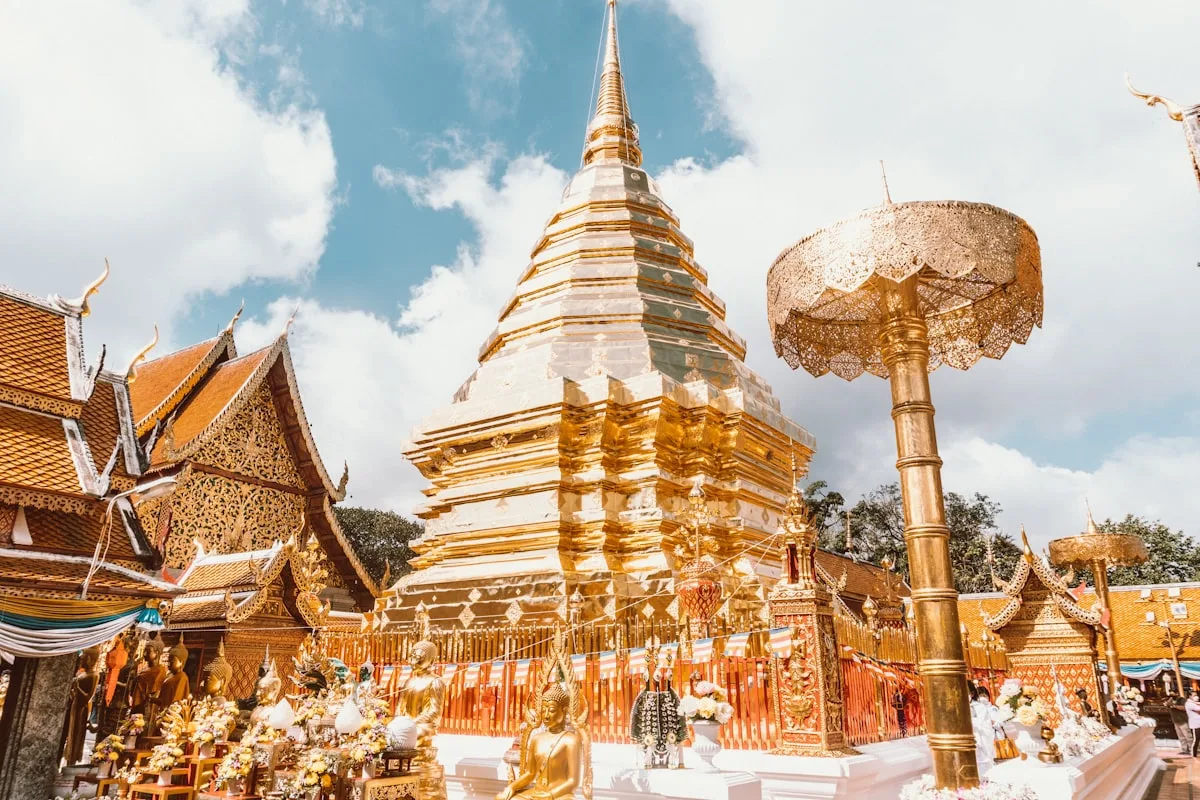
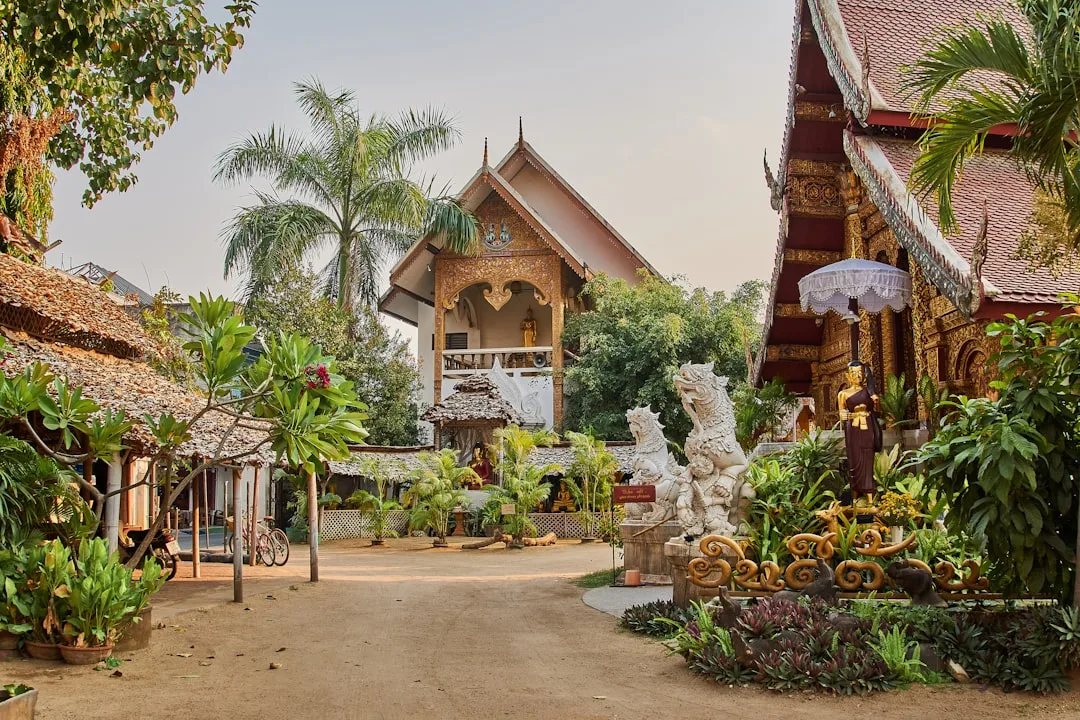
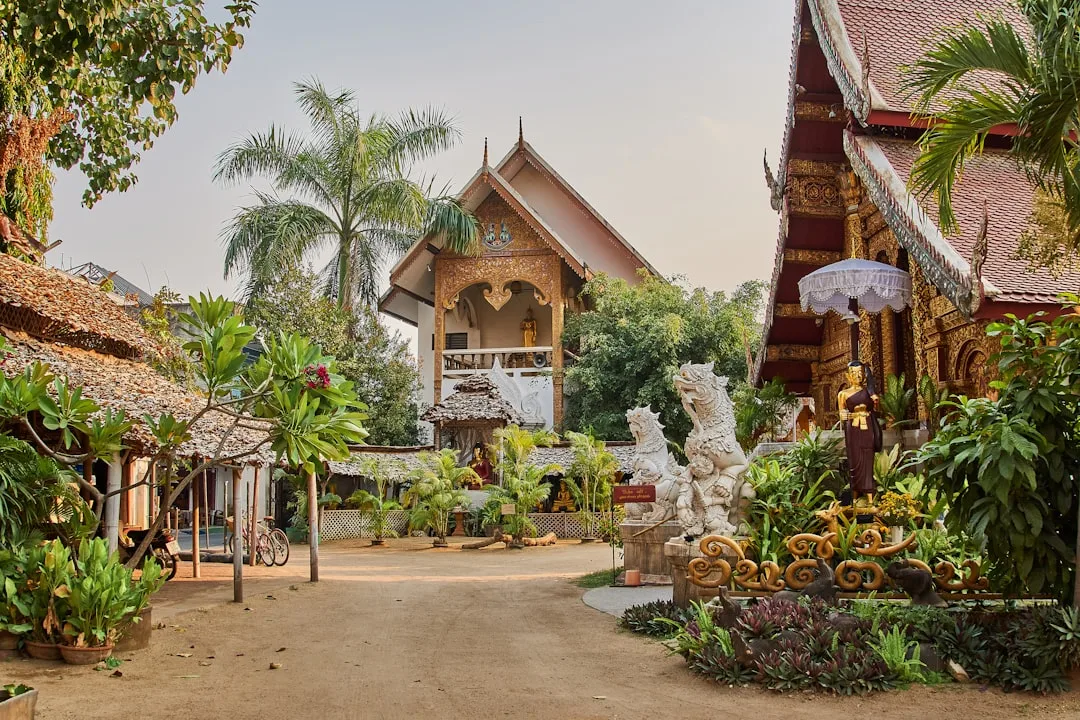
The Northern Thai (Tai Yuan or Khon Mueang) have sustained the Buddhist Sasana for over a millennium. The temple (Wat) serves as both the nucleus of rural civic life and a spiritual sanctuary for purification. Ancient custom dictated that upon crossing the monastery's outer gates, visitors removed their footwear, stepping barefoot across fine river sand deliberately spread across the temple courtyard to keep their feet unsoiled.
Entering the assembly hall (Vihara), devotees perform a three-fold prostration to the Triple Gem, an act termed in the local tongue as Krap Phra Kaew Chao Sam Pha-kan. Following this, sacred ritual trays (Khan) are presented in systematic sequence:
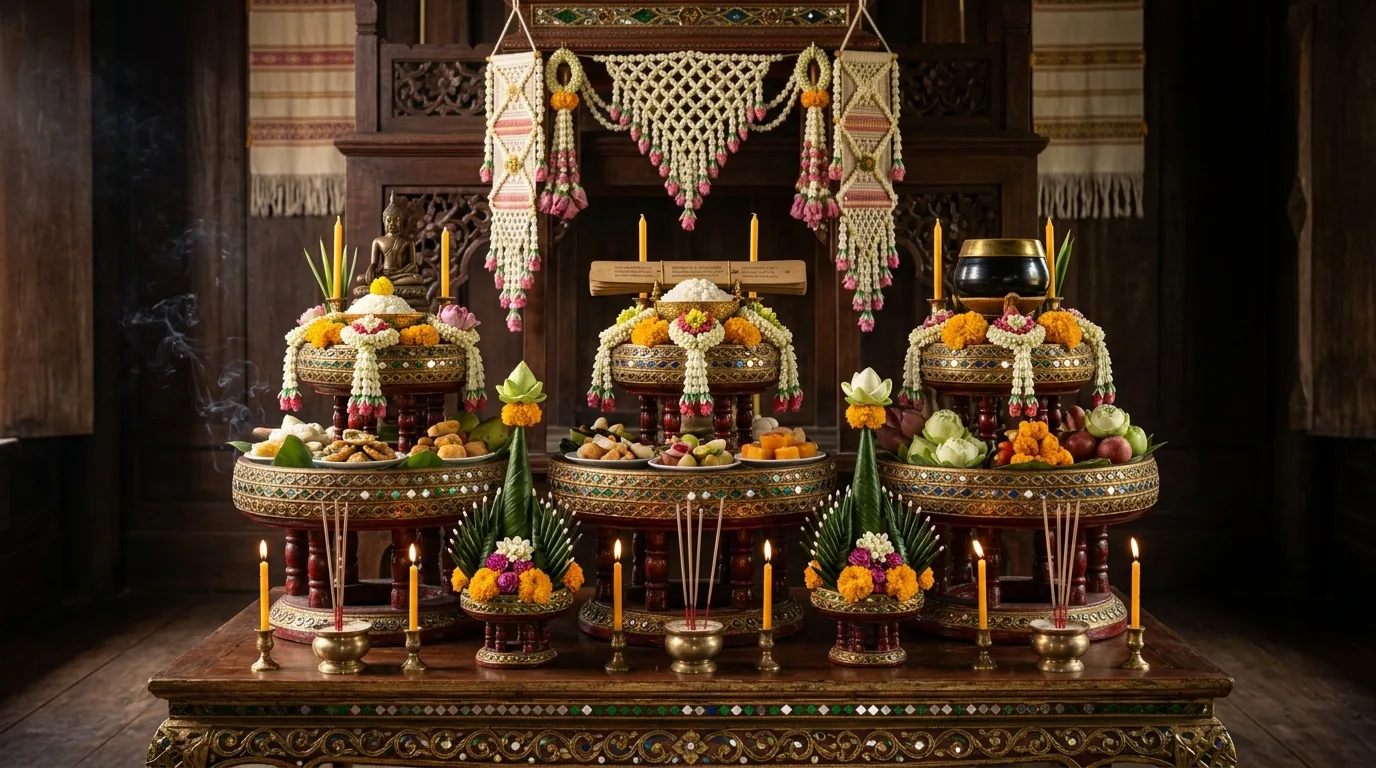
- Khan Kaew Tang Sam (The Three Sacred Jewels Tray): A monumental wooden pedestal tray, measuring roughly 18 to 20 inches in diameter and elevated approximately 30 inches on a base carved with three outward-facing Nagas. Adorned with traditional black lacquer, red cinnabar, gold leaf, and gilded watermark tracery (Lai Rot Nam). This tray is the designated vessel for venerating the Triple Gem. Devotees offer 3 incense sticks symbolizing the Buddha's Wisdom, Purity, and Great Compassion (chanting Buddhaguṇaṃ pūjemi); 2 beeswax candles honoring the Dhamma and Vinaya (Dhammaguṇaṃ pūjemi); floral blossoms honoring the historical and present Monastic Order (Saṅghaguṇaṃ pūjemi); and roasted puffed rice (Khao Tok) placed at the center, signifying blossoming wisdom and the enduring propagation of the Dhamma. Masters also recite the sacred mnemonic I-Svā-Su or Upajjhāmi.
- Khan Sin (The Precepts Tray): A floral arrangement bearing one incense stick, one candle, and puffed rice, formally handed to the presiding elder monk prior to requesting the Five or Eight Precepts.
- Khan Suma Khrua Tan (The Tray of Forgiveness and Alms Purification): A consecrated tray of flowers, candle, and incense presented by a respected lay master (Manayok or Pu Achan) to seek spiritual pardon (Suma) for unintentional physical contaminations — such as airborne dust, accidental stepping over, or stray hairs — ensuring the purity of the gifts before offering. In major secular rites like housewarmings, fragrant lustral water infused with wild turmeric and soap acacia (Nam Khamin Som Poi) is substituted.
- Khan Nimon (The Formal Clerical Invitation Tray): A tray carried to monks' residences to respectfully summon the Sangha to ascend the dais, replacing casual verbal solicitations with solemn monastic etiquette.
- Khan Nam Tan (The Tray for Heavy Offerings): Employed when offerings consist of immovable structures (monastery halls, pavilions) or heavy donations that cannot be physically lifted into the monks' hands. Consecrated white cotton cords (Sai Sin) connect the tray to the property, allowing elderly individuals and large congregations to share in the physical gesture of surrender.
The Metaphysics and Classifications of Water Libation (Yat Nam)
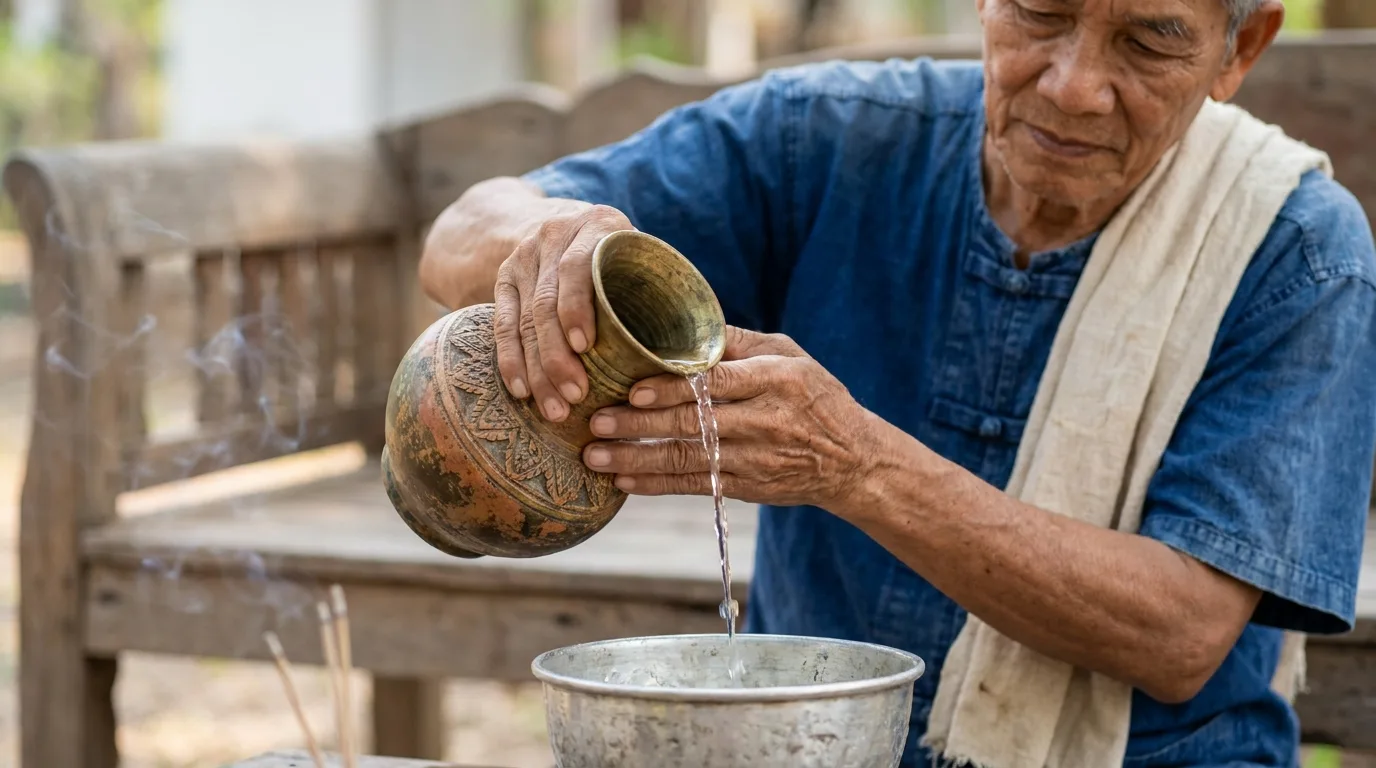
Water libation (Yat Nam or Kruat Nam) represents the physical outward transfer of internalized karmic merit (Pattidānamaya). Scripturally tracing its origin to King Bimbisāra of Magadha — who poured water onto the earth following his donation of Veluvana Bamboo Grove to alleviate the torments of his petrified kin reborn as pretas — the practice became an indelible feature of Northern Thai piety.
In Northern viharas, a traditional clay or metal pitcher (Nam Ton) is placed upon a basin near the sermon throne (Dhammasana). The lay leader or elder monk steadily pours water into a receptacle before finally conveying it to the earth beneath sacred trees, invoking Mae Thorani (the Earth Goddess) as witness.
The Four Scriptural Classifications of Water Libation:
- Ussodaka: Libation dedicated to departed ancestors, deities, and all sentient beings, strictly poured while monks chant the passage beginning Yathā vārivahā...
- Pattanodaka: Water poured for individual welfare, spiritual resolution, recovery from misfortune, and life prosperity, enacted after the monastic chanting concludes.
- Dakkhiṇodaka: Solemn water libation executing the definitive transfer of ownership over monumental, immovable monastic real estate.
- Sakkodaka: The primeval gesture of summoning the Earth as ultimate testimony, recreating the Bodhisatta Siddhattha's invocation of the Earth Goddess against the illusions of Mara.
The text strongly dispels the widespread superstition that touching another person's wrist or clothing creates a conductive current of merit, or that fingers must intercept the falling stream. The authentic vehicle of merit transference is undivided intention — "the language of the heart" (Phasa Chai) — whether articulated in classical Pali or the Northern Tai vernacular.