











Chapter 1: Songkran and Dam Hua: The Northern New Year Cycle, Taboos of Wan Nao, and the Aesthetics of Reconciliation
Explore the authentic Northern Songkran: the cosmos of Sangkhan Long, the strict taboos of Wan Nao, and the sublime ethics of the Dam Hua apology rite.
Wan Sangkhan Long: Gunfire Exorcisms and Civic Purification
In ancient Lanna, the vernal New Year festival, traditionally termed "Pi Mai Mueang," commenced precisely when the sun entered the constellation of Aries (Mesa Rasi), typically on the 13th of April. This threshold day is known as "Wan Sangkhan Long"—a vernacular derivative of the Sanskrit Saṅkrānti, denoting the astronomical passage of solar time rather than the mortal body (Saṅkhāra).
From the crack of dawn, communities echoed with the sharp retorts of gunfire, flintlocks, and firecrackers. This auditory barrage served a prophylactic function: violently dispelling the residual bad luck, impurities (Saniat Chanrai), and malignant entities accumulated over the previous year. Villagers mobilized en masse for village-wide domestic sanitation, sweeping house verandas (Khwang Ban) and incinerating organic refuse in what functioned as an institutionalized communal public-health day. Purified of grime, villagers engaged in ritual hair-washing, while the youth congregated along riverbanks to wash curtains, sleeping mats, and work garments, transforming the waterways into vibrant social hubs before embarking on New Year visitations (Aew Pi Mai).
Wan Nao: The Intercalary Taboo, Food Preparation, and Sand Stupas
The second day, known as "Wan Nao" (or Wan Puti), occupies the liminal void between the expired old year and the unborn new year. Monastic law and folk belief imposed an absolute behavioral prohibition: no cursing, vulgar speech, slander, or quarreling was permitted. The folk axiom warned that speaking ill on Wan Nao caused one's mouth to spiritually rot, blighting the offender with foul fortune for the entirety of the coming year.
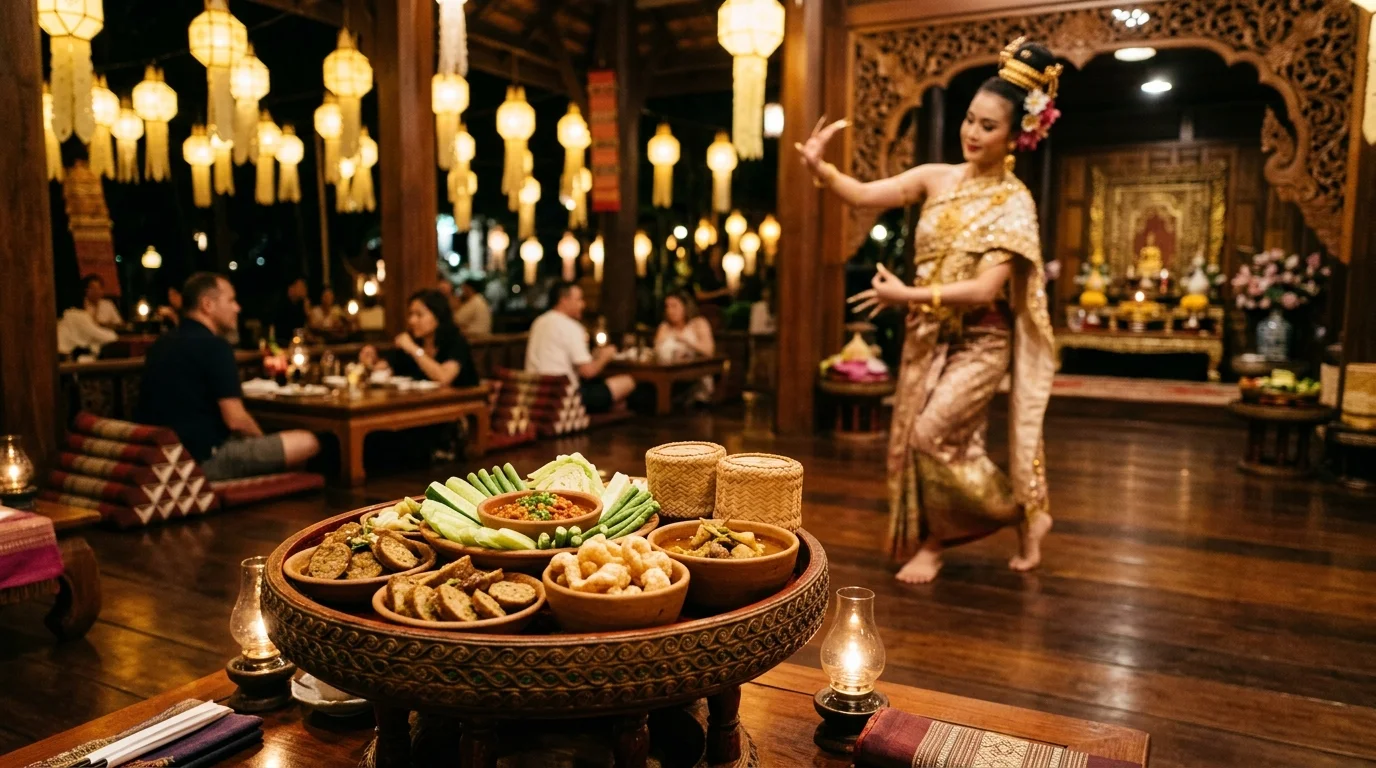
The morning was designated as "Wan Da" (the Preparation Day). Markets swarmed with festive commerce as families gathered provisions for ceremonial cooking. Northern households prepared dishes with long shelf lives, notably the rich pork curry Kaeng Hang Le, spicy aromatic soups (Kaeng Om), and banana-leaf steamed parcels (Ho Nueng). In the afternoon, worshippers journeyed to the banks of the Ping River to carry loads of river sand back to their parish temples (Khon Sai). This sand was sculpted into votive stupas (Cetiya Sai) on the temple grounds and festooned with vibrant triangular paper pennants (Chor) and long streamered banners (Tung). Palm-leaf scriptures attest that the spiritual merit accrued from offering these banners acts as a celestial tether, enabling fallen ancestral souls to grip the tails of the fluttering flags and pull themselves free from infernal pits into paradise.
Water splashing on this day was intensely joyful yet bound by chivalric modesty: using clean river water lightly scented with indigenous blossoms, in stark contrast to hazardous modern excess.
Wan Phraya Wan and the Dam Hua Ritual: The Ethics of Apology and Social Cohesion
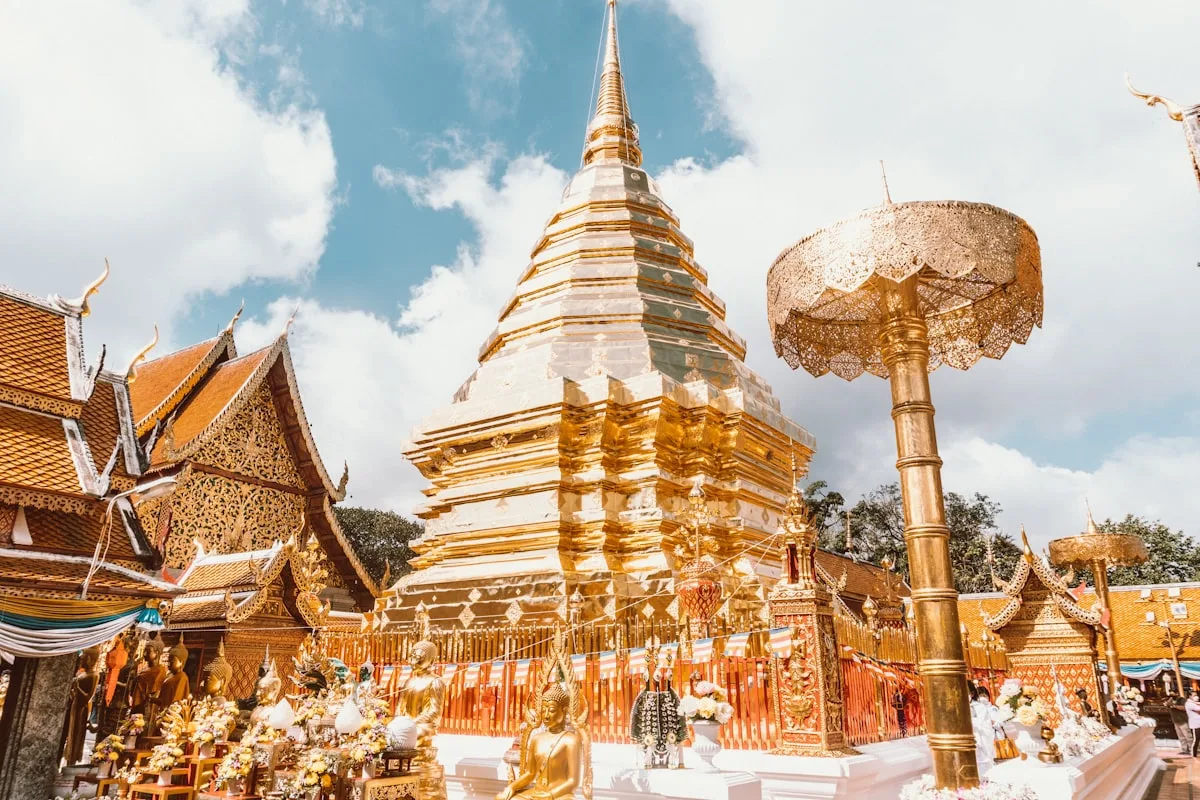
The apex of the festival arrived on the third day: "Wan Phraya Wan" (The Sovereign Day / Thaloengsok), heralding the actual dawn of the new astrological era. Devotees inaugurated the morning with "Tan Khan Khao"—presenting tiered lacquer trays of culinary delicacies to parish monks to transmit merit to ancestral spirits. The faithful venerated the temple's Bodhi trees with supportive wooden timbers (Kham Ton Pho) and performed lustral bathing rites (Song Nam) over sacred regional Buddha icons, including the white quartz Buddha (Phra Sae Tang Khamanee) at Wat Chiang Man, the golden-tongued Phra Chao Thong Thip, and the bronze colossus Phra Chao Kao Tue at Wat Suan Dok.
The moral and cultural crown of the Lanna calendar is the "Dam Hua" ceremony, beginning on the afternoon of Wan Phraya Wan and continuing through the inaugural days of Wan Pak Pi and Wan Pak Duean. While "Dam Hua" etymologically signifies hair-washing, it operates as a sublime litany of mutual reconciliation (Suma Karawa). Younger kin approach parents, preceptors, and village elders bearing "Nam Khamin Som Poi" (lustral water infused with roasted soap-pod acacia and wild turmeric), puffed rice, flowers, local textiles, and seasonal fruits to seek formal absolution for conscious and unconscious transgressions committed over the year.
The ceremonial Dam Hua processions reflected high Northern Thai aesthetic pageantry:
- Leading the procession were young men in indigo Mor Hom garb, jasmine garlands around their necks, faces brushed with powdered cosmetics, performing athletic martial dances ("Fawn Choeng") to the syncopated rhythm of Klong Mong drums.
- Village maidens followed in traditional silk attire, their hair coiffed and adorned with fragrant golden orchids ("Dok Eung Phueng"), bearing chased silver bowls of lustral water.
- Upon arriving at the elder's veranda (Teun), the leader chanted an elaborate formal apology in classical northern poetic verse. The presiding elder or monk reciprocated with "Pan Pon" (the dispensing of the blessing), granting total absolution (Ahosikamma) and lightly dabbing the scented acacia water onto their own crowns or the heads of the kneeling supplicants.
Finally, descendants of the northern dynastic houses (the Na Chiang Mai and Na Lamphun lineages descended from King Kawila) converged upon the royal cenotaphs ("Dam Hua Ku") at Wat Suan Dok. Kneeling before the white stucco reliquaries containing the ashes of their regal ancestors, they reaffirmed their genealogical continuity. Lanna's Songkran and Dam Hua were thus never mere bacchanalian water revelries, but a profound cultural mechanism ensuring filial gratitude, mutual forgiveness, and unshakeable community solidarity.