














Chapter 7: Tang Tham Luang and Thet Mahachat: The Aesthetics of Lanna Vocal Rhapsodies, the Himavanta Sanctuary, and the Thousandfold Offering
Explore Lanna's Tang Tham Luang: the 13 cantos of melodic Rabaam chanting, the Himavanta forest mandala, and the dawn Madhupayasa rite.
Literary Polyphony: 58 Regional Recensions and the 13 Cantos
The recitation of the Vessantara Jataka in Lanna—locally designated as "Tang Tham Luang" (The Institution of the Great Scripture)—stands as the supreme intellectual and liturgical monument of the Tai Yuan civilization. Traditionally staged during the full moon of the twelfth northern month (Yi Peng), it is founded upon the eschatological promise in the Malai Sutta: whoever listens to all 13 cantos (encompassing 1,000 Pali stanzas) from dawn to dawn will be guaranteed rebirth in the golden age of the future Buddha Maitreya.
Sanguan Chotisukharat highlights the staggering literary wealth of the north, recording that Lanna boasts at least 58 distinct poetic recensions (Samnuan) composed in vernacular verse by classical poet-monks (such as the Phaya Phon, Ving Vuan Luang, and Wua Phan Lak versions). The 13 cantos are preserved in regional orthography and cadence:
- Thasaphon (19 stanzas)
- Himaphan (134 stanzas)
- Thanakhan (209 stanzas)
- Vanapravet (57 stanzas)
- Chuchok / Tu-chok (79 stanzas)
- Chulaphon (35 stanzas)
- Mahaphon (80 stanzas)
- Kumara Banp (101 stanzas)
- Matsi / Ma-thee (90 stanzas)
- Sakkabap (43 stanzas)
- Maharach (69 stanzas)
- Sak-khasat (69 stanzas)
- Nakhon-kan (48 stanzas)
Totaling exactly 1,000 stanzas, known as the "Gatha Phan." These sacred verses were transcribed into a separate, independent palm-leaf bundle in pure Pali and revered as an esoteric talisman.
The Acoustics of "Rabaam": Regional Monastic Rhapsodies
The most captivating aesthetic dimension of the festival was the "Rabaam"—the dramatic vocal cadences cultivated by master preacher-monks (Phra Tham Kathuek), with distinct rhythmic schools associated with regional cities:
- Rabaam Nam Tok Tat (Chiang Mai): Characterized by slow, deliberate, cascading melismas that mimic the unhurried plunge of mountain waterfalls.
- Rabaam Nok Khao Hern (Phrae): A more rapid, syncopated rhythm soaring like a dove gliding upon thermal currents.
- Rabaam Chang Kham Thung (Nan): A ponderous, stately, and crystal-clear cadence reminiscent of an elephant marching across an open savanna.
- Other archaic folk styles included the Manao Lawng Khong, Ma Yam Fai (Horse Stamping on Fire), and Ma Tai Khan Na (Dog Walking on Dikes).
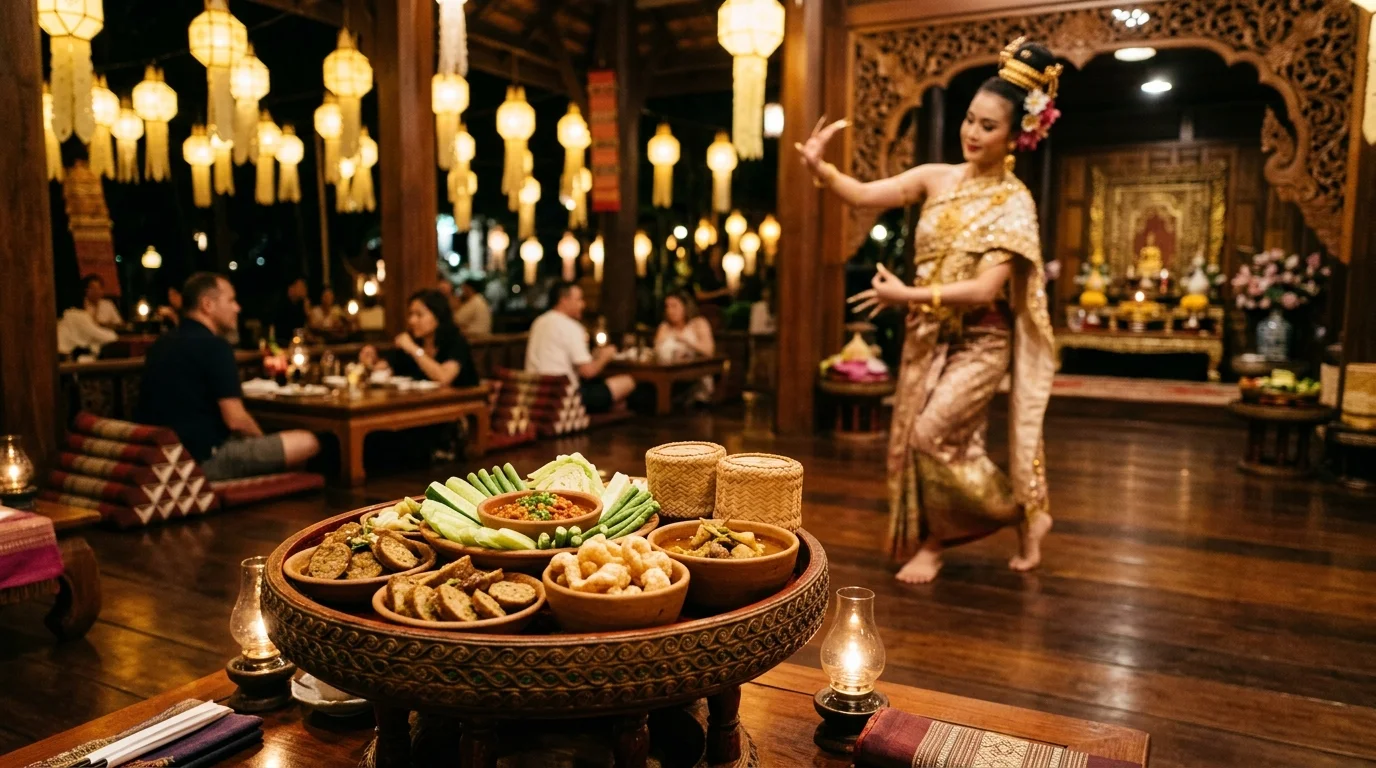
During the chanting, the preacher sat concealed behind three-sided silk curtains inside a tiered wooden pulpit (Dhammasana), his physical form invisible to the congregation. He cleared his throat with an ethereal hum ("Oi"), chanted the Stanza of the Lion's Roar, and recited the Namo invocation only once (a unique Lanna tradition, contrasting with Central Thailand's threefold recitation). He framed the narrative with three rhymed poetic summaries: the opening Kap Ton, the central Kap Klang, and the concluding Kap Plai. At the climax of each canto, the ceremonial Puja Drum (Klong Puja) thundered through the rafters alongside cracking firecrackers, while moved worshippers cast monetary tokens into special brass basins to honor virtuoso performances of maternal sorrow (Matsi) or comedic villainy (Chuchok).
Spatial Metamorphosis: The Himavanta Enclosure and Dawn Consecration
The interior of the Vihara was miraculously transformed into a tangible recreation of the mythical Himavanta forest and Mount Vamkot:
- The approach road was flanked by soaring Tung Chai banners (6–8 meters high), leading to a rustic Wilderness Gateway (Chum Pratu Pa) hung with conical trumpet lanterns (Khom Hang).
- From every teakwood pillar hung 600 hand-drawn paper figures: precisely 100 elephants, 100 horses, 100 cattle, 100 water buffaloes, 100 male slaves, and 100 female servants.
- Suspended around the pulpit were panels of dried white Indian Cork flowers (Dok Kasalong), while adjacent stood an expansive water basin containing beeswax figurines of turtles, crabs, fish, crocodiles, and water monitors swimming among fresh lotus pads.
- The Thousandfold Offerings (Prescribed by the Malai Sutta): Exactly 1,000 small terracotta oil lamps (Phang Prathip), 1,000 lotus-shaped beeswax candles, 1,000 paper flags, 1,000 incense sticks, and 1,000 fresh blossoms.
As the final Nakhon canto concluded in the twilight before dawn, 5 to 10 senior monks initiated the "Soat Boek" (The Dawn Awakening)—a rhythmic Mon-Lanna chanting of the First Discourse (Dhammacakkappavattana Sutta) and the Pathomsombodhi. The congregation consecrated 49 balls of sweet honeyed-milk rice (Madhupayasa), reenacting the maiden Sujata's historic offering before the Enlightenment, while laymen presented household Buddha statues for communal consecration ("Buat Phra Chao" / Ordaining the Buddha), crowning a monumental three-day liturgical marathon.