
















Chapter 9: Khao Inthakhin: Indra's Celestial City Pillar, the Subterranean Cauldron of 101 Tongues, and the Nine Lua Clans
Explore Chiang Mai's Khao Inthakhin: Indra's celestial pillar, the subterranean iron cauldron of 101 tongues, martial sword dances, and the Nine Lua Clans.
Historical Cartography: From the Navel of the City to Wat Chedi Luang
The term "Inthakhin" (derived from the Pali Indakhīla) designates the boundary stone, defensive pillar, or City Pillar erected at the spiritual threshold of a metropolis. In Lanna historical memory, this masonry pillar was formally established during the reign of King Saen Mueang Ma (the 7th monarch of the Mangrai Dynasty, circa 1411 CE). Originally, it was consecrated at the cosmological center of the realm within Wat Sadue Mueang (the Temple of the City's Navel, adjacent to the old Provincial Hall).
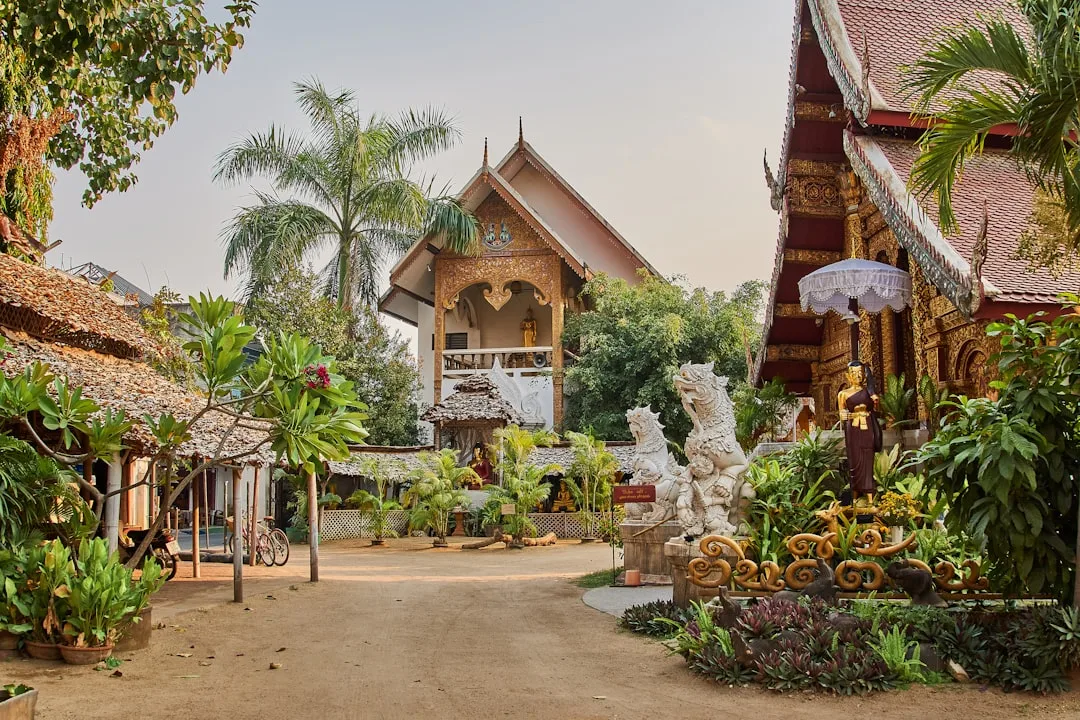
In the era of post-Burmese resurgence, King Kawila (founder of the Chao Chet Ton Dynasty) revitalized Chiang Mai, relocating the Inthakhin pillar in 1800 CE (2343 BE) to its present shrine within the southern cruciform transept of Wat Chedi Luang Varavihara. Flanking the pillar, he erected dynamic stucco statues of two guardian giants (Kumbhandas) and a holy ascetic hermit (Rishi), consecrating the precinct as the collective dwelling of the city's ancestral soul.
The annual celebration, known as "Prapheni Khao Inthakhin" (Entering the Inthakhin Season), is observed during the transition between the eighth and ninth northern lunar months—a timeframe proverbialized as "Duean 8 Khao, Duean 9 Ok" (late May to early June). Thousands of devotees stream into the monastic grounds bearing floral cones, tapers, and Nam Khamin Som Poi (turmeric-acacia lustral water) to wash the pillar, praying for agricultural abundance, seasonal monsoon rains, and communal peace.
The Ritual of Martial Dance: Swordplay, Troubadours, and Spirit Mediums
In antiquity, the Inthakhin festival was a visceral manifestation of spiritual militarism and civic solidarity:
- Dancers performed "Fawn Hok Fawn Dab" (The Dance of Spears and Swords) to appease the martial spirits of the territory (Arak). Customary law mandated that every professional minstrel (Chang Saw) in Chiang Mai, regardless of geographic distance, had to present themselves to sing shifts of praise before the pillar; refusal resulted in an irrevocable social boycott, destroying the singer's livelihood.
- State heralds traversed urban bazaars with massive rattan baskets, soliciting provisions. Merchants contributed mountains of fresh vegetables, dried fish, and salt with unhesitating piety, funding public banquets for visiting highland pilgrims and meat offerings for the tutelary deities.
- Mediums (Ma Khi or "spirit horses") channeled the ancestral spirit lords Chao Luang Kham Khiao and Chao Luang Kham Daeng. The ruling princes interrogated the possessed mediums concerning harvests, precipitation, and geopolitics. Adverse prophecies triggered emergency Sueb Chata Mueang rituals. Crucially, the city-pillar rites could not commence until the raw-buffalo sacrifice to the cannibal giants Pu Sae Ya Sae was completed at the base of Doi Kham.
Mythological Genesis: The Nine Lua Clans and the Cauldron of 101 Tongues
The mystical origin of the pillar is recorded in the Tamnan Suwanna Kham Daeng (translated by Phra Maha Muen of Wat Chedi Luang):
- The Nine Lua Clans and the Three Divine Mines: Long before the Tai arrival, the valley was inhabited by the Lawa (Lua) people. Harassed by malevolent demons, the Lua sought aid from Indra. The king of the gods commanded them to uphold the Five Precepts and divine truthfulness (Sacca), subsequently opening three miraculous subterranean mines: a silver mine, a gold mine, and a gem mine. The population was partitioned into Nine Great Clans (analogous to Chinese patriarchal surnames) to guard the treasures, inspiring the city's ancient name: Mueang Nopphaburi (The City of the Nine).
- The Descent of Indra's Pillar: Covetous neighboring kingdoms launched armies to seize the mines. Indra commanded two ferocious Kumbhanda giants to unearth the central Inthakhin Pillar from heaven, lower it in an iron cradle, and plant it in Nopphaburi. The supernatural aura of the pillar disarmed invading armies, magically transforming warriors into humble merchants.
- The Giants' Wrath and the Vanishing Mines: Over centuries, merchants and citizens succumbed to greed. They plundered the mines, threw garbage and filth around the sacred pillar, and withheld sacrificial offerings from the two Kumbhandas. Incensed by this human insolence, the giants uprooted the heavenly pillar and carried it back to heaven! The mines vanished instantly, plunging the region into ruin. An elderly Lua man, heartbroken by the desecration, adopted white ascetic robes and meditated under a sacred Yang tree for two years until an Arhat from the Himalayas prophesied imminent apocalyptic disaster.
- The "Ang Khang" Subterranean Matrix: Indra offered an esoteric architectural solution: the Lua were commanded to cast a colossal iron cauldron—the "Ang Khang"—measuring 8 inches thick, 8 cubits wide, and 8 cubits deep. They placed within it sculpted clay pairs of every terrestrial animal species, effigies of humans speaking 101 languages, and a pair of royal elephants and warhorses. This cauldron was buried deep underground, sealed with masonry, and surmounted by an exact terrestrial replica of the Inthakhin Pillar.
The sacred potency of this precinct is legendary. A migrant vendor who insolently relieved himself near the sacred Yang tree was swarmed by wild bees until he nearly perished. In the early 20th century, Kruba Thaem of Wat Saen Fang, a renowned esoteric master, found the Kumbhanda statues excessively terrifying and spiritually volatile (Hian). He performed a secret ritual to sever and re-cast their sculpted heads, pacifying their demonic fury into the tranquil, protective guardians seen at Wat Chedi Luang today.