
















Part 1: The Colossal Axis of the City: The Inthakhin Pillar and the Monumental Heritage of Wat Chedi Luang
Part 1: Wat Chedi Luang Worawihan: The 600-year colossal stupa, the sacred Inthakhin City Pillar, the 18-cubit Attharas Buddha, and the 1545 earthquake.
The Urban Cosmos of Chiang Mai
Wat Chedi Luang Worawihan stands as an imperial monastery of the Third Class, anchoring the exact geomantic and civic core of Chiang Mai at 103 Phra Pok Klao Road, spanning 32 Rai, 2 Ngan, and 38 square Wah. For over six centuries, this sacred precinct has functioned as the palladium of northern sovereignty. Since 1928 (B.E. 2471), under the spiritual stewardship of the revered Phra Upali Gunupamacariya (Jan Siricando), it has additionally served as the regional headquarters, administrative center, and supreme academic academy for the Dhammayut monastic order in Northern Thailand.
The precinct is rigorously demarcated into the Buddhavasa (the sacred zone of worship dominated by the Great Stupa) and the Sanghavasa (monastic residences divided into the Chedi Luang and Ho Tham administrative chapters).
The Epic of Phra That Chedi Luang: Earthquakes and Sovereignty (1391–1992 CE)
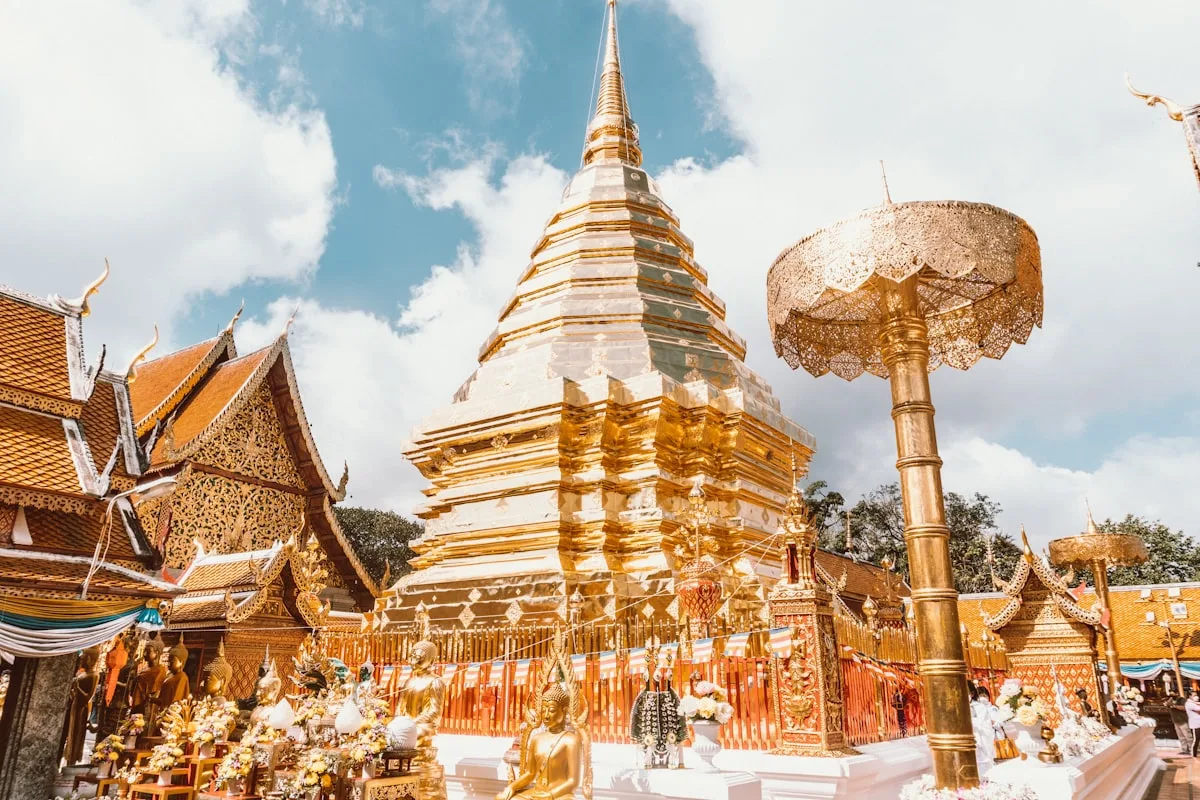
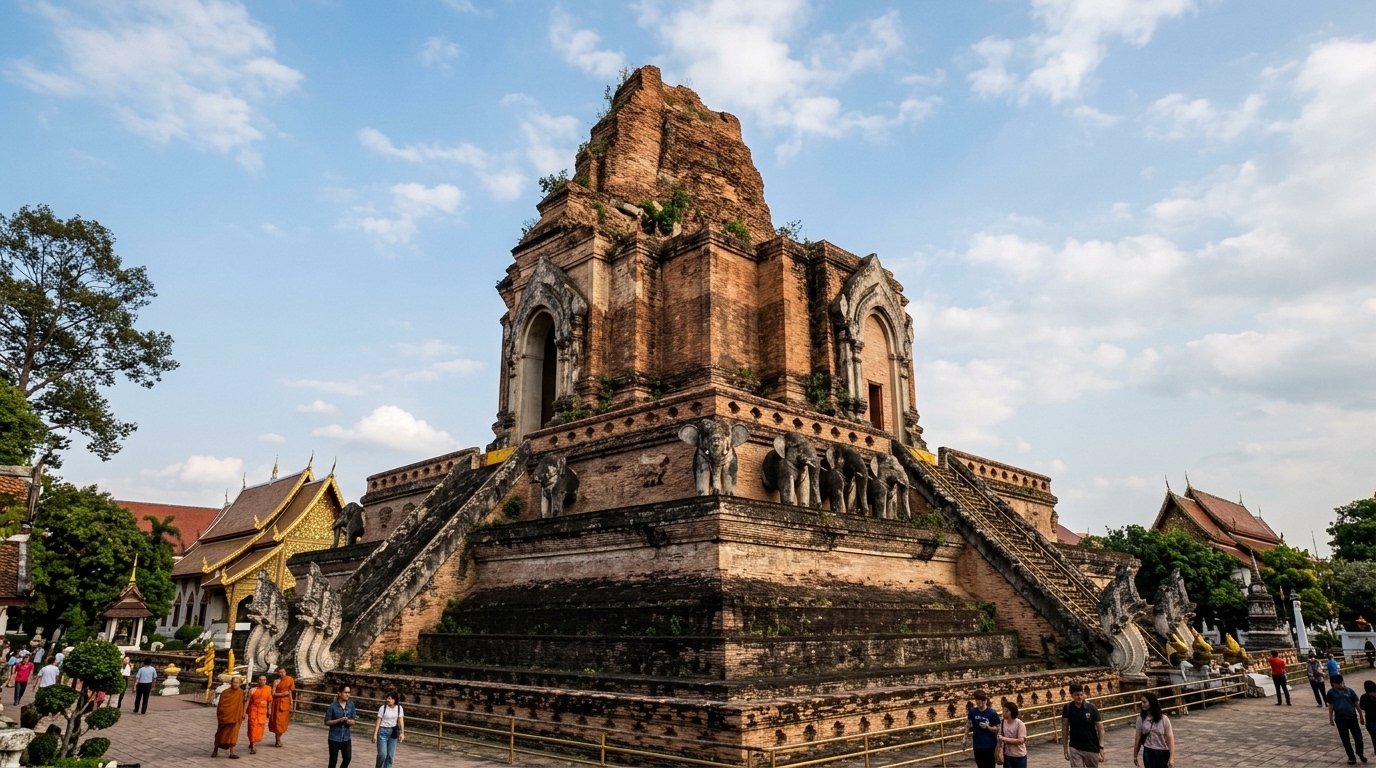
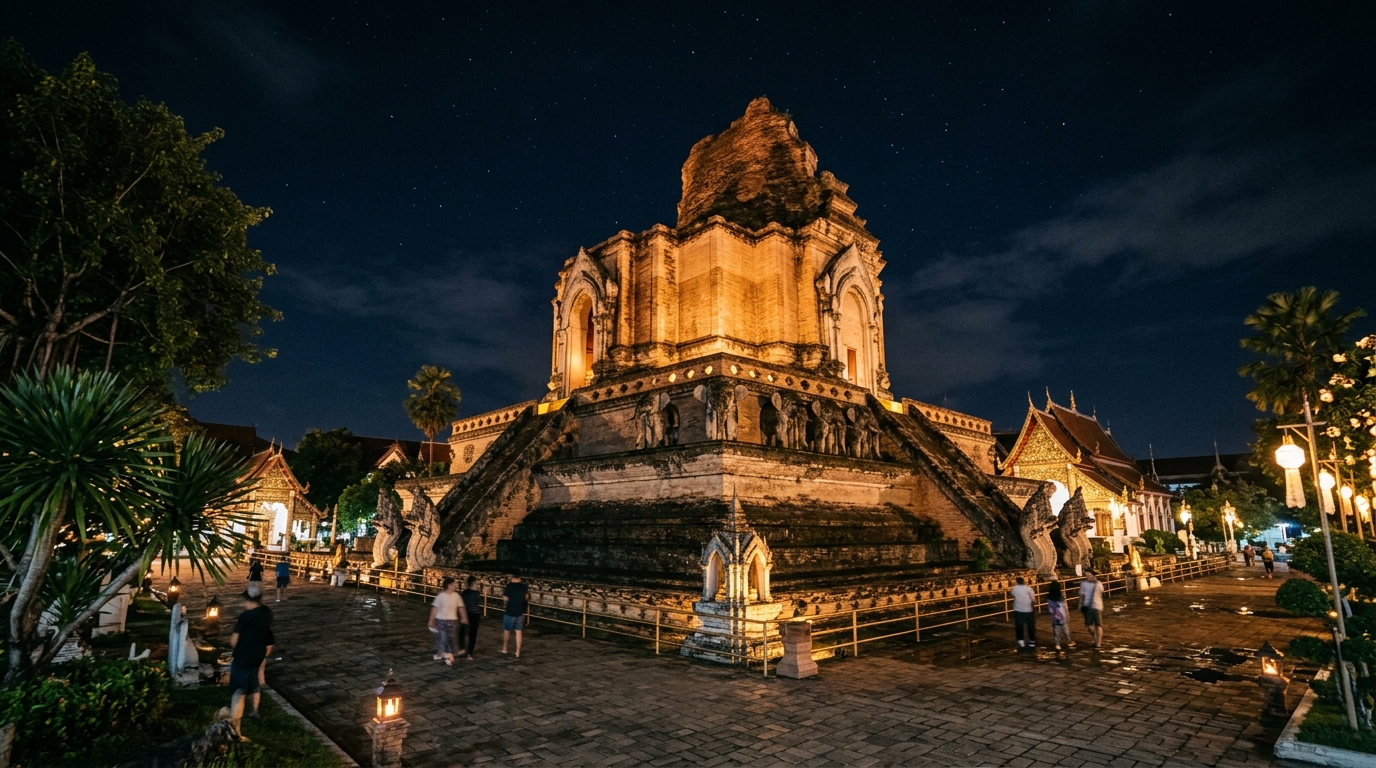
The colossal brick stupa of Chedi Luang was historically the loftiest masonry edifice in mainland Southeast Asia:
- The Foundational Phase (1391–1412 CE / B.E. 1934–1955): Commissioned in 1391 by King Saen Mueang Ma (7th monarch of the Mangrai Dynasty) to dedicate spiritual merit to his deceased father, King Kuena. Upon his sudden demise, the monument was carried to structural completion by his dowager queen, Queen Tilokachuda, and her royal son, King Samfangkaen, in 1412 CE.
- The Imperial Zenith under King Tilokaraj (1479–1480 CE / B.E. 2022–2023): King Tilokaraj dramatically enlarged the plinth and soaring bell-tower, expanding the base to 45 Wah (90 meters) on each side and elevating the apex to an astounding 45 Wah in height. For 84 years, its high vaulted niche enshrined the Emerald Buddha (Phra Kaew Morakot).
- The Cataclysmic Earthquake of 1545 CE (B.E. 2088): During the reign of Queen Chiraprapha Mahadevi, a historic storm and seismic catastrophe struck Chiang Mai, causing the upper half of the spire to collapse. The stupa lost nearly 30 meters of its height, standing as an evocative ruin for over four centuries.
- Archaeological Resurrection (1990–1992 CE / B.E. 2533–2535): The Fine Arts Department executed an intensive 35-million-baht restoration project, consolidating the laterite foundations, reconstructing the stepped ramparts, and stabilizing the famous projecting elephant caryatids (Chang Kham).
The Inthakhin City Pillar, Guardian Shrines, and Classical Statuary
Beyond the Great Stupa, Wat Chedi Luang shelters the primary metaphysical anchors of Chiang Mai:
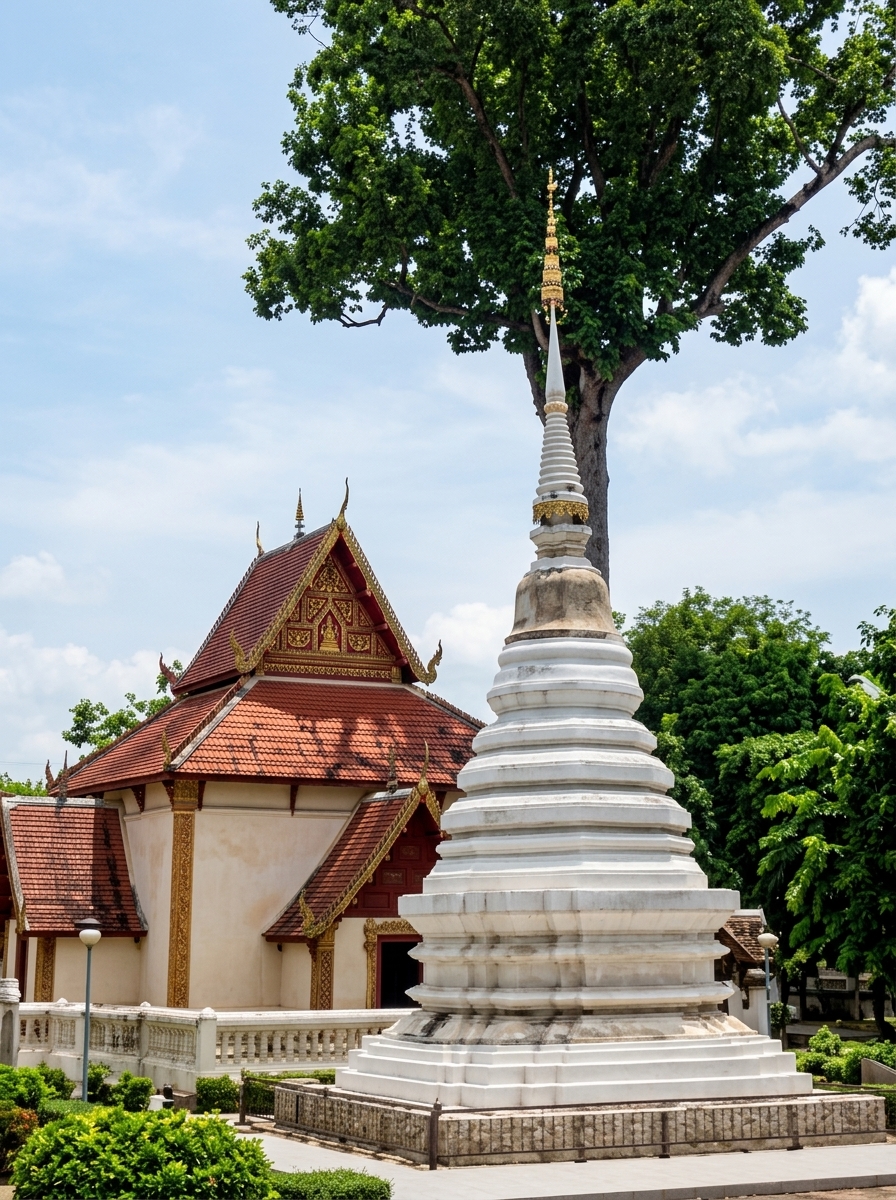
- The Inthakhin Pillar Vihara (Chiang Mai City Pillar): Consecrated inside a cruciform open pavilion, this masonry pillar — inlaid with colored glass — was historically situated at Wat Sadue Mueang (the Navel of the City). In 1800 (B.E. 2343), King Kawila re-established the capital and relocated the City Pillar to Wat Chedi Luang, placing it under the eternal vigil of two colossal Kumphand (Yaksha) statues bearing war clubs.
- The Three Sacred Yang Trees (Dipterocarpus alatus): Towering resin trees planted over two centuries ago by King Kawila, serving as living dendrological omens safeguarding urban stability.
- The Great Vihara and the Phra Attharas Colossus: Rebuilt in 1929 by Phra Upali, the grand wooden-and-brick hall enshrines the Phra Attharas, an imposing 18-cubit (9-meter) standing bronze Buddha in the gesture of dispelling fear (Abhaya Mudra), cast in 1411 CE (B.E. 1954) by Queen Tilokachuda.
- Phra Phuttha Chaloem Sirirat (The Canadian Jade Buddha): Consecrated in 1995 (B.E. 2538) to celebrate the 600th anniversary of Chedi Luang, this Buddha image (lap width 50 cm) was sculpted from flawless emerald-green Canadian nephrite jade, seated within the eastern niche of the great stupa.
- Bo Poeng (The Sacred Well): An ancient brick-lined cistern 11 meters deep and 4.32 meters wide, excavated in 1479 CE under King Tilokaraj to harvest clay for the stupa's bricks. In the northern dialect, Poeng denotes absolute propriety and cosmic suitability.
Learn more: Wat Chedi Luang Chiang Mai: Guide to the 14th-Century Colossus & City Pillar