














Chapter 1: The Realm of Lanna: Etymological Enigmas, Pali Literature, and the Dawn of Northern Riverine Civilizations
Chapter 1: The Realm of Lanna: Unraveling the etymology of Lanna, the Golden Age of Pali letters, and the 3 riverine civilizations.
The Etymological Enigma: Origins of the Name "Lanna"
The earliest textual origins of the toponym "Lanna" are preserved in two foundational Northern Thai chronicles: the Tamnan Mueang Chiang Mai (Wat Pang Bung Luang recension) and the Tamnan Suvanna Kham Daeng. These chronicles record the legendary pursuit of an enchanted golden deer by Prince Suvanna Kham Daeng from Mount Ang Song to the fertile floodplains of the Ping River. Assembled royal ministers engaged in divination to discern the mystical weight of a sacred chthonic boulder marking the site. While ministers conjectured weights of 700,000, 800,000, or 900,000 units, one minister declared its weight to be precisely "One Million Na" (ล้านนา). Following elaborate propitiatory offerings to Sakka, Mahabrahma, Yama, and the Four Great Heavenly Kings (Catumaharajika), the sovereign city founded on the site was formally christened "Mueang Lanna".
Archaeological philologists note that within this ancient mythic context, the word Na (นา) did not signify agricultural rice paddy fields, but functioned as an archaic indigenous volumetric or gravimetric measurement unit utilized by proto-Tai populations.
A lively orthographic debate exists regarding whether to transcribe the name with a tonal mark as "Lanna" (ล้านนา - Million Rice Fields/Units) or "Lan-na" (ลานนา - An Open Terrace/Plain):
- Prof. Pol. Lt. Saeng Manwithun, an eminent Sanskrit-Pali epigrapher who conducted intensive field research across northern Thailand for over two decades, asserted that "Lanna" (ล้านนา) is the solely accurate historical spelling. In Northern Thai dialect, expansive open grounds are invariably termed Khuang (ข่วง)—as in Khuang Ban, Khuang Wat, or Wat Hua Khuang—whereas the Central Thai term Lan (ลาน) is completely foreign to classical northern vernacular idiom. Thus, the prefix unquestionably designates the numeral Lan (1,000,000).
- Conversely, pioneer art historians—including M.C. Subhadradis Diskul, No. Na Paknam (Prayun Uluchada), Sanoe Niladech, and Prof. Dr. Santi Leksukhum—have utilized "Lanna Thai," "Lanna Art," or "Chiang Saen Art (Lanna Art)" interchangeably as broad territorial and stylistic denominators.
The Three Great River Basins and the Golden Age of Pali Letters
The geopolitical emergence of Lanna developed along three riverine arteries that nurtured early urban civilization long before the 14th century:
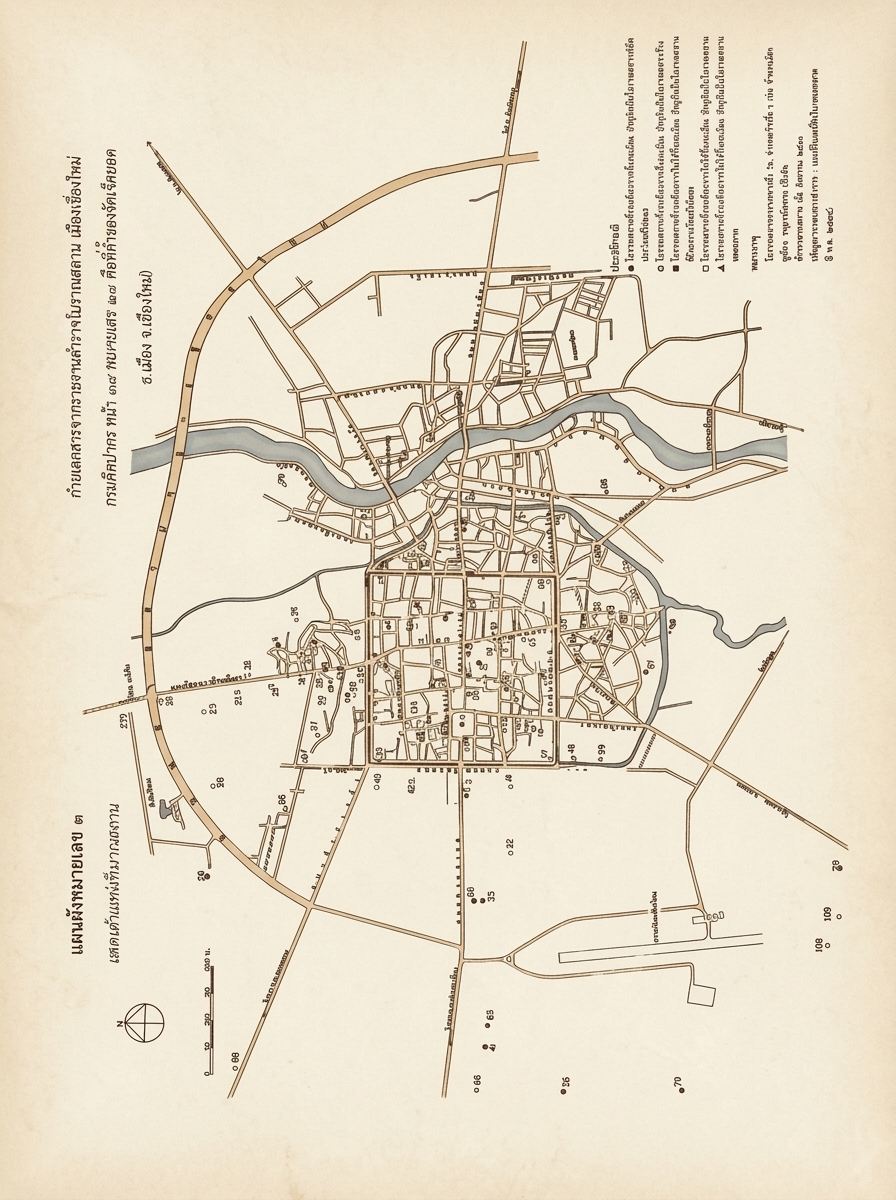
- The Kok River Basin: The northern heartland of Mueang Yonok Nakhon.
- The Ping River Basin: The domain of Hariphunchai (Lamphun), possessing the earliest documented Buddhist archaeological strata in Northern Thailand dating back to the 7th–8th centuries CE (12th–13th Buddhist centuries), which later culminated in the foundation of Chiang Mai.
- The Sai and Mekong River Basins: The foundational nexus of Mueang Hiranya Nakhon Ngoen Yang Chiang Saen.
Lanna's civilization achieved its intellectual apogee during the Pali Literary Renaissance of the late 15th and early 16th centuries (particularly under King Mueang Kaeo, r. 1495–1525 CE), when northern scholarly monks composed monumental treatises that gained canonical authority across the Theravada Buddhist world:
- Phra Bodhirangsi: Authored the Sihinganidana (Chronicle of the Phra Phuttha Sihing) and the Camadevivamsa (Chronicle of Queen Camadevi).
- Phra Rattanapanya Thera: Composed the celebrated Jinakalamali (The Garland of the Eras of the Conqueror).
- Phra Sirimangalacarya: Penned masterworks of exegesis including the Mangalatthadipani (the definitive commentary on the Mangala Sutta), Vessantaradipani, Cakkavaladipani, and Sankhyapakasakatika.
- Phra Ñāṇakitti Thera: Produced six comprehensive sub-commentaries (Yojana) decoding the Vinaya and the Abhidhamma.
- Phra Brahmabanya: Chronicled the history of the Emerald Buddha in the Ratanabimbavamsa, alongside the renowned apocryphal birth tales, the Pannasa Jataka.
Historiographical Debates on Periodization
Archaeologists and art historians remain divided into two interpretive camps regarding the chronological origin of Lanna culture:
- Pre-13th Century Origins: Scholars examining stylistic lineage argue that Lanna art emerged well before the 13th century CE. M.C. Subhadradis Diskul placed the earliest Chiang Saen Buddha images around 1057 CE (B.E. 1600). Sanoe Niladech highlighted the 11th-century stepped square stupa at Wat Ku Kut as an ancestral prototype. No. Na Paknam identified the stone sculpture of Phayao (12th–13th centuries CE) as the oldest regional tradition after Hariphunchai.
- Post-13th Century Statehood (The Mangrai Epoch): Conversely, Kongdej Prapattong and Prof. Dr. Santi Leksukhum argue that preceding centuries belong strictly to the "Pre-Lanna" era. In their analysis, authentic Lanna political and cultural identity coalesced only when King Mangrai the Great conquered Hariphunchai in 1292 CE and founded Chiang Mai in 1296 CE (late 19th Buddhist century).
Ultimately, the comprehensive administrative, military, and artistic consolidation of Northern Thailand—uniting Chiang Mai with the principalities of Phayao, Nan, Phrae, and projecting northern suzerainty down toward Sukhothai and Kamphaeng Phet—was fulfilled under the imperial scepter of King Tilokaraj in the 15th century.