



















Chapter 7: The 1992 Wat Chet Yot Sculpture Conservation Protocols: Modern Scientific Metrology and the Revived Lanna Mortar Alchemy
Chapter 7: The 1992 Wat Chet Yot Conservation Protocols: Unveiling the Lanna mortar formula, stainless steel pinning, and modern heritage science.
Conservation Philosophy and Methodological Workflow (1992 CE / B.E. 2535)
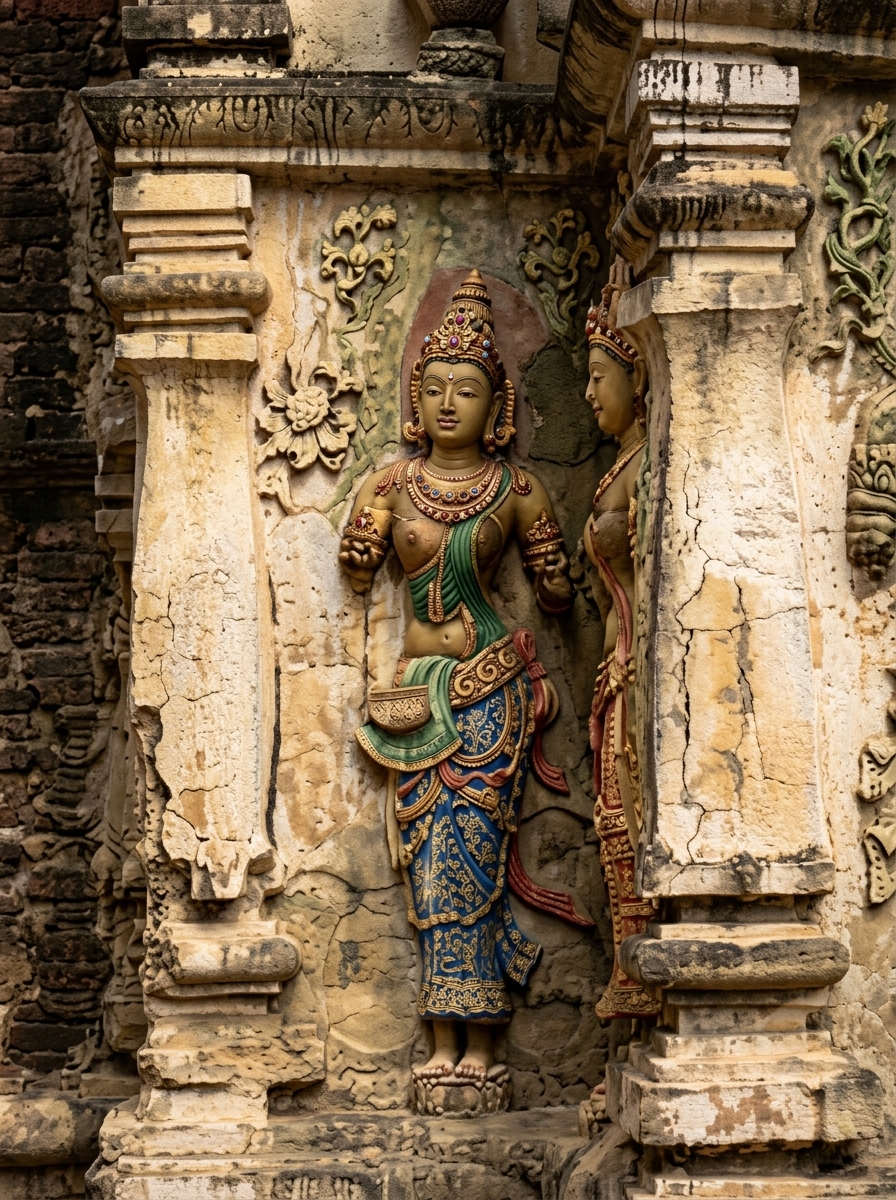
Recognizing the rapid degradation and irreversibility of early synthetic polymers used during the 1970s, the Fine Arts Department implemented a comprehensive, scientifically rigorous conservation program in 1992 (B.E. 2535). Targeting the 70 stucco devas and primary monuments of Wat Chet Yot, the project adhered to strict international ethics — the principles of material compatibility, physical reversibility, and minimum intervention codified by the Venice Charter:
- Photogrammetric Baseline and Pathological Diagnosis: Systematically recording color slides, black-and-white archives, and mapping subterranean hollows, micro-fissures, and structural deformations prior to any chemical contact.
- Pre-Cleaning Structural Stabilization: Highly fragile, hollowed, or semi-detached stucco reliefs were reinforced with temporary shoring and delicate grout pre-injections to prevent accidental catastrophic detachment during wash cycles.
- Biological Eradication: Removing parasitic vegetation, including the meticulous chiseling of invasive Ficus roots lodged within laterite joints. Surfaces were then misted with an aqueous solution of Benzalkonium Chloride (1:100 dilution), systematically destroying algae cell membranes and fungal spores without inducing thermal or chemical shock in the historic stone.
- Specialized Chemical Cleaning of Resistant Crusts: For airborne soot, particulate grease, and aged coatings — localized application of Toluene compresses for 5 to 10 minutes. For deeply embedded black crusts and gypsum sulfation — a specialized poultice of 10% Ammonium Carbonate + 0.5% neutral liquid soap + 10% Toluene suspended in purified cellulose tissue, left in contact for 15 to 20 minutes before delicate mechanical rinsing with rabbit-hair brushes.

The Engineering of Stainless Steel Pinning
For monumental, load-bearing stucco devas separating from the substrate, conservators developed an internal mechanical anchoring system:

- In visually neutral zones devoid of decorative carving, technicians drilled angled pilot holes downward at 20 to 30 degrees, penetrating through the stucco layer and embedding 25 to 30 centimeters deep into the laterite/brick masonry.
- Dust and friable stone particulates were evacuated using pneumatic bulb blowers.
- High-tensile AISI 316 Stainless Steel Rods (diameter: 9.5–12.7 mm), pre-cut 2 cm shorter than the borehole, were buttered with Araldite epoxy structural adhesive and driven into the core, recessed 1 cm below the historic plaster surface. This provided invisible, shear-resistant skeletal anchoring transferring the sculptures' dead load directly into the wall.
- The borehole aperture was then capped with color-matched traditional lime mortar, rendering the intervention invisible.
The Revived 1992 Formula of Lanna Conservation Mortar (Pun Tam)
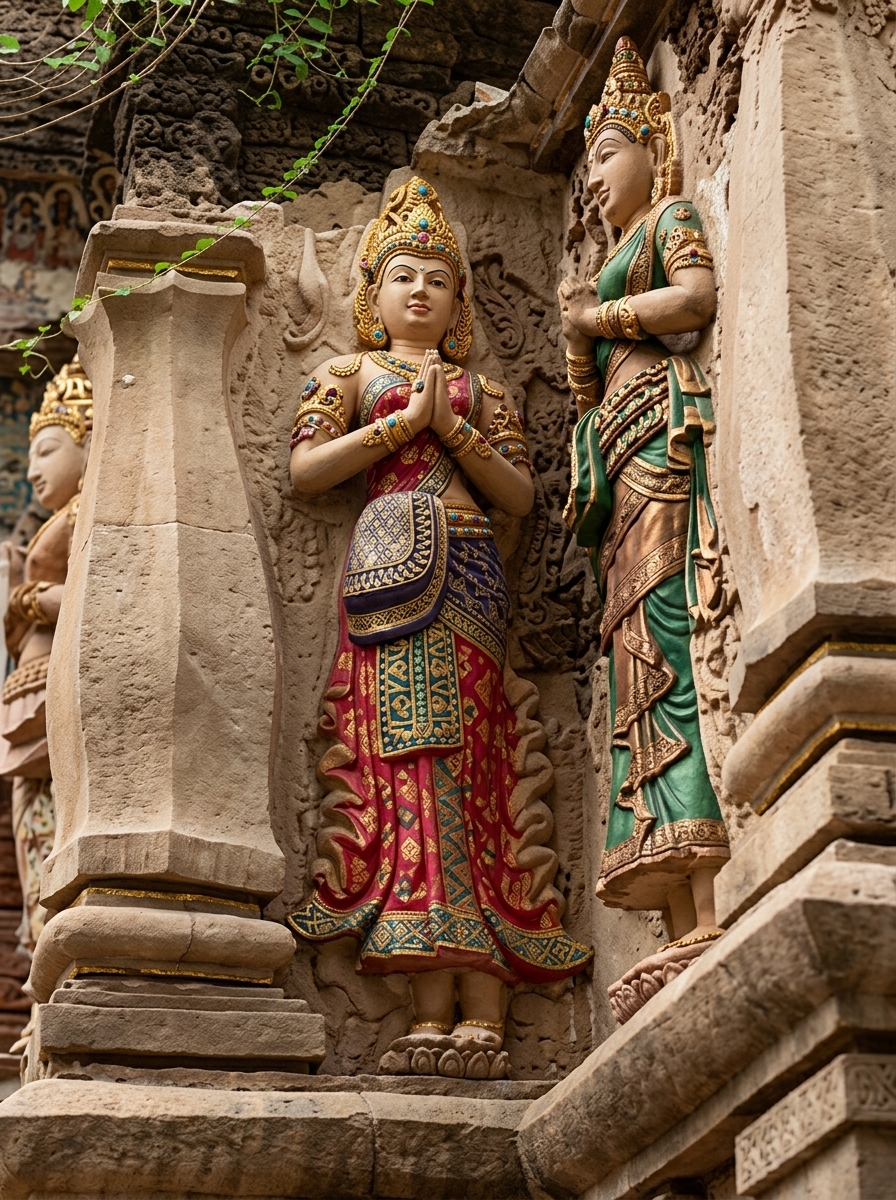
The crowning technological triumph of this campaign was the total abandonment of Portland cement in favor of an optimized, scientifically balanced recreation of Ancient Lanna Mortar (Pun Tam). Derived from traditional manuscripts and calibrated to match the thermal expansion, porosity, and compressive strength of the 500-year-old original plaster, the recipe was standardized as follows:
- Slaked Lime Putty (Pun Khao): 1.0 Part (aged in water for months to maximize carbonation capacity)
- Fine River Sand (Sai Rai-iat): 1.0 Part (washed, graded quartz sand serving as structural aggregate)
- Mulberry Paper Pulp (Kradat Sa): 1/3 Part (macerated cellulose fibers acting as a three-dimensional tensile micro-mesh against shrinkage cracks)
- Boiled Cane Sugar Syrup (Nam Oi): 2/10 Part (organic polysaccharide plasticizer retarding cure time and accelerating crystal formation)
- Animal Hide Glue (Kao Nang Sat): 2/5 Part (collagen binder providing internal elasticity and water repellency)
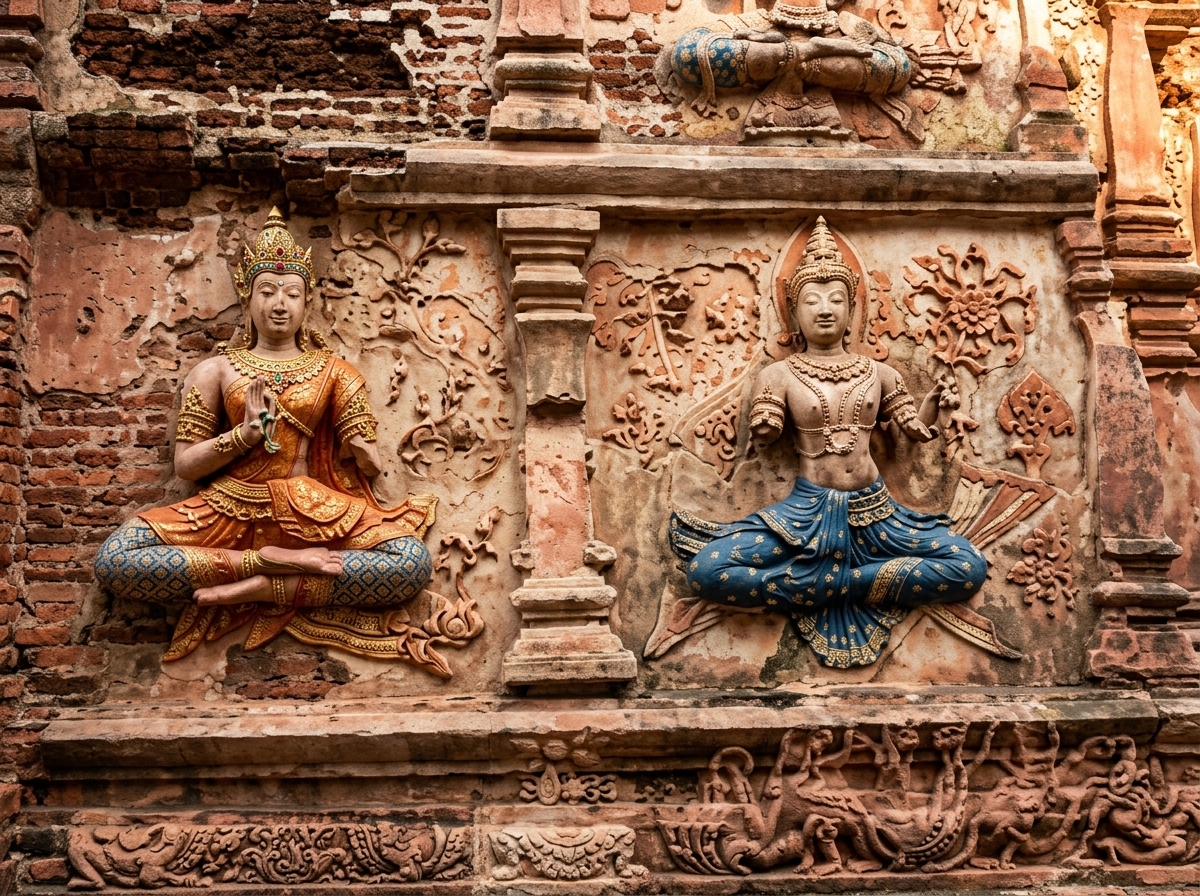
Tinted with inert mineral earth pigments, this bio-composite mortar was deployed exclusively for filling fissures and stabilizing margins. Reconstructive modeling was rigorously restricted to structural necessity, forbidding conjectural restoration of lost anatomical features.
Consolidation and Protective Surface Metallurgy
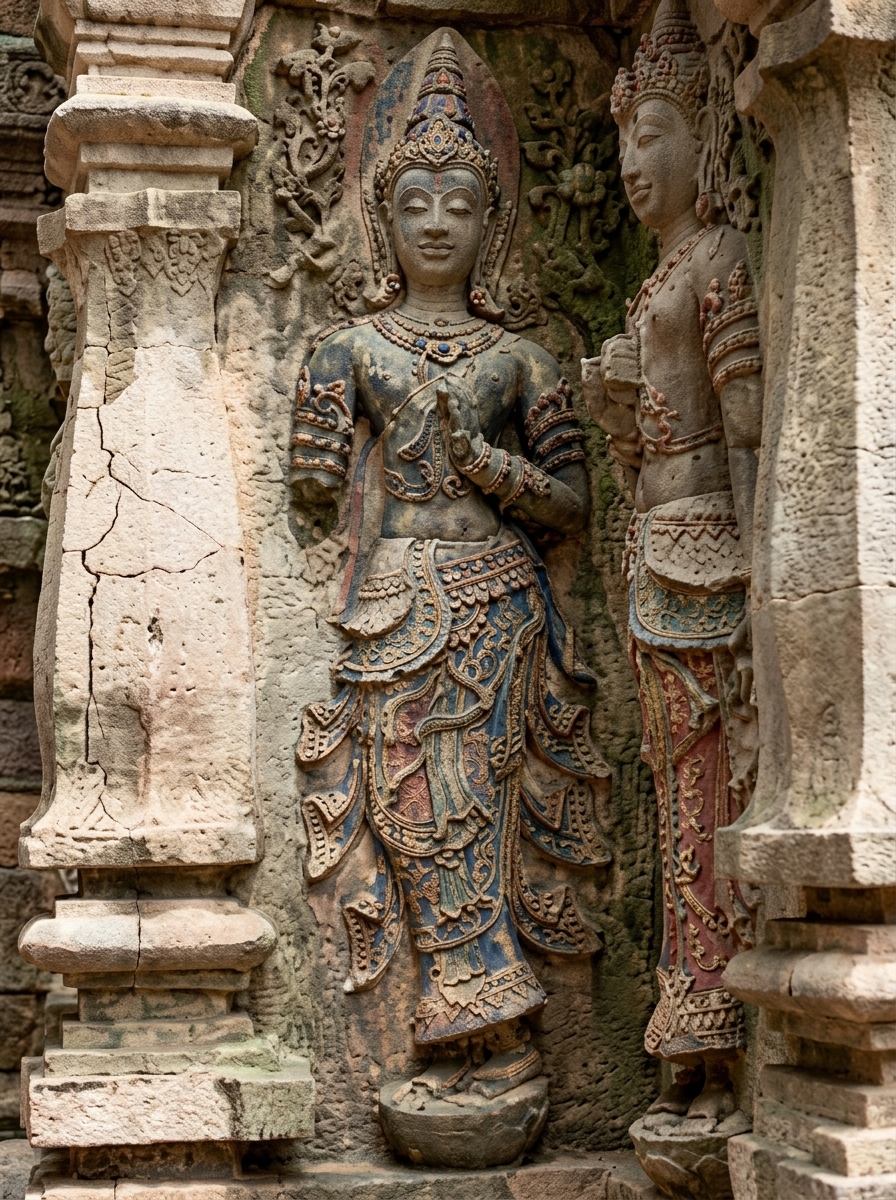
Upon reaching full hydraulic and carbonation cure, the sculptures were treated with a protective envelope: a uniform misting of CERECOND (a breathable oligomeric siloxane/silicone water repellent), allowed to cross-link for 24 hours, followed by 2 to 3 brush coats of Paraloid B-72 (an ethyl-methacrylate copolymer, 15% w/v in Toluene), consolidating granular crumbly plaster into a coherent, stone-hard matrix without blocking natural vapor permeability. Long-term site management mandated banning heavy vehicular traffic along the perimeter gate to eliminate ground vibration, prohibiting open-flame votive candle-burning against the monuments, and clearing gutter debris annually.
From the sacred planting of the Bodhi sapling under King Tilokaraj in 1455 CE through the historic Eighth Buddhist Council to the triumphs of modern conservation science, Wat Chet Yot stands immortal as the ultimate monument of Lanna spirituality and sacred art. The chronicle of "Wat Chet Yot, Chiang Mai Province" is now fully synthesized and complete.