











History of Wat Suan Dok Part 7: Khru Ba Srivichai, the Saint of Lanna: The Great Vihara Restoration and the Doi Suthep Road Epic
The saga of Khru Ba Srivichai: Enduring trials with patience, the 8-month Wat Suan Dok restoration, and building the Doi Suthep road in 5 months.
From "Ai Fa Hong" to Spiritual Sovereign of the North
Khru Ba Srivichai was born on Tuesday, 11 June 1878 (B.E. 2421), in the remote hamlet of Ban Pang, Li District, Lamphun. On the night of his birth, a ferocious thunderstorm rattled the mountain valleys, accompanied by violent lightning strikes and tremors that shook his family's wooden hut, earning him the childhood name "Ai Fa Hong" (Thunder Boy). Ordained into the Buddhist monastic order at age eighteen as Sirivijayo Bhikkhu, he embraced a rigorously austere forest life: subsisting on a single vegetarian meal a day, abstaining from betel and tobacco, observing celibate purity, and undertaking long missionary treks to convert hilltribe communities (Karen, Lahu, Hmong, and Khmu). His charisma (Barami) spread like wildfire across the northern valleys.
However, his traditional Lanna ecclesiastical ways collided directly with Siam's centralized ecclesiastical administration under the Sangha Act of 1902 (R.S. 121). Between 1907 and 1935, Srivichai was subjected to relentless clerical prosecutions (Adhikarana): accused of ordaining monks without bureaucratic state authorization, disobeying district ecclesiastical officers, and being branded a dangerous charismatic rebel (Phi Bun). In 1919 (B.E. 2462), when colonial-era authorities ordered his expulsion from Lamphun, an extraordinary peaceful exodus took place: nearly 3,000 monks, novices, and ethnic devotees formed a human procession, marching alongside their master to Chiang Mai to the thunderous beats of northern Sabat Chai drums.
Interned at Wat Si Don Chai in Chiang Mai, Srivichai was confined to a cramped, unpaved earthen pavilion devoid of basic bedding. He endured this humiliation with unflinching Khanti-Dhamma (Transcendent Patience), harboring no malice toward his accusers. Transferred under armed guard to Bangkok for trial at Wat Benchamabophit, the Supreme Patriarch, Prince Krom Phraya Wachirayanawarorot, meticulously investigated the charges, cleared him of all treasonous and supernatural allegations, and returned him triumphantly to his northern homeland.
The Monumental Reconstruction of Wat Suan Dok (1931)
Fully exonerated, Srivichai dedicated the remainder of his life to restoring dilapidated sacred sites across Northern Thailand, earning the enduring title "The Saint of Lanna" (Nak Bun Haeng Lanna). In 1931 (B.E. 2474), Major-General Chao Kaew Nawarat (the last Prince of Chiang Mai) and Princess Dara Rasmi formally invited him to lead the total resurrection of Wat Suan Dok.
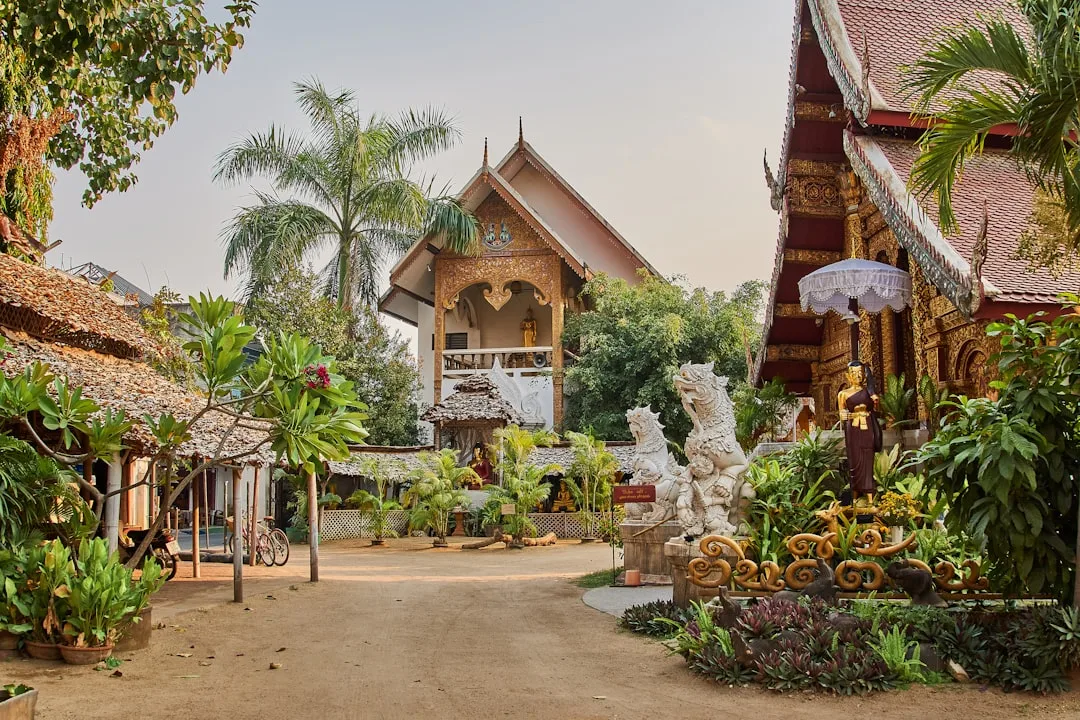
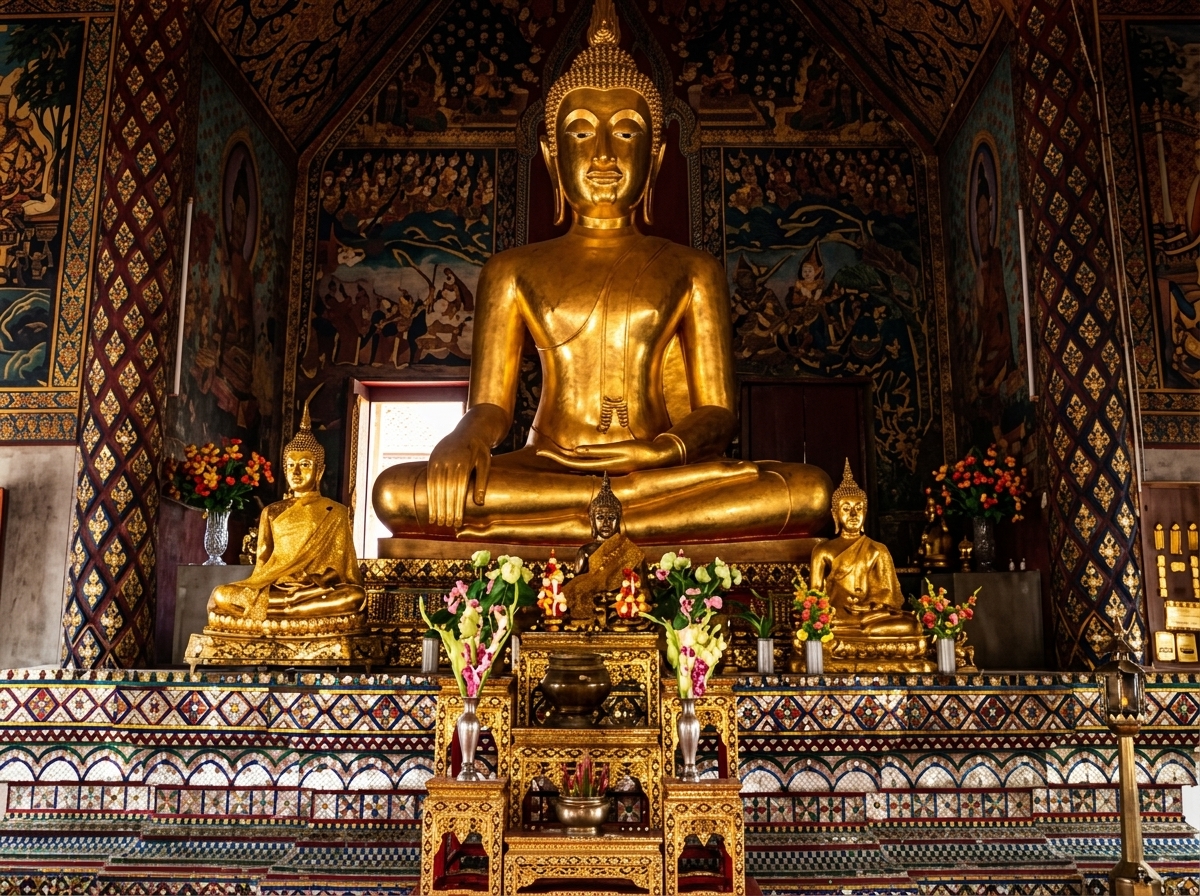
Commencing on a sacred lunar date in 1931, thousands of volunteers converged on the compound. Srivichai mobilized the construction of the monumental Great Vihara Luang—measuring an astonishing 33 Wah in length, over 12 Wah in width, supported by 56 massive columns, with an open-sided pavilion architecture designed to accommodate vast congregations. Simultaneously, he rebuilt the Great Stupa and the protective cloister walls. Between 6,000 and 7,000 pilgrims laboured daily without wages, funding the entire 65,406 Rupee budget purely through spontaneous grassroots donations. The monumental sanctuary was completed in an astonishing eight months.
The Epic of the Doi Suthep Mountain Road (1934–1935)
Srivichai's crowning logistical miracle occurred on 9 November 1934, when he struck the first ceremonial hoe into the earth to construct the road ascending Mount Suthep to Wat Phra That Doi Suthep. Siamese government engineers had long deemed the project impossible without millions of baht in mechanized infrastructure. Srivichai accomplished it relying solely on manual labor: thousands of northern peasants and indigenous hilltribes carried baskets of earth, picks, and chisels, carving 11 kilometers of mountain highway through solid rock and dense jungle in a breathtaking 5 months and 22 days. On 30 April 1935, the first motor vehicle ascended the mountain.
Exhausted by decades of ascetic hardship, Khru Ba Srivichai passed away peacefully at Wat Ban Pang on 20 February 1939 (B.E. 2481) at the age of sixty. Following years of lying in state, his royal cremation in 1946 at Wat Chamthewi gathered hundreds of thousands of mourners. His cremated relics were divided into six portions and enshrined across five northern provinces, with the second major portion enshrined perpetually within the white stupa (Ku Khru Ba Srivichai) south of the Great Vihara at Wat Suan Dok.