★ 9.4/10 EXCEPTIONAL ON AGODA & BOOKING.COM • ROYAL FLORA RATCHAPHRUEK CERTIFIED
Overnight Nature Farmstay • KAS Farmstay
KAS Farmstay (Private Farmstay Tent & Campfire)
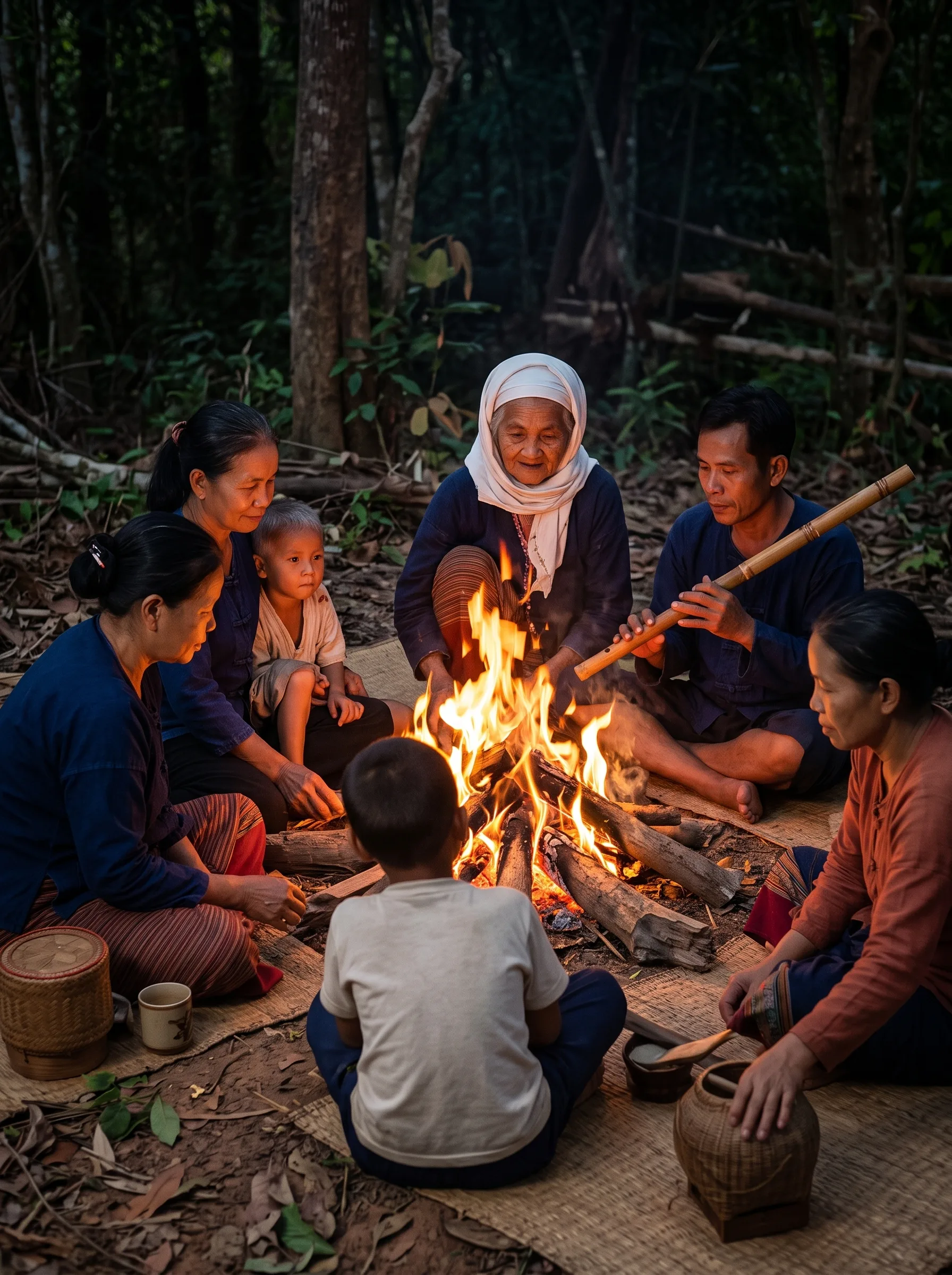
Experience a peaceful private farmstay amidst our organic orchards in Lamphun. Cozy tent glamping, evening campfires under starry skies, and organic garden-fresh mookata BBQ. Official online booking is now live.
A collection of translated rare books on Lanna history and culture
Terra Lanna is gathering and translating rare books on Lanna history, beliefs, and way of life — preserving these stories and sharing them with readers everywhere.
Sort by:
Listen to Lanna Stories
Translating and gathering books — coming soon
Contact Us
Talk to us, or share your feedback to help us improve and grow.
Our Hotel
NampiangdinBoutique Hotel
4-Star Lanna Boutique Hotel in the Heart of Chiang Mai
★★★★ 4-Star Boutique46 Rooms15 Min from AirportFree Airport Transfer
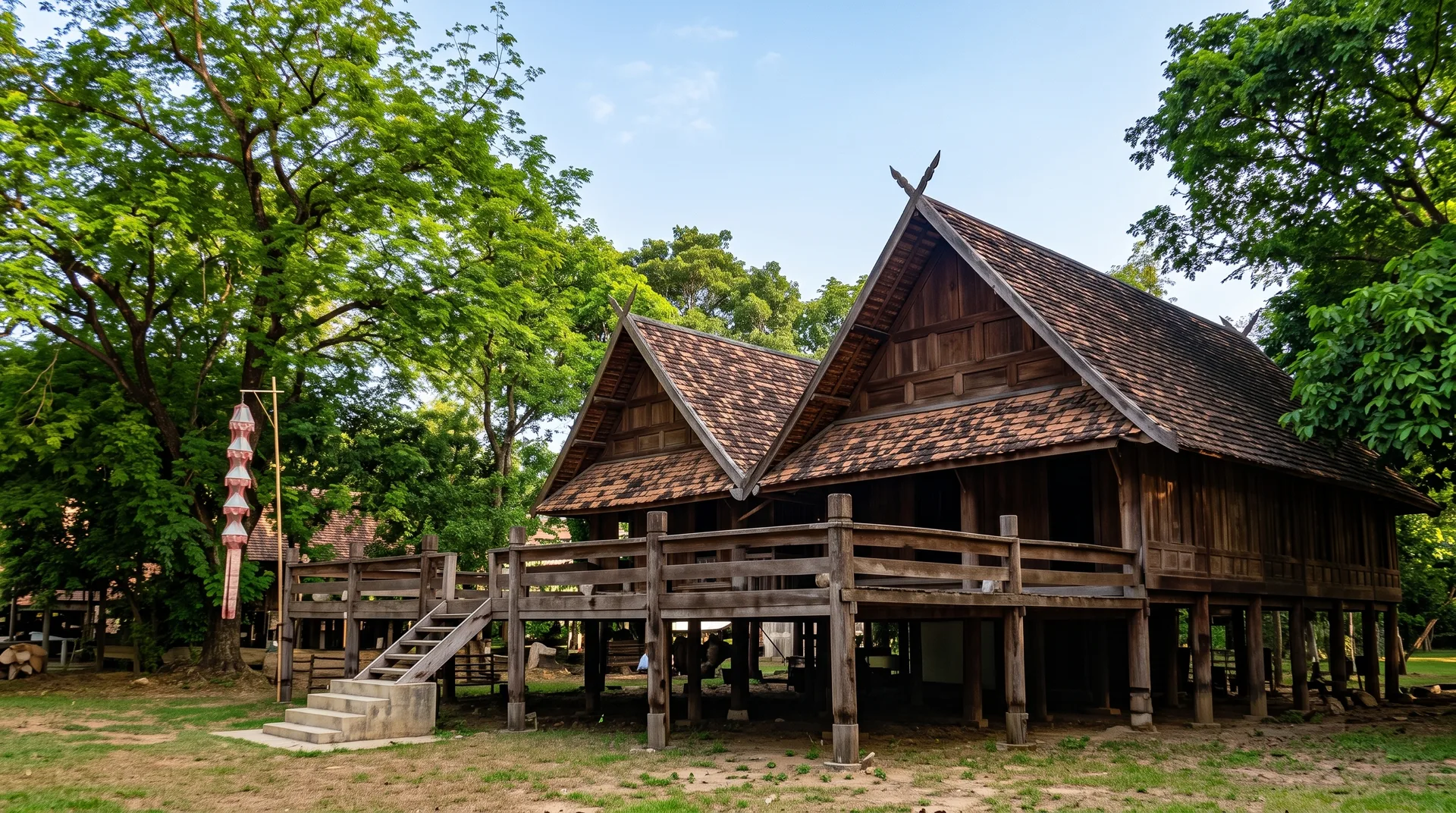
Nampiangdin Boutique Hotel is a 4-star boutique property blending ancient Lanna architecture with modern comfort. Located in central Chiang Mai, 15 minutes from the airport, with a warm atmosphere, heartfelt service, a lush garden, outdoor pool, and a restaurant featuring local ingredients.
Rooms
Choose the ExperienceThat's Right for You
All rooms feature a private balcony, pool view, AC, free WiFi, minibar, and breakfast included
Sorted by guest review score — prices updated daily
Active & Available in Chiang Mai
Your Eyes, Ears & Boots on the Ground in Chiang Mai
Moving, investing, or sourcing in Northern Thailand? We provide what no remote tool or overseas agency can ever match: genuine local presence, native northern dialect negotiation, and zero-bias on-site execution.
Why Technology Cannot Replace Local Boots on the Ground
Overseas expats, digital nomads, and remote investors face significant friction when managing property or sourcing in Northern Thailand. Having trusted on-the-ground representation eliminates risks, protects your budget, and gives you total peace of mind.
Common Pitfalls of Managing Remotely
Misleading Listings: Online photos are frequently edited or years out of date. In reality, properties may have hidden mold, weak water pressure, noisy air-conditioning, or loud construction right outside your window.
Unwarranted Price Markups: Without local Thai and Northern dialect negotiation skills, foreigners often face inflated quotes—paying 20%–40% above true local market rates for rent, contractor labor, and artisan craft manufacturing.
Unreliable Wi-Fi Claims: Landlords routinely advertise 'high-speed internet' that turns out to be congested shared building Wi-Fi with high latency, dropping client Zoom calls and disrupting remote work.
Zero On-Site Emergency Recourse: When an air conditioner leaks, plumbing bursts, or a guest locks themselves out late at night, remote coordination across time zones is stressful and ineffective.
The Terra Lanna Advantage
Objective High-Definition Video Inspections: We physically inspect every corner of the property, testing plumbing pressure, air-con odor, noise decibels, and surrounding neighborhood conditions without bias.
Direct Native & Northern Dialect Negotiation: We speak fluent Thai and Kam Mueang directly with landlords, technicians, and workshop owners—securing authentic, fair local terms and lease conditions.
Certified On-Site Speedtests: We plug in directly to run certified Ookla Speedtests (measuring ping latency, jitter, download, and upload speeds) before you commit to any rental deposit.
Trusted Keyholding & Urgent Dispatch: Permanently stationed in Chiang Mai, ready to handle emergency lockout rescues, supervise contractors, and deliver structured photo/video reports directly to you.
Our 4 Core Capabilities
What Overseas Clients Hire Us to Do
Four specialized on-the-ground services tailored for expats, remote entrepreneurs, Airbnb owners, and international media agencies.
For Nomads & Expats
Local Fixer & Personal Assistant
Your personal problem solver in Chiang Mai. Whether you are landing soon or already living here, we eliminate bureaucratic stress, rental headaches, and language barriers.
Core Focus
Condo pre-lease walk-throughs, Wi-Fi stability tests, lease negotiation to kill farang markups, parcel reception, and initial government/immigration logistics guidance.
Key Deliverables
Detailed video walkthrough & timestamped photo inspection
Live Ookla Wi-Fi speedtest (latency, download/upload speeds)
Lease contract review & direct Thai landlord negotiation
Urgent parcel pickup, mail forwarding & local errands
Overseas retailers and interior designers import handcrafted furniture, teakwood, ceramics, and textiles from Chiang Mai artisan hubs. We are your dedicated QC eyes on the workshop floor.
Geographical Advantage
We know the back alleys of Baan Tawai, San Kamphaeng, Bo Sang, Hang Dong, and Mae Rim. We talk directly to carvers and weavers in local dialect, preventing communication errors.
Key Deliverables
In-person workshop & factory visits across Chiang Mai & Lamphun
Foreign investors who own condos or pool villas in Chiang Mai for Airbnb need trustworthy local oversight. We inspect rooms after cleaning, hold emergency keys, and dispatch trusted tradesmen.
Timezone Synergy
We chat and report to you during your evening hours overseas, then execute daytime on-site checkups and maintenance across Chiang Mai during local business hours.
Commercial film crews, YouTube creators, and high-end travelers demand secret, authentic locations away from mass tourist traps. We scout hidden temple grounds, mountain overlooks, and private chef tables.
Exclusive Synergy
Seamlessly paired with Terra Lanna's private farmstead: organic orchard walks, botanical craft liquor workshops, and private campfire dinners in Lamphun.
Key Deliverables
On-site location scouting with lighting notes, acoustics & GPS coords
From initial inquiry to completed mission in 4 simple steps.
01
1. Send Your Brief
Share your requirements, links, or address via email or the booking form below.
02
2. Action Plan in 2 Hours
We confirm feasibility, provide an exact upfront quote, and schedule the on-site mission.
03
3. On-The-Ground Execution
We drive directly to the property, factory, or location with our equipment and live status updates.
04
4. Comprehensive Report
You receive comprehensive video walkthroughs, speedtest stats, defect photos, and our honest local recommendations.
Request a Fixer or Property Inspection
Tell us what you need done on the ground in Chiang Mai. We reply within 2 hours during active daytime hours.
Frequently Asked Questions
Everything You Need to Know
Online listings in Thailand frequently feature stale photos, hidden structural/mold defects, or inflated 'Farang' prices (20%–40% above local rates). Without speaking northern Thai or being physically present to smell the room, test the water pressure, and check for noisy construction, you risk getting trapped in an inflexible 12-month lease. We serve as your unbiased on-site representative.
We cover all major expat and residential districts: Old City (Sri Phum, Phra Sing), Nimmanhaemin, Santitham, Jed Yod, Chang Phueak, Chang Khlan / Night Bazaar, Wat Gate / Riverside, Mae Hia, Hang Dong, San Kamphaeng, Doi Saket, and Mae Rim. We also travel to Lamphun artisan workshops upon request.
Standard requests are completed within 24–48 hours. Urgent same-day emergency callouts can often be accommodated depending on current schedule. Contact us via email (terralanna67@gmail.com) for rapid dispatch.
We bring a laptop and mobile testing kit directly to the unit. We connect to the actual in-room router and run certified Ookla Speedtests measuring ping latency, jitter, download Mbps, and upload Mbps. We also check 4G/5G mobile signal backup coverage inside the room.
Never. Terra Lanna maintains a zero-kickback, zero-commission policy. When negotiating rent or product costs, 100% of the discount goes directly to you. You pay us solely for our time, expertise, and transparent on-the-ground service.
We accept Wise (formerly TransferWise), standard international bank wire transfer, Thai PromptPay / QR bank transfer, and major credit cards via Stripe.
Ministry of Education and Ministry of Interior, via the Fine Arts Department, with Chiang Mai Province · 1999 CE (B.E. 2542) · Chiang Mai
Chapter 3 (VII): The Lanna Festival Calendar & Life Rites
A complete twelve-month Lanna festival calendar — from Songkran to Yi Peng — plus life-cycle customs such as weddings and house-warming.
The Su Khwan Khwai Rite (Rite for the Buffalo's Khwan/Spirit)
After the buffalo have been used to plough the fields and the rice seedlings have been transplanted, a rite is held to call back the khwan (vital essence) of the buffalo, as a way of asking forgiveness for the labour and, at times, the blows the animals endured during the work. A ritual master (pu achan) is invited to conduct the rite, and the accompanying recitation includes both an apology and an acknowledgment of the buffalo's debt of gratitude to be remembered.
Customs of the Twelfth Northern Month (around September)
The Than Khao Chi Custom (Offering of Roasted Sticky Rice)
This is an act of merit-making through the donation of alms to monks, and to the lay men and women (upasaka, upasika) who keep the precepts at the monastery, with the donors typically being elderly people. Sermons are preached to accompany the offering, expounding on such texts as the Mangala Sutta, the Lokavuti, and the Chai Noi. Food and provisions are prepared for the elderly lay people observing the precepts, who are then given a shared meal together with everyone present.
The Custom of Wan Sipsong Peng (Full Moon of the Twelfth Northern Month)
This is a custom for dedicating merit to the deceased. It is believed that the fifteenth waxing day of the twelfth northern month (the tenth month in the central Thai calendar) is the time when Yama, the King of Death, releases departed souls to the human world so that they may receive merit dedicated by their relatives and descendants. Merit is therefore dedicated to the dead: for those who died a normal death, food is brought and offered directly to the monks at the monastery; but for those who died an unnatural or violent death ("tai hong"), the merit is dedicated to them through a sermon on such texts as the Petaphali, the Malai Prot, the Mula Nibbana, the Maha Mula Nibbana, the Legend of Don Indra, and the Legend of Inthawak.
The Than Salak (Salakaphat) Custom
Also called "tan kuai salak," this is the merit-making custom of the Salakaphat almsgiving festival, generally held between roughly August and October, in which food, provisions, and daily necessities are prepared and dedicated as merit to departed relatives. In this form of merit-making, offerings are not directed to any particular monk; instead, all the gathered offerings are pooled and divided according to the number of monks invited, after which the monks and novices each draw a lot (salak); whichever set of offerings (as lay gifts, or thai than) corresponds to the lot drawn is then presented to that particular monk or novice.
Customs of the First Northern Month (around October)
Leaving the Rains Retreat (Ok Watsa)
This marks the end of the three-month Rains Retreat, falling on the fifteenth waxing day of the eleventh northern month (duean kiang). On this day the Sangha holds a rite called Wan Maha Pawarana. The word "pawarana" means to grant permission to be admonished or corrected for any fault or transgression committed while living together during the retreat. After the first waning day of duean kiang, monks are again free to spend the night elsewhere.
The Tak Bat Thewo Custom (Alms-Giving to Commemorate the Buddha's Descent from Heaven)
This takes place during the period from the first waning day of duean kiang to the fifteenth waxing day of the second month (duean yi). In former times, villagers did not commonly offer the Kathin robe as is done today, since it was regarded as a considerable undertaking requiring much preparation — particularly the assembling of a Kathin retinue and the hosting of the many relatives who would attend. Whoever wished to offer the Kathin robe had to be a person of good standing and firm intent; anyone wishing to sponsor the Kathin offering had to reserve the right to do so at the monastery and have this announced publicly.
The Pha Pa (Forest-Robe) Offering Custom
In some communities, the Kathin ceremony is combined with a Pha Pa robe offering completed within a single night, called "pha pa than dai" ("instant forest robe"), which is then formally offered the following day. In the Pha Pa custom, once the Kathin has been offered, a Pha Pa offering may follow as its "tail," with some sponsors organizing several groups jointly to establish funds for the public benefit of the monastery, publicly announced beforehand. In some communities there is also the offering of the Chulakathin, a "instant Kathin robe" that villagers weave together and complete within a single night; the offering may also take the form of other goods — cotton, rice, or materials related to a livelihood — contributed by a single individual, a single family, or several families joining together in large number.
The Than Thot Custom (Alms Left Along the Way)
This is a form of almsgiving in which a traveller prepares various lay offerings in advance, so that should they encounter monks along the way who appear to be in want, they may leave the offerings — for instance, placed discreetly among the bushes so as not to be seen presenting them directly. The recipient, upon hearing an announcement, then comes out to retrieve the offering left for them.
Customs of the Second Northern Month (around November)
The Yi Peng Custom (pronounced "Yi Peng")
This is the custom observed during the festival of the full moon of the second northern month. Originally, the central rite of this festival was the "Tang Tham Luang" — the setting-up of the Great Dhamma, or the listening to the Mahachat sermon, that is, listening to the preaching of the Vessantara Jataka, the final birth-story of the Bodhisatta before his birth and enlightenment as the Buddha, comprising thirteen chapters (kan). The word "tang" means "to begin" or "to establish"; the sermon marks, in effect, the inauguration of a newly inscribed set of scriptures being used for the first time. This custom corresponds to the Thet Maha Chat (Great Birth Sermon) festival of central Thailand. The Tang Tham Luang is held during the Yi Peng month and requires extensive preparation — from preparing the scriptures to be used in preaching, arranging for the preachers (Dhamma reciters), assigning sponsors responsible for each chapter (kan) of the sermon, to preparing those who will come to listen. It is regarded as a major rite on a par with the Salakaphat festival; accordingly there is a convention that in whichever year the Salakaphat merit-making has been held, the Tang Tham Luang is not held, and in whichever year the Tang Tham Luang is held, the Salakaphat is not held. Besides the Mahachat / Vessantara Jataka sermon, the "Great Dhamma" (tham luang) — the scripture chosen for the Tang Tham Luang ceremony — may instead be some other lengthy text, most commonly the Dasajataka (Ten Birth Stories) or the Pannasa Jataka (Fifty Birth Stories), or another apocryphal Jataka tale outside the canonical collection; but the most popular remains the Mahachat, or Vessantara Jataka, since it is believed that whoever listens to the complete thirteen chapters of the Mahachat sermon will be born in the future era of the coming Buddha, Phra Sri Ariya Metteyya. Before the Mahachat proper is preached, other texts are recited in sequence; toward the end, the texts Malai Sai and the Merits of the Mahachat (Anisong Mahachat) are recited, after which the preaching of the Mahachat itself begins and continues until all thirteen chapters have been completed. Because the Mahachat sermon has proven so popular, Lanna scholars composed as many as some fourteen regional versions or recensions of it — such as the Wiwo-uan Noi, Wiwo-uan Luang, and Wiwo-uan Ton Klang recensions, together with the Kaeo Non-on, Tha Paen Rim Khong, and Soi Sangkon versions, among others. The version composed entirely in Pali is called the Katha Phan.
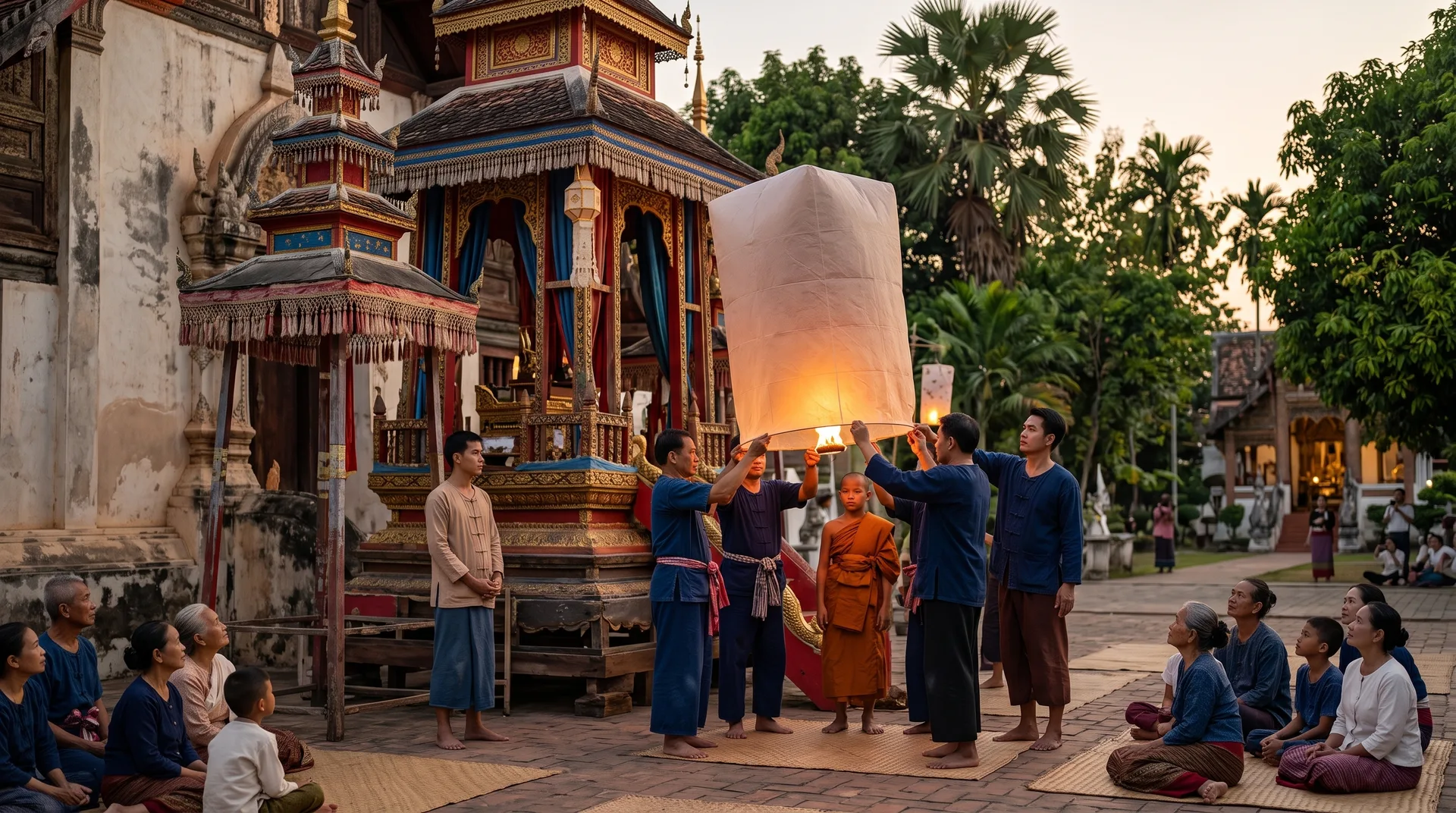
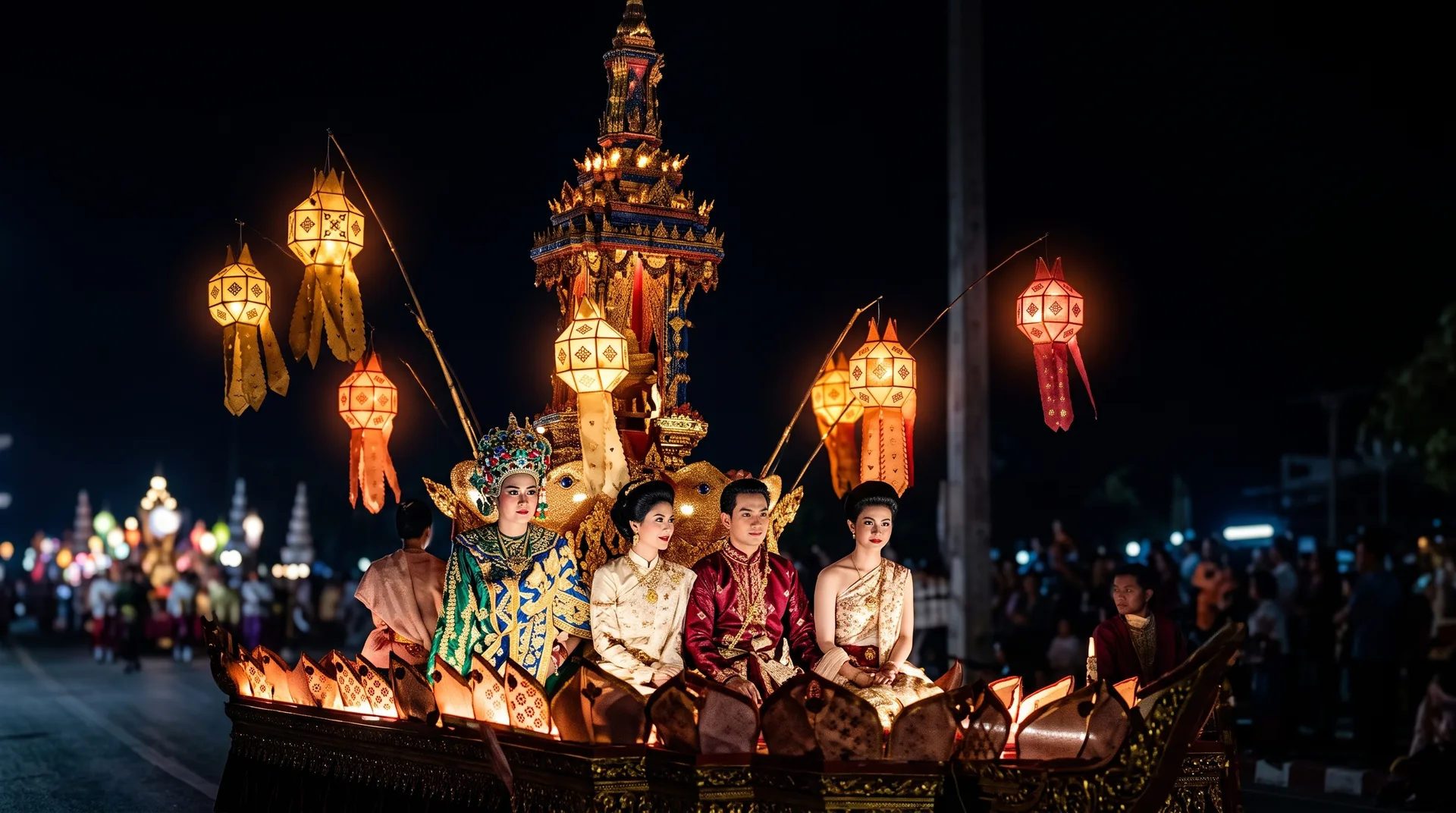
For the villagers, the monastery grounds are decorated with lanterns and chandeliers, garlands of flowers are made as offerings, and gateways of banana trunks, sugarcane, and coconuts are erected; special food is prepared (such as steamed sticky rice, om curry, hangle curry, larb, and various sweets) to be offered as merit. In some places a rite of stirring "divine rice" (khao thip, or upasaka rice) is held, offered as homage to the Buddha, on the morning of the full-moon day of the second northern month. Afterward, trays of food are offered in dedication to deceased ancestors; in some places a Kathin-related offering is also made to the monks, and the Mahachat sermon is recited from the evening through the night. Floating lanterns (khom loi) are released, in what is called "wao hom" or "wao khuen" ("releasing into the sky"), and a sermon entitled "The Merits of Releasing a Lantern" ("Anisong Phai Prathet") is preached. Young men and women also set off bamboo rockets, hold rocket-firing competitions, and release sky lanterns.
The Loi Khamot Custom (Floating Lanterns/Effigies)
The Loi Khamot custom is an activity referred to in older accounts, said to resemble the central Thai custom of floating krathong: offerings and daily necessities are placed in specially made vessels or small boats, which are then set adrift on the current on the full-moon day of the twelfth month. This custom is understood to arise from an ancient belief, according to which legend recounts...
Customs of the Third Northern Month (around December)
The Kiao Khao Ao Fueang Custom (Rice Harvest)
When the rice growing in the paddies ripens to a golden colour across the fields, the harvest season begins, referred to by the villagers as "kiao khao ao fueang" — that is, the harvesting and storing of the rice for use. This harvest generally begins from around the end of November onward.
The Su Khwan Khao Custom (Rite for the Rice's Khwan/Spirit)
This is a rite to call back the khwan of the rice after the harvest, as an act of apology and gratitude toward Mae Phosop, the goddess of rice; it is also believed to prevent the rice from spoiling or being quickly used up. The rite is normally performed on the day the rice has finished being brought in from the fields, or, failing that, on the following day.
The rite of calling the rice's khwan may be performed either simply or elaborately, depending on local custom and the resources of the host. If performed elaborately, a great many offerings are prepared; generally the ritual items include chicken and liquor, together with items associated with women, such as a mirror and face powder. These offerings are placed on the altar previously used for the Haek Na rite, after which words of invocation (kham okat) are spoken — an offering-formula of thanks to Mae Phosop for the abundant harvest she has provided. In an elaborate rite, the owner of the field generally does not speak the invocation personally, but instead asks the village's ritual master (pu achan) to do so on their behalf.
The Khao Sosanakam Custom (The Rite of the Buddha Image "Entering Austerity" — Phra Chao Khao Kam)
This is a Buddhist rite practiced in Chiang Mai in which monks go to dwell in a forest cemetery or burial ground, building temporary huts in which to spend a month in retreat; during this period the monks must strictly observe the ascetic practices (dhutanga). In this rite, the monks who undertake this retreat must maintain the strictest self-restraint in every respect, so as to lessen attachment to material objects received as offerings, striving to loosen every form of attachment. At the same time, the retreat provides an opportunity for those wishing to practice meditation — novices and laypeople alike — to join in observing the precepts and meditating together, dedicating the resulting merit to their ancestors. This period of retreat is believed to coincide with the coldest time of year.
Before the Khao Sosanakam rite is held, villagers clear and clean the cemetery grounds and build small huts for the monks and those who come to practice. The abbot invites monks from neighbouring monasteries to join the rite, which generally lasts five to seven days. Because the monks are engaged in such strict ascetic practice during this period, villagers commonly believe that merit-making at this time carries especially great spiritual reward, and so a great many devout people come to make offerings. It is also considered meritorious to fetch water to bathe the monks, who endure the cold weather during this period. Activities carried out during the retreat include: paying homage to the Buddha, chanting, preaching to the assembled public, sitting in meditation beside the funeral pyre or cremation platform, performing the bangsukul robe-offering rite for the dead and the spreading of loving-kindness (metta), walking meditation, sitting in meditation within one's own hut, and receiving food as a daily observance, among other practices. The teaching sessions for the public are generally held twice a day, in the morning and at night, and may take the form of scriptural preaching, extemporaneous preaching, question-and-answer preaching, or preaching delivered in a particular chanting style and cadence. Where scriptural preaching is used, texts commonly drawn upon include the Maha Vibaka, the Malai Prot Lok, the Legend of Phraya Indra, the Mula Nibbana, or the Nibbana Sutta.
Customs of the Fourth Northern Month (around January)
The Custom of Offering Firewood to Warm the Buddha Image (Than Lua Hing Fai Phra Chao)
This custom of offering firewood to kindle a fire to warm the Buddha image is held during the cold season, since in Chiang Mai province during the fourth month (around January) the weather turns very cold, and the people, considering that the Lord Buddha (in the form of the Buddha image) must also feel the cold, join together to gather firewood and pile it up so that a fire may be lit for the image to be warmed by. The abbot has the monks, novices, and temple boys go out to gather firewood, choosing wood that is pale in colour, burns cleanly, and does not crack or spark when lit, to be used as fuel for warming the Buddha image. Popular types of wood for this purpose include khon tha wood, mok man wood, and tamarind wood, among others. Once enough firewood has been gathered, it is sorted and cut into lengths of about one cubit (sok); the pieces are then counted out to correspond to the age of the Buddha image — traditionally forty pieces — and bound into bundles. Villagers are then invited to bring firewood to offer at the monastery's vihara, piling the offerings into a tall stack; sometimes further items are added as well. When the preparations are complete, a bundle of pale firewood is brought, together with food offerings; after paying homage to the Buddha image and receiving the precepts, the wood is formally presented before the principal Buddha image. On the following day at the appointed hour, the abbot is the first to light the fire from the piled wood, striking the temple gong three times so that the villagers will know and may join in rejoicing in the merit of that occasion.
The Custom of Offering Khao Lam and Khao Chi (New Rice Offerings)
This is held in the fifth northern month, on the fifteenth waxing day (the full moon of the sixth month — approximately January), after farmers have finished their rice-farming work; a rite is performed to offer the new rice (than khao mai), so that the monks may eat food prepared from rice newly harvested from the fields — such as khao chi (grilled sticky rice), khao lam (rice steamed in bamboo), khao tom (boiled rice dumplings), khao tom kathi (coconut rice dumplings), khao lam mok (a steamed sweet, similar to khanom thian), and khao tom mai oi (rice dumplings with sugarcane). These foods are brought to be offered to the monks together with other savoury dishes; at the same time, this offering of rice — that is, the presentation of food — is dedicated as merit to the deceased.
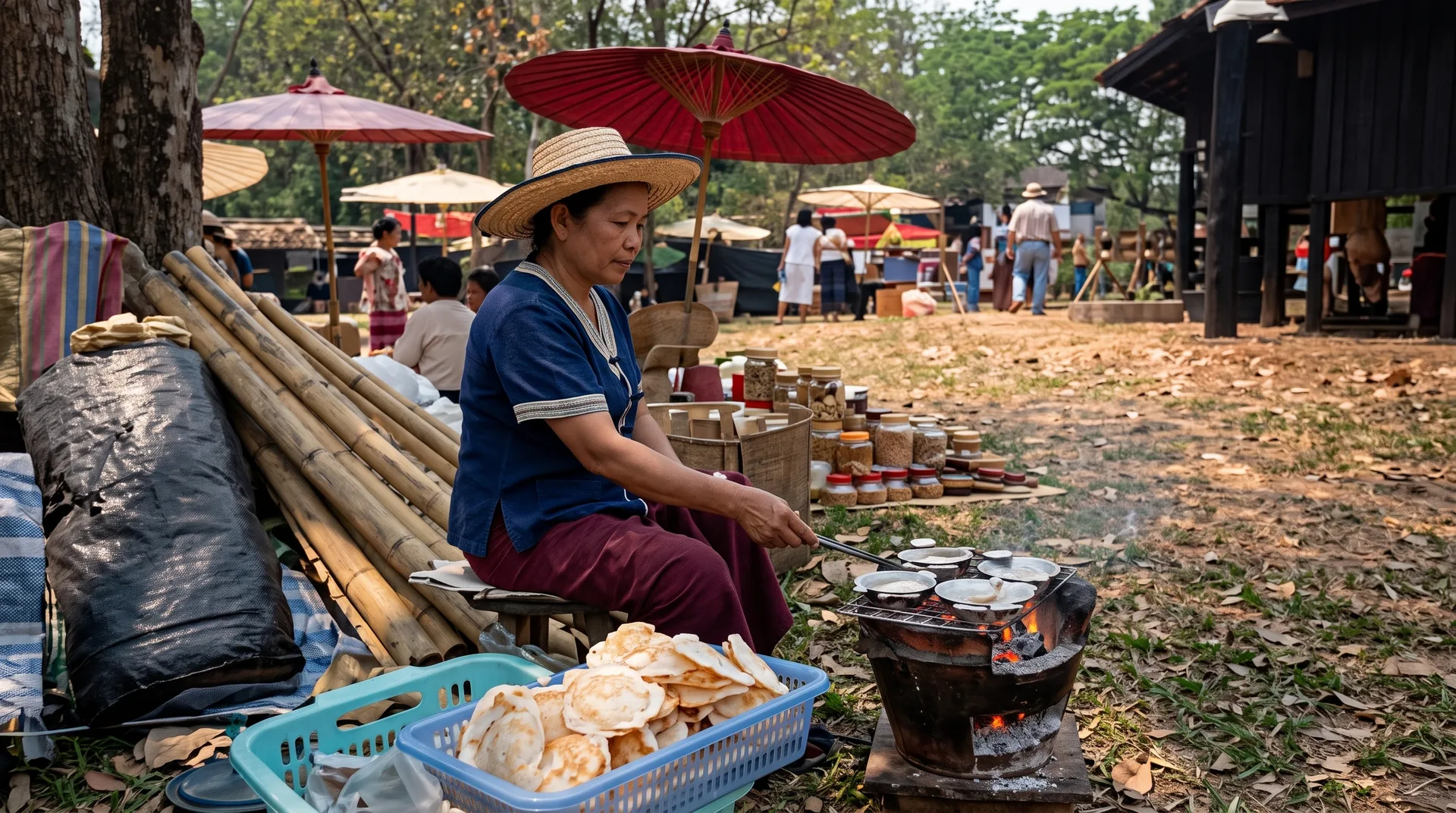
Khao Chi is made by skewering a ball of sticky rice on the end of a stick and grilling it over glowing coals so that the surface becomes crisp and fragrant. Khao lam, meanwhile, is sticky rice cooked inside a length of bamboo: the rice, previously soaked in water since the evening before, is packed into the bamboo tube; by morning the soaked rice has swollen fully and become fragrant. The bamboo tube is then roasted over glowing coals until the rice is cooked; when it is time to eat, the tube is peeled by shaving away the charred outer layer of bamboo, leaving a thin layer of bamboo still wrapped around the cooked rice within.
On the day of the rite, villagers rise early to prepare the cooked khao chi and khao lam, along with other offerings — flowers, food, and fruit. Once everything is ready, together with water for the merit-dedication pouring rite, everyone proceeds to the monastery. Once gathered there, a sermon accompanies the merit-making with khao chi and khao lam; the offerings are first presented to the monks to eat, after which a sermon is given recounting and extolling the merit of this offering of khao chi and khao lam.
Customs of the Fifth Northern Month (around February)
The Poi Luk Kaeo or Poi Noi Custom (Novice Ordination Celebration)
(Pronounced "poi luk kaeo" or "poi noi") — this is a celebration held in connection with the rite of ordaining boys as novices, generally held during the fifth, sixth, seventh, and eighth northern months — that is, roughly from February to May. The purpose of the celebration is to honour temple boys (called luk sit wat) who have served the monks at the monastery for a long time and who have gained merit through studying the Pali language and scripture; the monastery, together with senior relatives, jointly arranges the ordination ceremony to bring the boy into the Buddhist monkhood as a novice.
Once a firm date has been set, the parents or elders sponsoring each boy's ordination prepare the eight requisites (atthaparikkhara) needed for the newly ordained novice, along with the full ordination outfit, comprising: one lower robe (sabong), one upper robe (chiwon), one shoulder cloth (angsa), an alms bowl, a needle case, a water-strainer knife, and prayer beads (or a monastic belt, which is optional); offerings of veneration (formerly presented at six locations, today at three); an arrangement of flowers in a basket to be placed in the tray used for requesting ordination; a further set for the monastic requisites and precepts; and a further set for the attending sponsor.
The boy to be ordained must, meanwhile, prepare himself by memorizing the words of the ordination request during the period he serves as a temple boy, and must be able to read Pali script during this time as well; after ordaining, he must be able to read the texts of the Dhamma scriptures, along with the monastery's chants, and must practice proper deportment and the correct manner of paying respects, so that he will conduct himself correctly once he has entered the monastic state.
Before the day of the ceremony, there is a custom called "aew tham um," in which the monastic requisites that have been purchased are displayed for others to view; a procession, which may include a drum procession, travels through the neighbouring villages to announce the merit-making occasion.
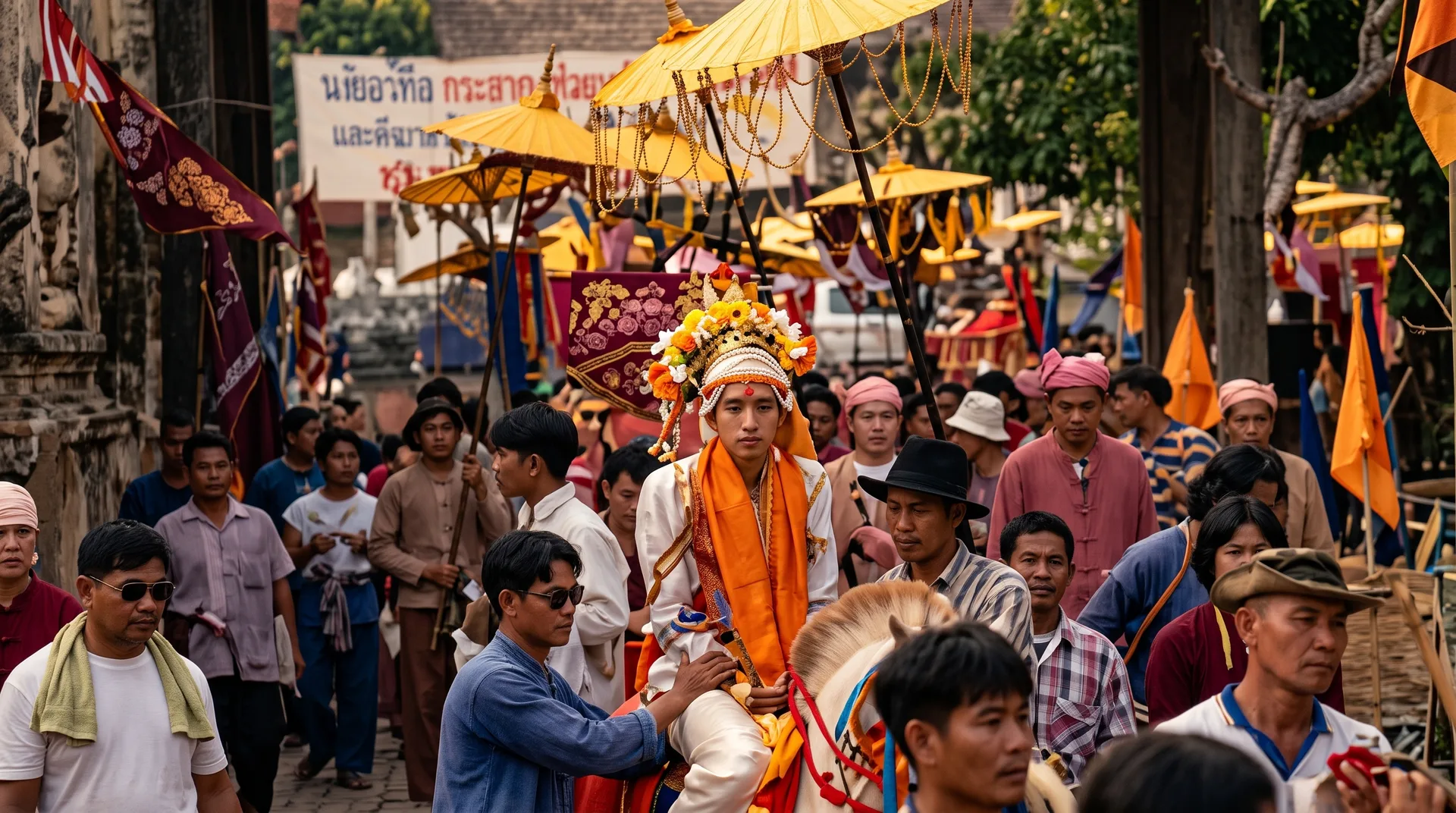
On the day of the ceremony, the sponsoring family gathers together at the monastery, bringing the boy to be ordained dressed and adorned to represent Prince Siddhartha at the moment of his renunciation, wearing splendid ornaments, anointed with perfume, and fully made up with powder — this figure is called the "look kaeo" (jewel child), representing Prince Siddhartha at the moment of leaving to become a monk, mounted, like his horse Kanthaka, on a companion who carries him. The look kaeo is paraded around the village, calling at the homes of respected elders who are asked to hold him aloft...
The Poi Khao Sang Custom (Khao Songkh — for Those Who Died an Unnatural Death)
This is a merit-making occasion to dedicate merit to the deceased who died through accident or in some other abnormal manner, including death during childbirth — since it is believed that the souls of such people are not at peace. Those who remain — a surviving spouse or children — will often invoke the departed spirit and arrange a religious rite to provide for it after death, according to what is deemed fitting, or when it is learned that the family's means allow, and this may be held to coincide with the anniversary of the death, though it is more commonly held to mark the anniversary year. The Poi Khao Sang is arranged as an occasion to make merit dedicated to the deceased; beyond the recitation of the Dhamma, a further rite of merit-dedication for the deceased follows afterward.
For the Poi Khao Sang, the sponsoring family prepares offerings of lay requisites suited to this belief, commonly in the form of a miniature model house furnished with a complete set of household items — bedding, pillows, mosquito net, cups and bowls, clothing, shoes, a mirror, a comb — together with provisions such as rice, fish, and other food, as well as betel and cigarettes, prepared in full. In the case of a woman who died in childbirth, since she is regarded as carrying a heavy karmic burden, a model boat about five metres long and two metres wide is built, equipped with fishing tackle and other implements placed within it, in the belief that the boat will carry her to a fortunate rebirth, the implements serving as tools for her to use for sustenance along the way.
For those who died suddenly by whatever cause, the sanghadana offering dedicated to them must include both raw and cooked provisions. As part of the merit-making, both the raw-provisions and cooked-provisions offerings are presented to the monks — for example, eight sanghadana sets offered to nine monks, and so forth — and further offerings are made for the monastery's preaching requirements, with additional sermon-chapters (kan thet) sponsored corresponding to the number of Dhamma texts, Vibhanga sections, or portions of the Tipitaka recited; a large number of monks may be invited to chant the texts simultaneously. The sponsoring family announces the merit-making to relatives and neighbours so that they may join in. It is customary to bring in local entertainment, such as fon mueang folk dance, to provide enjoyment for those attending. The rite is generally held over a single day, beginning with the lighting of incense and candles in homage to the Triple Gem, requesting the precepts, requesting the Dhamma, and listening to a sermon; the lay leader (marakanayok) then conducts the rite of asking forgiveness in connection with the lay offerings, after which the words of merit-dedication are spoken, beginning with an invocation of the deities, homage to the Triple Gem, a statement of the purpose of the merit-making, and finally the dedication of the resulting merit.
The Poi Lo Custom (Funeral of a Senior Monk)
This is a custom held for the cremation of a monk who has passed away, arranged to commemorate his virtue and good deeds before the cremation of his remains takes place. It is held specifically for monks of standing (in terms of seniority, or vassa) who are held to have rendered fitting service to society. The community of the faithful and the temple boys undertake all the preparations, inviting everyone to join in making merit, offering food to the monks who come to take part in the rite, feeding those who attend, and giving those of good will the opportunity to contribute donations according to their means. The distinguishing symbol of the Poi Lo is the "prasat" (pronounced "phasat"), a large funeral structure, meru, built with great and intricate craftsmanship to house the remains of the deceased monk. The prasat is commonly built in the form of the hangsa-diliṅga bird (nok hatsadiling), popularly called by villagers "nok sak," which is set upon a platform and further mounted upon a wheeled bier constructed of bundled logs (resembling a kind of sled or cart).
At the Poi Lo, religious rites and various forms of entertainment continue for around three to seven days, after which the prasat (the funeral structure) is drawn to the cremation ground designated for the occasion — a temporary site, an open field not far from the monastery. During the event, religious rites and entertainments continue for around three to seven days before the prasat is drawn to this temporary cremation ground. The community of the faithful together pulls the prasat containing the remains along a specially prepared path, and a small gong (kangsadan) leads the procession. Along the way there is a custom called "ngan ngoen" — the scattering of alms, in which coins are inserted into hollowed-out limes and then thrown into the crowd of those gathered for the rite; whoever retrieves one is entitled to keep it. It is said that this scattered money is auspicious money, which people commonly keep as a memento.
This is called "ngoen than thung," or "bag money." When the prasat structure reaches the cremation ground, the customary rite of the bangsukul robe-offering is performed before the cremation itself. For a monk's cremation, there is a further special feature: long poles are set up "to the full length spanning..."
Khanop Prapheni (Established Customs) (continued)
The Poi Lo Custom (continued)
"the full length" (poles as long as can be obtained), four in number, planted at the four corners of the cremation platform; robes are draped along their tops, while at the base of the platform where the prasat rests, robes are likewise spread out. This is done in the belief that with robes hung above and spread below, the heat of the fire will be prevented from rising to heaven or descending to the underworld. Fireworks are set off — bok fai chang rong (trumpeting-elephant rockets), bok fai chakachan (cicada rockets), bok fai thong dan, bok fai salap nu, and others. Once the prasat has burned, people rush to gather pieces of the fire-touched relics; the four corner poles, as the fire spreads and consumes them together with the robes, are likewise taken by villagers as sacred and auspicious mementos to carry away.
The Poi Lo custom is regarded as an occasion of great merit, one through which devout Buddhists express their reverence for monks who are objects of respect and veneration among the general public. Carrying out the whole of this undertaking requires the cooperation of every party involved, for however exalted the ecclesiastical rank of the deceased monk, the ceremony — and indeed the number of people who come to take part — must be correspondingly large, and the greater the event, the greater the undertaking required. Everyone must contribute their wealth, their physical effort, and their goodwill toward carrying it through to completion, so that merit may accrue to all. Some may sponsor the building of the cremation structure; some may sponsor the printing of commemorative texts; others may sponsor the purchase of scriptural texts, or the sandalwood flowers used in the rite; and even those who contribute in smaller ways are reckoned to add to the merit of this, one further great occasion.
Customs Relating to Life
Customs of Birth and Childbirth in Lanna. These are practices long upheld though never recorded in writing. Birth was a matter of the greatest importance: in ancient times, when medical science had not yet advanced, each delivery carried mortal risk. Many of the practices observed by a pregnant woman, and after childbirth, have today largely faded from use; even in rural areas where some such practices remain observed, this is done for the sake of the safety of mother and child. It must nevertheless be acknowledged that such inherited customs were well suited to the thinking of the people of that era; anyone who failed to follow the customs long upheld would be regarded as behaving disrespectfully, or as failing to honour their grandparents and ancestors, which was believed to invite misfortune upon body and mind alike — that is, to constitute a breach of custom.
In preparing for the birth, the first step was to arrange the birthing room. Above the room a red bow or a golden amulet-charm against evil spirits would be hung; a "talaew" (woven bamboo star, a ward against evil) would be affixed, along with green branches at the doorway, and any new or repaired section of wall or floor beneath the birthing room — which also served as the room in which the mother would rest during her month of confinement — would be encircled with thorny "sa" (rattan) branches, in the belief that this could ward off anything that might bring harm.
Regarding the delivery itself, there was a belief that if the midwife (or attending helper) faced north, or east, in the same direction as the doorway, the delivery would go more easily. In the delivery room, besides the mother, only the midwife (mae chang) and a few close relatives would be present. Once the child was born, it was customary to have a monk record the date, month, and year of birth on a palm-leaf manuscript, called the "bai chata" (horoscope leaf).
Once the child was born, those assisting the midwife had to press down on the mother's abdomen to prevent the placenta from rising too high; if it seemed the placenta was rising too far, the midwife would use a carrying pole pressed against the solar plexus to prevent this, so as not to obstruct the mother's breathing and risk her life.
If the placenta would not come out, betel leaf would be rolled and inserted to induce the mother to cough it out; if this failed, a pillow would be used to help expel it; if that too failed, pressure would be applied with both hands; and if after all this the placenta still would not come out, a traditional healer skilled in such matters would be sought to administer a remedy. As long as the placenta had not emerged, the midwife would not yet cut the umbilical cord, for fear that the cord might slip back inside and endanger the mother's life, or that the cord might remain caught within the child's body. The umbilical cord, called in Lanna "sai kae" or similar, was also believed to foretell the child's future — for example, if a boy was born with the cord looped around his neck, this was taken as an omen that he would be ordained into the monkhood.
Once delivered, the midwife would hold the child and clear the mucus fully from its mouth and throat; if this was not done thoroughly, it was feared that as the child grew it would speak with a hoarse, unresonant voice, and might also become slow-witted. Once the mouth had been cleared, the child would be wrapped in cloth; afterward, once the placenta had emerged, the mother — exhausted from the labour — would rest, leaving the midwife to attend further to the child and the umbilical cord.
Once the child was born, the umbilical cord had to be tied off with black thread at two points before being cut in between; the cutting, too, had to be done at a prescribed measure — it was said that if this were not done correctly, the child would grow up to be quick-tempered. [The passage here is fragmentary in the source, concerning a cleansing rite and the wrapping of the newborn, placed in a winnowing basket.] Afterward, a rite called "khai lae on" was performed at the house: the winnowing basket would be gently shaken while words of prognostication were murmured; the child would then be set down, and it would be said: "If this is the child of the spirits, of the termite-mound spirits, take it back now" — and then someone present, a relative, would answer on the child's behalf: "This child is mine, I shall take it," whereupon the child would be carried into the room prepared within the house. The person who receives the child in this way is called the "mae rap" (pronounced "mae hap," the receiving mother).
Once the child had been delivered, the cord cut, and the bathing completed, the midwife would see to the disposal of the placenta. It was believed that if the placenta were not properly cleaned, the child to whom it belonged would suffer discomfort or trouble as well. Once thoroughly cleaned, it would be placed inside a length of bamboo. [The passage describing the burial of the placenta is fragmentary in the source.] The child's father would generally be the one to bury it; it was not customary to bury the placenta at the foot of a tree away from the house, since it was believed that doing so would cause the child, once grown, to remain attached to hearth and home. When the father carried the placenta to bury it, it was considered auspicious if he held it in his right hand, as this was believed to make the child right-handed.
As for the length of umbilical cord still attached to the child, once it fell away naturally the father would hang it up to dry, wrapped in white cloth, and keep it. Once there were several siblings in the family, the dried cords of each child would be combined, or ground and mixed into water for all the children to drink, in the belief that this would make the siblings love one another, never quarrel, and always be ready to help each other in whatever they undertook.
When a child was newly born, some mothers did not yet have milk to nurse the infant. The first thing given to such a child to eat was roasted and ground "khi maseb" (a traditional preparation, likely a roasted seed or herbal substance) dissolved in water; this roasted khi maseb was regarded as a remedy to help clear the infant's first stool (meconium). In some places, honey mixed with water was used instead, given to the child to suck from a clean cloth dipped in the honey-water. If it was a first delivery, the mother's milk might be slow to come; the nipples would be gently drawn out two or three times to help bring the milk in. If several days passed after birth and the child still had no milk, the child would be carried to a woman who had given birth around the same time, or such a woman would be brought to the house, so that she could nurse the child in the meantime; most people did not consider this practice objectionable, and were willing to help one another in this way.
When there was uncertainty as to whether a mother would have enough milk to nurse her child, herbal remedies or other substances believed to promote milk production would be sought out. According to one recipe, two days after the birth, banana flower would be boiled and given to the mother to eat; according to another recipe, [the remainder of this passage is fragmentary in the source, concerning a preparation intended to ensure the child would be well and abundantly nourished].
Customs Relating to Death. In ancient times, when a death occurred within a lineage, the descendants of the deceased would typically express their grief and mourning through loud wailing and lamentation, called "thui" (a resonant crying-out). When villagers heard the sound of thui, they understood this as a signal that a death had occurred, and would come to help with every necessary task — from the ho loi (washing of the body), to preparing the site, to helping make the coffin (mai), through to carrying the body away for burial or cremation according to custom.
In ancient times, the bodies of ordinary people were, it seems, invariably buried, never cremated; cremation was reserved solely for the case of monks, kings, and senior nobility. When a death occurred, relatives would arrange the funeral rites and merit-making, generally held at the home, inviting monks to conduct nightly chanting; and when the appointed day arrived, the body would be taken away — for burial or cremation — in what was called "lak sop" ("dragging/drawing the body"), that is, the method of moving the body using a wheeled cart or sledge, which in ancient custom was reserved for moving the bodies of nobility or the wealthy, while ordinary people had their dead carried on a bier.
A woven covering resembling a large lid (mae kwak khuai) would be placed over the body, decorated attractively with flowers and patterns as appropriate. Once a suitable day had been determined, the body would be carried to the burial ground (pronounced "pa cha") for burial. Because burial, rather than cremation, was the method used for the dead in ancient custom, the term used in this connection is an old word meaning "to bury" or "the body."
In the case of a family of lesser means, a shan (a carrier who builds the bier stand, the platform on which the body rests) would be engaged, or invited, to build a two-tiered funeral structure (prasat lang klai, pronounced "phasat lang kai") to hold the body and carry it to the burial ground. Later, it became the practice to mount such a structure on a wheeled frame, sometimes drawn by an ox-cart, and carried to the burial ground in this way. Once the structure carrying the body had been fully prepared and decorated, if the religious rite was held in the morning, the body would be moved around midday; but if the rite was held in the afternoon, the body would be moved around 3:00 p.m. Villagers would attach two lengths of white cotton cord to the wheeled bier carrying the body — called the "phai chung phi" ("cord that leads the spirit") — by which the body would be drawn toward the burial ground. In some places the procession would include a vehicle bearing a canopy resembling a heavenly conveyance to lead the way to the burial ground, with a monk seated aboard, reciting scripture all along the route.
For those without means, a similar arrangement was made: a shan would be engaged to build the two-tiered prasat structure to hold the body and carry it to the burial ground; later such structures also came to be mounted for transport by ox-cart in the northern manner, drawn as a "royal cart" (lak rot luang), following the same method. If the religious rite was held in the morning, the body would be moved around 1:00 p.m.; if in the afternoon, around 3:00 p.m. Villagers would attach cords for those drawing the body to the wheeled bier, forming two lines called the "phai chung phi," and novices ordained alongside a lay sponsor would help draw the procession to the burial ground; in some places the procession included a canopied vehicle, with a monk seated aboard reciting scripture throughout the journey.
The Kin Khaek Taeng Ngan Custom (Wedding Feast — "Taking a Husband, Taking a Wife")
"Ao Phua Ao Mia" refers to a young man and woman living together as husband and wife. Before a young Lanna couple decides to form a new household, beyond the two parties weighing their mutual regard for each other's appearance, temperament, and material means, together with the web of kinship and social ties within the village, and a mutual affection born of courtship and shared company, they must also take into account matters of belief — in particular, methods of divining fortune, compatibility, and the prospects for married life. This includes consulting the day, month, and year of birth to determine whether the couple's signs are friendly or hostile to one another; there exist treatises for reading whether the birth dates of a young man and woman are compatible or not. If the birth dates of the couple are found to be in conflict, it is believed that the marriage will not prosper, and if the couple's birth dates are determined to be mutually hostile, this is believed to lead to the failure of the marriage.
The Khuen Heuan Mai Custom (Moving into a New House / House-Warming)
The custom of khuen heuan mai, or moving into a new house, refers to the act of taking up residence in a newly built home. The first step is to seek an auspicious time and a favourable day; it is customary to move into a new house during an even-numbered month, such as the second, fourth, or sixth month; in the city, the most favoured time is the twelfth month (the twelfth month of the central Thai calendar).
As for inviting monks to the house-warming ceremony, ancient custom favoured inviting a single monk to conduct the religious rite for the occasion; the rite is generally arranged as a procession into the house. The host family prepares a Buddha image, valuable items, a vessel of husked or unhusked rice (one basket-load), and bedding — mattress, pillow, and mosquito net — gathering these together beforehand so that they may be carried into the new house at the auspicious hour. In addition, the host may arrange for people bearing auspicious names — such as Dee ("good"), Kaeo ("crystal/jewel"), Kham ("gold"), or Hin ("stone") — to join the procession. The order in which items are carried into the house may also be chosen according to the day of the move, as follows: on a Sunday, one eats a meal first, then enters, with an honoured elder leading the way into the house first; on a Monday, a tray of flowers or fragrant items is carried in first; on a Tuesday, [the text here is fragmentary, concerning an item carried in first]; on a Wednesday, rice seed is carried in first; on a Thursday, books are carried in first; on a Friday, husked rice is carried in first —
or, alternatively, white flowers are carried in first; on a Saturday, a stone and [an item, unclear in the source] are carried in first; in some versions, the head of the household feigns anger and has his wife and children enter first. When the appointed hour arrives, the person carrying the tray with the Buddha image leads the way and places it upon the altar prepared for it; the other household items are then carried in, in their turn. After this, the ritual master (pu achan) and the monks direct the ceremony to proceed according to custom — the taking of the precepts, the dedication of offerings, the chanting, the blessing bestowed upon the new home, and finally the sprinkling of consecrated water throughout, in due order.
Terra Lanna Travel was founded out of a love for Lanna history and culture. We believe the stories of the northern land — its legends, traditions, temples, and the way of life of those who came before us — are a precious heritage worth recording, preserving, and passing on to future generations. That is why the core content of this website is centered on travel, history, and culture articles about Lanna.
Hotels & Tours: A Supporting Role
The hotel accommodations and tour programs featured on this site are a supplementary source of income, used to develop and maintain the website so it can continue in the long run — they are not our primary purpose.
Our Role
Our main role is to tell stories and share knowledge about Lanna history, so this cultural heritage can be preserved, protected, and passed on to future generations. We also translate our content into multiple languages so that international readers with an interest in Lanna culture can access and learn these stories too.
About Our Images
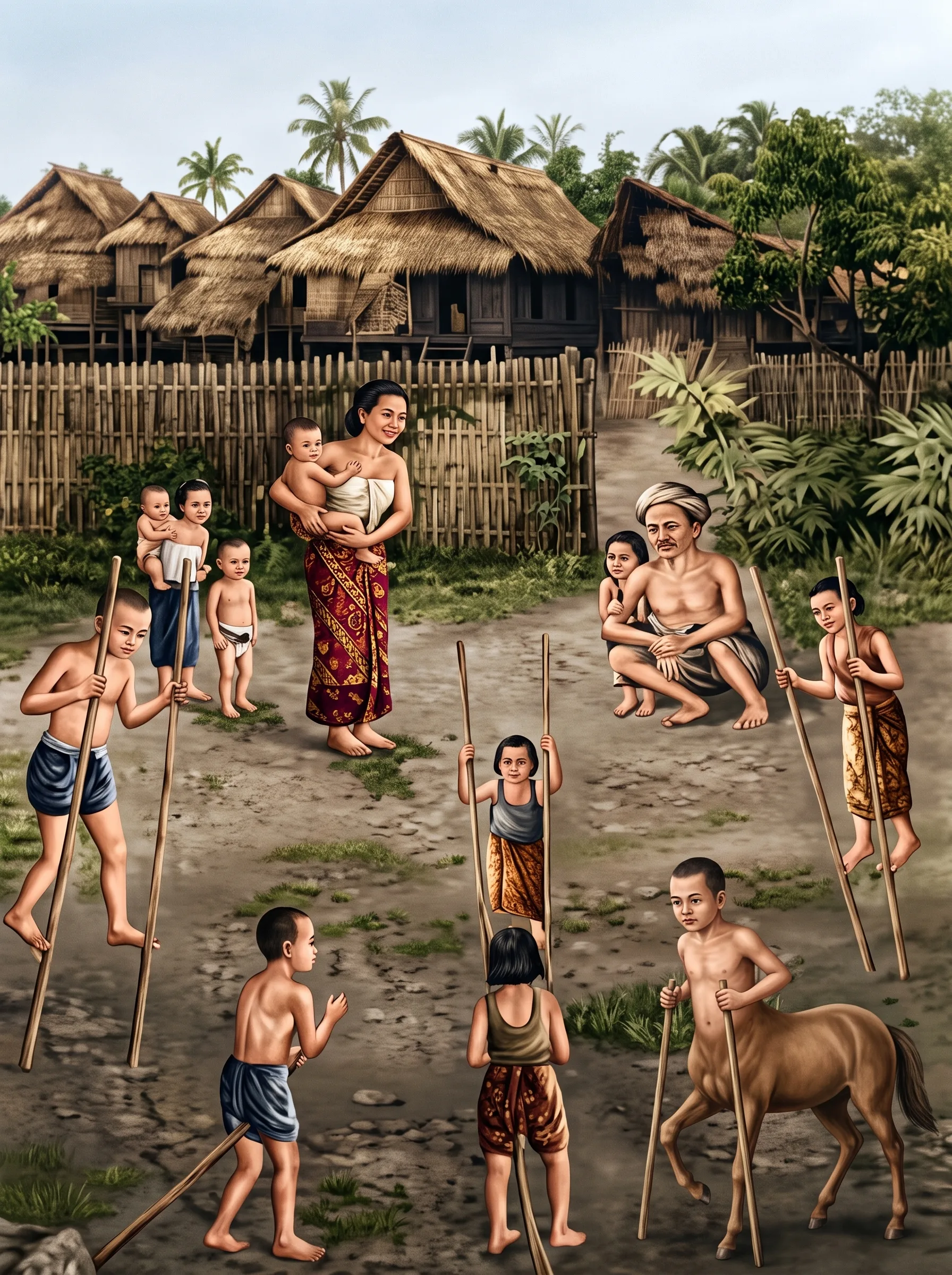
The images on this website include both genuine photographs and images restored using AI technology from old black-and-white photographs, so readers can see the atmosphere of those eras more clearly and vividly.
Privacy Policy / นโยบายความเป็นส่วนตัว
Last updated: 26 April 2026 | อัปเดตล่าสุด: 26 เมษายน 2569
This site contains affiliate links to Agoda, Viator, and Trip.com. When you click these links and make a booking, we may earn a commission at no extra cost to you. Hotel prices (Agoda) and tour prices (Viator) shown on this site are live prices pulled directly from our partners; Trip.com prices require clicking through to the partner's own site. Affiliate cookies are only set when you click these links directly.
คุกกี้สถิติและการวิเคราะห์ (Analytics Cookies): วิเคราะห์แนวโน้มการเข้าชมหน้าเว็บเพื่อปรับปรุงคุณภาพเนื้อหา ผ่าน Google Analytics (G-CSV1H77PY8)
We use cookies and similar technologies to enhance your browsing experience:
Preference Cookies: Remember your selected language and cookie banner consent status.
Analytics Cookies: Help us understand audience engagement and improve article quality via Google Analytics.
5. นโยบายโฆษณา Google AdSense / Google AdSense Advertising Disclosures
เว็บไซต์นี้ใช้บริการโฆษณาจาก Google AdSense เพื่อสนับสนุนการดำเนินงานและการผลิตเนื้อหาคุณภาพ เพื่อให้เป็นไปตามข้อกำหนดและนโยบายความเป็นส่วนตัวของ Google เราขอแจ้งให้ผู้ใช้ทราบดังนี้:
ผู้ให้บริการภายนอก ซึ่งรวมถึง Google ใช้คุกกี้ (รวมถึง DoubleClick cookie) เพื่อแสดงโฆษณาตามประวัติการเข้าชมเว็บไซต์นี้หรือเว็บไซต์อื่นๆ ในอินเทอร์เน็ตของผู้ใช้ในอดีต
การใช้คุกกี้เพื่อการโฆษณาช่วยให้ Google และพาร์ทเนอร์สามารถแสดงโฆษณาที่เกี่ยวข้องและตรงกับความสนใจของผู้ใช้ อิงตามประวัติการเข้าชมเว็บไซต์ของเราและ/หรือเว็บไซต์อื่นๆ ในเครือข่ายอินเทอร์เน็ต
ผู้ใช้มีสิทธิ์เลือกปิดการใช้งาน (Opt-out) โฆษณาที่ปรับแต่งตามโปรไฟล์ความสนใจส่วนบุคคลได้ทุกเวลา โดยเข้าไปที่ Google Ads Settings หรือเข้าไปที่เว็บไซต์ www.aboutads.info เพื่อปิดการใช้คุกกี้ของผู้ให้บริการภายนอกสำหรับการโฆษณาตามความสนใจ
This website partners with Google AdSense to display advertisements. In strict accordance with Google AdSense Publisher Policies, please be advised:
Third-party vendors, including Google, use cookies (including the DoubleClick cookie) to serve ads based on a user's prior visits to this website or other websites across the Internet.
Google's use of advertising cookies enables it and its partners to serve personalized ads to users based on their visits to our site and/or other sites on the Internet.
Users may opt out of personalized advertising at any time by visiting Google Ads Settings. Alternatively, users can opt out of a third-party vendor's use of cookies for personalized advertising by visiting www.aboutads.info.
Terra Lanna Travel Chiang Mai — เชียงใหม่, ประเทศไทย
Terms of Service / ข้อกำหนดการใช้งาน
Last updated: 25 September 2026 | อัปเดตล่าสุด: 25 กันยายน 2569
1. เกี่ยวกับบริการของเรา / About Our Service
Terra Lanna Travel Chiang Mai ("เรา", "Terra Lanna") ให้บริการเว็บไซต์ที่รวมหลายส่วนเข้าด้วยกัน ได้แก่ ที่พัก Nampiangdin Boutique Hotel ทัวร์ฟาร์มออร์แกนิกที่ลำพูน โปรแกรมทัวร์คัดสรร ไดเรกทอรีโรงแรมพร้อมราคาสดจากพาร์ทเนอร์ บล็อกเรื่องราวเชิงวัฒนธรรมล้านนา และ "ห้องสมุดล้านนา" ซึ่งเป็นคลังหนังสือประวัติศาสตร์/วัฒนธรรมล้านนาที่แปลและเรียบเรียงขึ้นใหม่ การใช้งานเว็บไซต์นี้ถือว่าคุณยอมรับข้อกำหนดฉบับนี้
Terra Lanna Travel Chiang Mai ("we", "Terra Lanna") operates a website combining several parts: Nampiangdin Boutique Hotel accommodation, organic farm tours in Lamphun, curated tour programs, a hotel directory with live partner pricing, a Lanna culture blog, and the "Lanna Library" (ห้องสมุดล้านนา) — a collection of translated and re-edited Lanna history and culture books. By using this website, you agree to these Terms.
2. เนื้อหาบล็อกและห้องสมุดล้านนา / Blog & Lanna Library Content
บทความบล็อกและหนังสือใน "ห้องสมุดล้านนา" เป็นผลงานที่เรียบเรียง แปล และดัดแปลงขึ้นโดย Terra Lanna จากแหล่งข้อมูลประวัติศาสตร์/วรรณกรรมล้านนาสาธารณะ โดยมีเจตนาเพื่อการสานต่อและอนุรักษ์วัฒนธรรมล้านนาให้เข้าถึงได้ในหลายภาษา เนื้อหาที่แปล/เรียบเรียงใหม่นี้เป็นลิขสิทธิ์ของ Terra Lanna ส่วนผลงานต้นฉบับยังคงเป็นของผู้ประพันธ์/สำนักพิมพ์เดิมตามที่ระบุไว้ในแต่ละเล่ม รูปภาพประกอบบางส่วนเป็นภาพถ่ายจริง และบางส่วนสร้าง/บูรณะขึ้นด้วยเทคโนโลยี AI จากภาพถ่ายเก่าขาวดำ (ดูรายละเอียดที่หน้า About Us) เนื้อหาทั้งหมดจัดทำขึ้นเพื่อวัตถุประสงค์ด้านการศึกษาและวัฒนธรรม ห้ามคัดลอกหรือนำไปเผยแพร่ซ้ำเพื่อการค้าโดยไม่ได้รับอนุญาตเป็นลายลักษณ์อักษร
Blog articles and books in the "Lanna Library" are compiled, translated, and adapted by Terra Lanna from public Lanna historical/literary sources, with the intent of continuing and preserving Lanna culture in multiple languages. This translated/re-edited content is copyrighted by Terra Lanna; original source works remain the property of their original authors/publishers as credited within each volume. Some accompanying images are genuine photographs, while others are AI-restored or AI-generated from old black-and-white photographs (see the About Us page for details). All content is produced for educational and cultural purposes. Copying or commercial redistribution without written permission is prohibited.
3. การจองผ่านลิงก์พาร์ทเนอร์ / Bookings via Partner Links
Hotel (Agoda) and tour (Viator) prices shown on this site are pulled live from our partners, but the actual booking is completed on the partner's own website and is governed by that partner's own terms and cancellation/refund policy — not Terra Lanna's. We act only as an affiliate referrer and are not a party to that booking contract, and are not responsible for service issues, cancellations, or disputes arising from the partner. (See Privacy Policy for affiliate commission details.)
You may not use this website to: violate Thai or applicable law, scrape or bulk-extract content without permission, or attempt unauthorized system access.
We provide information on this website "as is" and make reasonable efforts to keep it accurate and current, but do not guarantee that content, prices, or availability are correct, complete, or error-free at all times. To the maximum extent permitted by law, Terra Lanna is not liable for indirect, incidental damages, or loss of profit arising from use of this website or our partners' services.























 ภูมิปัญญาดินอินทรีย์ · 4 นาที