★ 9.4/10 EXCEPTIONAL ON AGODA & BOOKING.COM • ROYAL FLORA RATCHAPHRUEK CERTIFIED
Overnight Nature Farmstay • KAS Farmstay
KAS Farmstay (Private Farmstay Tent & Campfire)
Experience a peaceful private farmstay amidst our organic orchards in Lamphun. Cozy tent glamping, evening campfires under starry skies, and organic garden-fresh mookata BBQ. Official online booking is now live.
A collection of translated rare books on Lanna history and culture
Terra Lanna is gathering and translating rare books on Lanna history, beliefs, and way of life — preserving these stories and sharing them with readers everywhere.
Sort by:
Listen to Lanna Stories
Translating and gathering books — coming soon
Contact Us
Talk to us, or share your feedback to help us improve and grow.
Our Hotel
NampiangdinBoutique Hotel
4-Star Lanna Boutique Hotel in the Heart of Chiang Mai
★★★★ 4-Star Boutique46 Rooms15 Min from AirportFree Airport Transfer
Nampiangdin Boutique Hotel is a 4-star boutique property blending ancient Lanna architecture with modern comfort. Located in central Chiang Mai, 15 minutes from the airport, with a warm atmosphere, heartfelt service, a lush garden, outdoor pool, and a restaurant featuring local ingredients.
Rooms
Choose the ExperienceThat's Right for You
All rooms feature a private balcony, pool view, AC, free WiFi, minibar, and breakfast included
Sorted by guest review score — prices updated daily
Active & Available in Chiang Mai
Your Eyes, Ears & Boots on the Ground in Chiang Mai
Moving, investing, or sourcing in Northern Thailand? We provide what no remote tool or overseas agency can ever match: genuine local presence, native northern dialect negotiation, and zero-bias on-site execution.
Why Technology Cannot Replace Local Boots on the Ground
Overseas expats, digital nomads, and remote investors face significant friction when managing property or sourcing in Northern Thailand. Having trusted on-the-ground representation eliminates risks, protects your budget, and gives you total peace of mind.
Common Pitfalls of Managing Remotely
Misleading Listings: Online photos are frequently edited or years out of date. In reality, properties may have hidden mold, weak water pressure, noisy air-conditioning, or loud construction right outside your window.
Unwarranted Price Markups: Without local Thai and Northern dialect negotiation skills, foreigners often face inflated quotes—paying 20%–40% above true local market rates for rent, contractor labor, and artisan craft manufacturing.
Unreliable Wi-Fi Claims: Landlords routinely advertise 'high-speed internet' that turns out to be congested shared building Wi-Fi with high latency, dropping client Zoom calls and disrupting remote work.
Zero On-Site Emergency Recourse: When an air conditioner leaks, plumbing bursts, or a guest locks themselves out late at night, remote coordination across time zones is stressful and ineffective.
The Terra Lanna Advantage
Objective High-Definition Video Inspections: We physically inspect every corner of the property, testing plumbing pressure, air-con odor, noise decibels, and surrounding neighborhood conditions without bias.
Direct Native & Northern Dialect Negotiation: We speak fluent Thai and Kam Mueang directly with landlords, technicians, and workshop owners—securing authentic, fair local terms and lease conditions.
Certified On-Site Speedtests: We plug in directly to run certified Ookla Speedtests (measuring ping latency, jitter, download, and upload speeds) before you commit to any rental deposit.
Trusted Keyholding & Urgent Dispatch: Permanently stationed in Chiang Mai, ready to handle emergency lockout rescues, supervise contractors, and deliver structured photo/video reports directly to you.
Our 4 Core Capabilities
What Overseas Clients Hire Us to Do
Four specialized on-the-ground services tailored for expats, remote entrepreneurs, Airbnb owners, and international media agencies.
For Nomads & Expats
Local Fixer & Personal Assistant
Your personal problem solver in Chiang Mai. Whether you are landing soon or already living here, we eliminate bureaucratic stress, rental headaches, and language barriers.
Core Focus
Condo pre-lease walk-throughs, Wi-Fi stability tests, lease negotiation to kill farang markups, parcel reception, and initial government/immigration logistics guidance.
Key Deliverables
Detailed video walkthrough & timestamped photo inspection
Live Ookla Wi-Fi speedtest (latency, download/upload speeds)
Lease contract review & direct Thai landlord negotiation
Urgent parcel pickup, mail forwarding & local errands
Overseas retailers and interior designers import handcrafted furniture, teakwood, ceramics, and textiles from Chiang Mai artisan hubs. We are your dedicated QC eyes on the workshop floor.
Geographical Advantage
We know the back alleys of Baan Tawai, San Kamphaeng, Bo Sang, Hang Dong, and Mae Rim. We talk directly to carvers and weavers in local dialect, preventing communication errors.
Key Deliverables
In-person workshop & factory visits across Chiang Mai & Lamphun
Foreign investors who own condos or pool villas in Chiang Mai for Airbnb need trustworthy local oversight. We inspect rooms after cleaning, hold emergency keys, and dispatch trusted tradesmen.
Timezone Synergy
We chat and report to you during your evening hours overseas, then execute daytime on-site checkups and maintenance across Chiang Mai during local business hours.
Commercial film crews, YouTube creators, and high-end travelers demand secret, authentic locations away from mass tourist traps. We scout hidden temple grounds, mountain overlooks, and private chef tables.
Exclusive Synergy
Seamlessly paired with Terra Lanna's private farmstead: organic orchard walks, botanical craft liquor workshops, and private campfire dinners in Lamphun.
Key Deliverables
On-site location scouting with lighting notes, acoustics & GPS coords
From initial inquiry to completed mission in 4 simple steps.
01
1. Send Your Brief
Share your requirements, links, or address via email or the booking form below.
02
2. Action Plan in 2 Hours
We confirm feasibility, provide an exact upfront quote, and schedule the on-site mission.
03
3. On-The-Ground Execution
We drive directly to the property, factory, or location with our equipment and live status updates.
04
4. Comprehensive Report
You receive comprehensive video walkthroughs, speedtest stats, defect photos, and our honest local recommendations.
Request a Fixer or Property Inspection
Tell us what you need done on the ground in Chiang Mai. We reply within 2 hours during active daytime hours.
Frequently Asked Questions
Everything You Need to Know
Online listings in Thailand frequently feature stale photos, hidden structural/mold defects, or inflated 'Farang' prices (20%–40% above local rates). Without speaking northern Thai or being physically present to smell the room, test the water pressure, and check for noisy construction, you risk getting trapped in an inflexible 12-month lease. We serve as your unbiased on-site representative.
We cover all major expat and residential districts: Old City (Sri Phum, Phra Sing), Nimmanhaemin, Santitham, Jed Yod, Chang Phueak, Chang Khlan / Night Bazaar, Wat Gate / Riverside, Mae Hia, Hang Dong, San Kamphaeng, Doi Saket, and Mae Rim. We also travel to Lamphun artisan workshops upon request.
Standard requests are completed within 24–48 hours. Urgent same-day emergency callouts can often be accommodated depending on current schedule. Contact us via email (terralanna67@gmail.com) for rapid dispatch.
We bring a laptop and mobile testing kit directly to the unit. We connect to the actual in-room router and run certified Ookla Speedtests measuring ping latency, jitter, download Mbps, and upload Mbps. We also check 4G/5G mobile signal backup coverage inside the room.
Never. Terra Lanna maintains a zero-kickback, zero-commission policy. When negotiating rent or product costs, 100% of the discount goes directly to you. You pay us solely for our time, expertise, and transparent on-the-ground service.
We accept Wise (formerly TransferWise), standard international bank wire transfer, Thai PromptPay / QR bank transfer, and major credit cards via Stripe.
Ministry of Education and Ministry of Interior, via the Fine Arts Department, with Chiang Mai Province · 1999 CE (B.E. 2542) · Chiang Mai
Chapter 3 (VI): Religion & Local Beliefs
The five religions practiced in Chiang Mai — Buddhism, Islam, Christianity, Hinduism, and Sikhism — and local folk beliefs.
Religion, Beliefs, and Rites
The religions practiced by the people of Chiang Mai province include Buddhism, Christianity, Islam, Hinduism, and Sikhism, among others. This section gives a brief history and development of each.
Buddhism
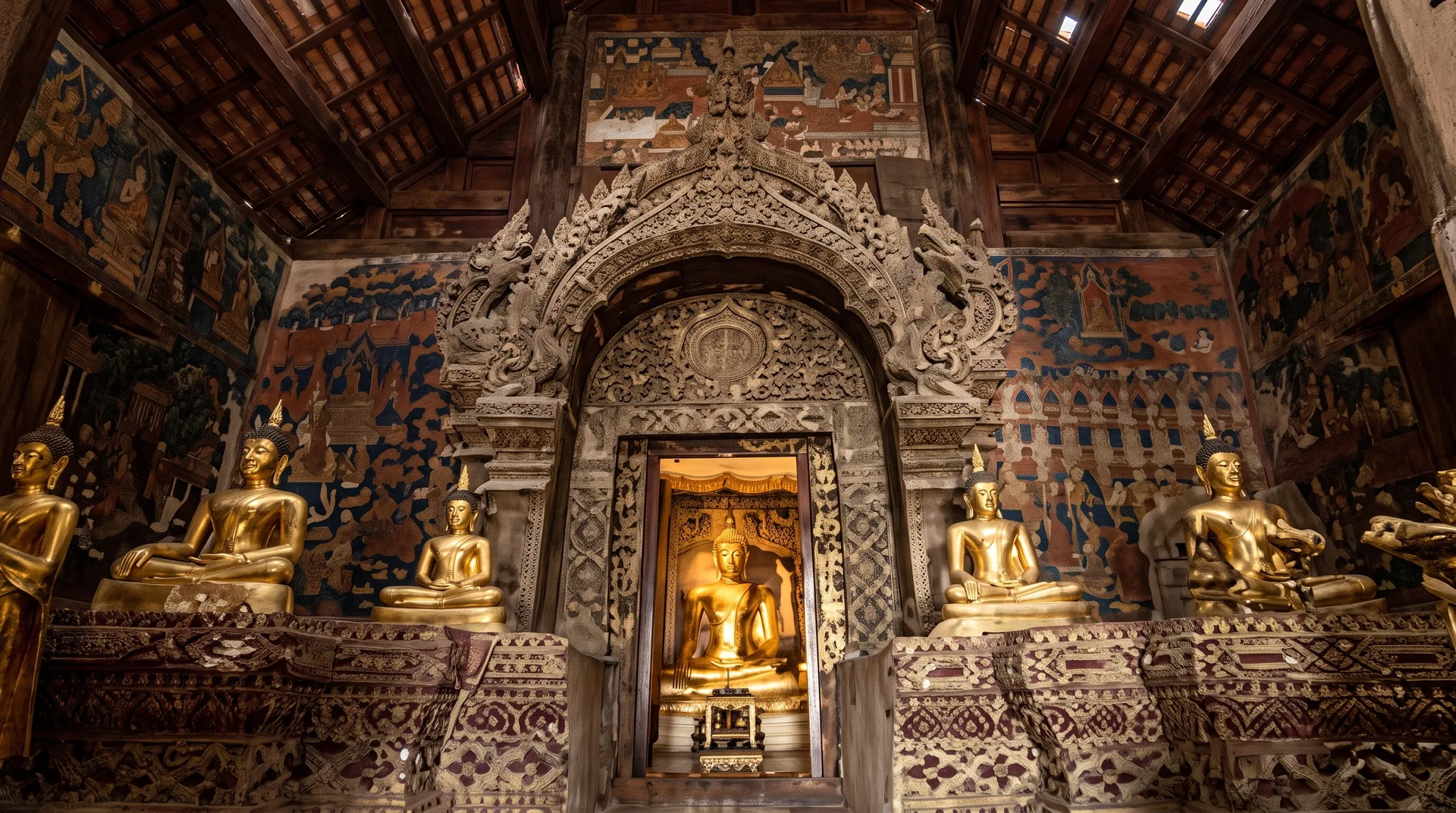
Buddhism is today the national religion and has flourished in the Lanna region since ancient times. In 1296 C.E. (B.E. 1839), King Mangrai founded the city of Chiang Mai and fostered the Buddhist religion, strengthening it further. He proclaimed that the people should perform meritorious deeds and keep the precepts, and do so constantly — with the result that the kingdom lived in peace and happiness throughout his reign.
Buddhism (continued) — Learned Elder Monks and Pali Literature
In 1456 C.E. (B.E. 1999), during the reign of King Kuena, a royal envoy was appointed bearing a letter to invite the Elder Phra Mahasumana Thera from Phra Maha Thammaracha Lithai of Sukhothai to come and proclaim the religion in the city of Chiang Mai. This gave rise to the Sinhalese (Lankavamsa) lineage of Buddhism in Lanna. Monks from various monastic communities studied the Dhamma-Vinaya, especially the Pali language, so that the monks of Lanna in that era became particularly accomplished in it.
Later, King Sam Fang Kaen ascended the throne in 1406 C.E. (B.E. 1949), and there was a greater awakening of religious education among the monks than in the preceding era. Many Lanna monks travelled to the city of Lanka to study Buddhism, and two monks from Lanka were invited to come and help propagate Buddhism in the Lanna kingdom.
King Tilokarat was the foremost patron of the religion. The Eighth World Council for the redaction of the Tipitaka was held at Wat Photharam (Wat Chet Yot) in 1477 C.E. (B.E. 2020); it is reckoned as the eighth council of the Tipitaka held anywhere in the world, convened to collect and correct the Pali Tipitaka so that it would be accurate and complete.
In 1912 C.E. (B.E. 2455), King Muang Kaeo had the consecrated boundary (sima) of the ordination hall of Wat Maha Photharam (Wat Chet Yot) established, and invited monks versed in the Tipitaka from various towns to assemble and hold a council. Subsequently Phra Phaiyasaratha Mekhala was raised to the position of Supreme Patriarch (Abhisaratha). Upon his passing, the abbot of Wat Photharam (Chet Yot) was raised in his turn to be the next Supreme Patriarch.
The Supreme Patriarch bearing the full title Phra Maha Sami Sri Konoknorot Rajakhru Chulamani Sri Silavichayutta-Mattavati Mahakaravi Pahangvongsa Samparinayaka Ratanavana-ibodi Virasumana-atulyapanya-antolathaisai Tripitaka Voramerin-korabaromdilokachan Yatisatkaronupi, Grand Ecclesiastical Head of the Lanka lineage, resident at Wat Photharam Maha Vihara (Chet Yot) — in 1483 C.E. (B.E. 2026) this Supreme Patriarch passed away. When 1527 C.E. (B.E. 2070) came, Phra Mueang Kaeo Kao, ruler of the city of Chiang Mai, held the consecration ceremony raising Phra Maha Sukhontha to be the next Supreme Patriarch.
Elder monks who were scholars of Pali (In the era of King Muang Kaeo there were elder monks who were scholars and experts in the Pali language, to the point of being able to compose various treatises in Pali. They include:)
Phra Bodhiransi Thera, a native of Chiang Mai, who composed two Pali works of the chronicle (tamnan) genre: the Camadevivamsa (Chronicle of Queen Camadevi) and the Sihinganidana.
Phra Dhammasenabodi Thera, who composed a treatise on Pali grammar entitled Saddatthajotika Pakaranayojana.
Phra Nyanakitti, who had extensive learning in the Tipitaka and was also a teacher of King Tilokarat. He composed as many as twelve works in Pali, namely: Samantapasadika-Atthayojana-tipani, Simasankinicchaya, Bhikkhupatimokkha-ganthi-tipani, Puggalapannatti-Atthakatha-Salini, Kathavatthu-Atthayojana, Yamaka-Atthayojana, Patthana-Atthayojana, Abhidhammatthavibhavani-panjika-Atthayojana, and Mulakaccayanayojana.
Phra Saddhamma-kitti Mahasuddhasa Thera, who wrote an exposition of Pali grammar entitled Saddabindu-abhinavatika.
Phra Sirimangalacariya, an elder monk of Chiang Mai whose body of work includes four lengthy Pali compositions: - Vessantaradipani, written to explain the meaning of terms in the Vessantara Jataka. - Cakkavaladipani, a treatise on the cosmos according to Brahmanical-Buddhist thought. - Sankhyapakasatika, an explanation of certain terms in the Sankhyapakasaka, a treatise composed by Phra Nyanavilasa. - Mangalatthadipani, an exposition of the thirty-eight blessings of the Mangala Sutta, divided into two parts (Book One and Book Two). This work is regarded as Phra Sirimangalacariya's masterpiece, one which scholars of Buddhism have praised as among the finest works of Pali literature in the world.
Phra Ratanapanna Thera, with three works to his name: the Jinakalamali, the Vajirasaratthasangaha, and the Matikatthasarupa-atthamangali.
Phra Nyanavilasa Thera, who composed the Sankhyapakasaka, a short treatise on the reckoning of time, weights, measures, distances, calendrical cycles, and currency.
Phra Suvannarangsi Thera, with two works: the Atthakathabhagika and the Pathamasambodhikatha.
Phra Uttarama Thera, who composed a commentary explaining the Visuddhimagga of Phra Buddhaghosacariya, entitled Visuddhimaggadipani.
In 1558 C.E. (B.E. 2101), Burma came to rule over the city of Chiang Mai, but this did not sever the practice of religion in any way; the Burmese continued to support the upkeep of monasteries and the religious observances of the people. Nevertheless, the Burmese also brought their own architectural culture to bear, adapting or restoring stupas and viharas in Burmese style — such as the setting of coloured glass, or Ava glass, along the finials (cho fa) of temple roof ridges, a feature still commonly seen throughout the North, and especially in Chiang Mai province.
After King Kawila drove the Burmese out in 1774 C.E. (B.E. 2317), the religion was restored anew, both through the repair and restoration of stupas and through the reorganization of the Sangha administration. Buddhism in the city of Chiang Mai has thus flourished in continuous progression down to the present day.
Beliefs and Rites
Belief is a natural phenomenon common to every human being; in Buddhism it is called faith (saddha). The beliefs of the people of Chiang Mai differ from locality to locality according to the base of knowledge handed down from their ancestors. But the beliefs of the ancient people of Lanna were, broadly, things that had once been practiced and had produced good results — bringing peace and comfort — and which therefore came to be favoured and handed down in turn. These beliefs may represent a blend of Buddhism with the indigenous worship of spirits and with Brahmanical theory, and it is this blend that has become the set of beliefs the people of Chiang Mai have held to from ancient times down to the present.
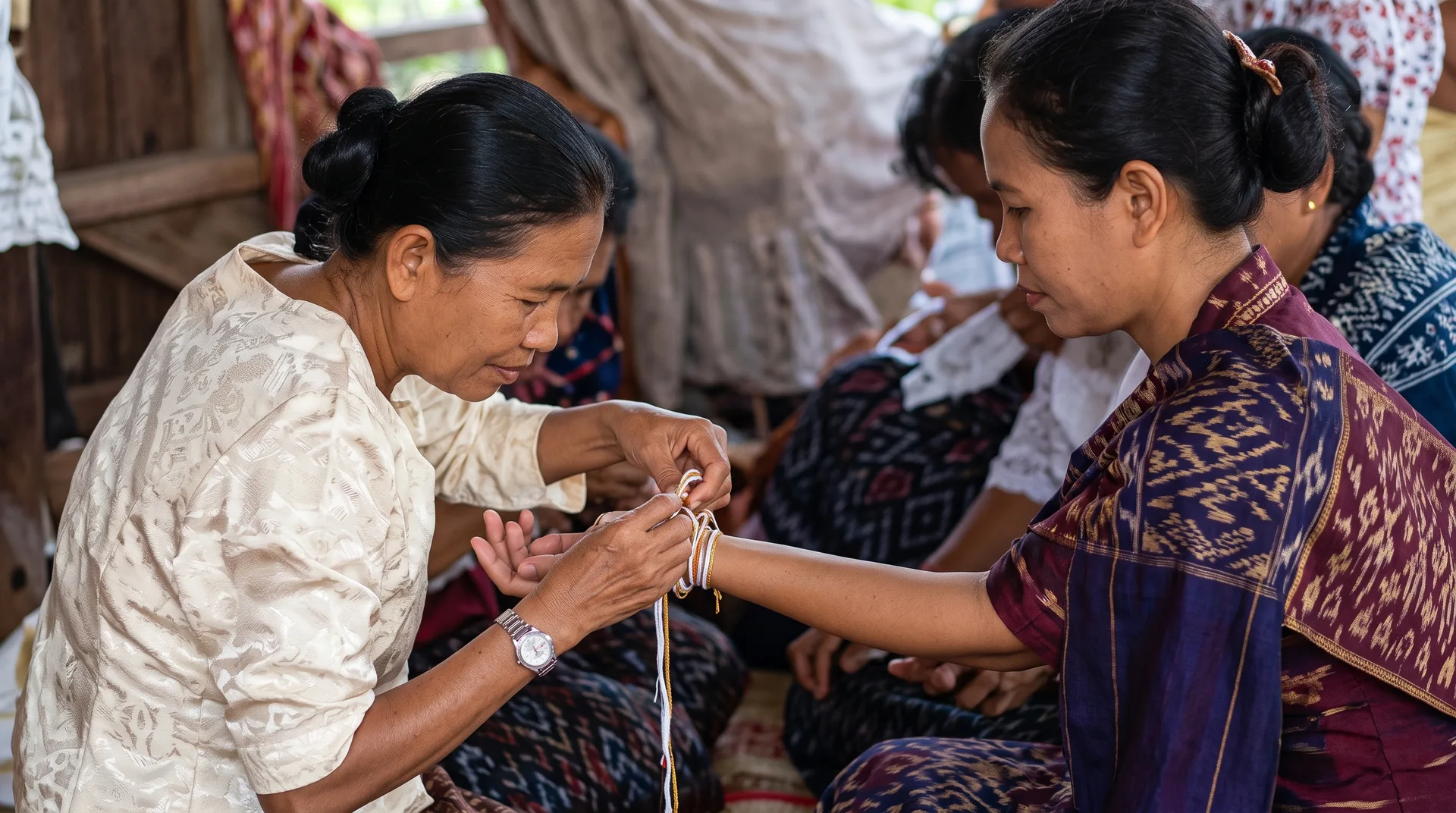
It may indeed be a blend between the veneration of Buddhism and the indigenous worship of spirits together with Brahmanical theory, which has become the belief the people of Chiang Mai have held from ancient times to the present. Once a belief exists, rites generally follow from it — these may be Buddhist rites blended with Brahmanical elements, or rites of the occult blended with practices following Buddhist teaching mixed with spirit worship.
The beliefs of the Lanna Thai people thus differ from locality to locality according to the base of knowledge each community has inherited from its ancestors. For example:
Belief in the law of karma. This belief in the law of karma appears in various works of literature, such as the verse romance Nirat Haribhunchai, the verse tale of Brahmadatta, and the verse tale of the swan-race of Amara, among others.
Belief concerning the relinquishing of the physical body (death).
Belief in predestined kinship from past lives (bubphesannivat).
Belief in the merit accruing from good deeds — for example, the creation of Dhamma manuscripts to be kept within the religion: it is believed that whoever donates a copy of the Tipitaka will, in a future life, be born intelligent and possessed of great wisdom.
In addition, there are Buddhist-related beliefs that the people of Chiang Mai still hold and practice down to the present, such as: - Beliefs and rites surrounding the arrival of a ruling lord to reside in Chiang Mai - Belief in bad omens and the rites performed to counter them - Belief in inauspicious markings (khit) and the rites performed to counter them - Belief concerning drought and the rites performed to counter it - Belief concerning insect infestations of crops and the rites performed to counter them - Belief that the body is inhabited by thirty-two khwan (guardian spirits/vital essences), and the associated rites - Belief that cremation should not be carried out within the city, and that cremation grounds or cemeteries should not be established within a monastery - Belief in astrology - Belief in the merit of good deeds performed - Belief in and worship of spirits attached to the household, the village, the town, and the monastery - Belief in ancestral spirits - Belief concerning the ceremony of homage to the Three Sacred Vessels (sum kha khan kaeo) - Belief concerning the building of funeral structures in the form of the hangsa-diliṅga bird (nok hatsadiling) - Belief in the prohibition against women entering the ordination hall (ubosot)
The beliefs listed above each involve rites and procedures that differ in detail, and it is not possible to describe them all here in full. As an example, the belief concerning the arrival of a ruling lord to reside in the city of Chiang Mai is summarized briefly below.
This is an ancient belief, holding that a "city-entering" rite must be performed so that the ruler may dwell there in peace and happiness; the rite follows the same pattern as the original rite of founding the city. The entry into the city takes place on a Thursday (the fifth day of the week, the day on which Chiang Mai was founded), following this sequence: paying homage to the principal Buddha image at Wat Chiang Yuen (whose name signifies true permanence); entering through the Hua Wiang Gate (the White Elephant Gate), believed to be an auspicious gate; then lodging and paying homage to the Phra Kaeo image at Wat Chiang Man (an image whose name evokes stability, peace, and happiness) at a time close to midday (as the trumpets sound toward noon) — because according to the ancient Chiang Mai treatise on auspicious hours, the period from 9:01 to 10:30 a.m. is the "Uthang Thangkha" hour, and the period from 10:31 a.m. to 12:00 noon is the "Chaiyalap Sakang" hour, both being auspicious. A clockwise circumambulation of the city is also performed, which may take place either before or after entering the city; it is done three times, as an act of homage to the sacred guardian spirits of the city and to all the deities.
Besides the rites regularly held according to the month or the season, there are many further rites that villagers perform on various occasions, such as:
Khuen Khan Tang ("raising the offering tray") — an act of homage paid to the teacher of whichever master is conducting a given rite, as a way of announcing to the teacher one's intention to make use of the knowledge invoked, or of inviting the teacher's spirit to be present so as to add sanctity to the rite being performed. The offering tray set up for such a teacher is kept as a separate item, and is not combined with the offering tray used in worship for the rite itself.
The Rite of the Four Great Kings (Khuen Thao Thang Si) — the opening, or initiating, of an auspicious rite, which begins with an invocation addressed to the Four Great Kings, that is, the four great deva-kings: - Thao Kuvera — the Lord Vessavana, who guards the world to the north of Mount Sumeru. - Thao Dhatarattha — who guards the world to the east of Mount Sumeru. - Thao Virulhaka — who guards the world to the south of Mount Sumeru. - Thao Virupakkha — who guards the world to the west of Mount Sumeru.
In performing the rite, besides these four great deva-kings, Indra and the Earth Goddess (Nang Thorani) are also invoked.
The "Sending" Rite (Phithi Song) — a Lanna-style sending or propitiatory offering, performed when misfortune arises: for example, an illness that will not heal, a mishap such as a house fire, or a run of frequent misfortunes of various kinds, believed to be caused by spirits or by some malign power. One remedy is to "send" or make an offering to the spirit or power responsible, so that it may be freed from its evil condition. There are several kinds of sending rites — sending the khwan (song khwan), sending the guardian kings (song thao), sending the spirits and deities (song phi thewada), sending away misfortune (song khro), sending to the sky-spirit Then (song thaen), and so on — each with its own ritual paraphernalia and offering formula, depending on the type of sending performed.
The Rite of Offering a Bridge or Causeway (Than Khua/Than Saphan) — the making of a bridge, or the offering of a causeway as merit, arises from the belief that when a patient suffering from an incurable illness, or a person near death, will not die despite this — even though the family has already arranged for the sick person to listen to the recitation of the Mahachat (the Great Birth sermon) so that they may hear the Dhamma preached and thereby have a path prepared toward a good rebirth, on the reasoning that once the dying person's store of merit is exhausted they will die free of suffering and pass along the heavenly path — beyond having them listen to the great retribution sermon, there is a further way of helping such a patient: offering a bridge or causeway as merit. It is believed that this offering of a bridge is akin to dedicating oneself as a gift to others, in the same way that a bridge helps people reduce the hardship of crossing water.
The Sutkuam Rite (pronounced "sut-thuam") — the chanting of protective (paritta) verses while a monk's outer robe (sanghati) is used to cover the area; within the space the robe covers, an alms bowl is also placed over the patient's head as a further protective measure. (It is customary for the reciters of the paritta to stand holding the corners of the robe at its four corners, so as to drive out any spirits possessing the patient's body.)
Islam
Islam first entered Chiang Mai province in 1950 C.E. (B.E. 2493), arriving through two distinct groups:
Muslims of Pakistani-Indian descent — the earliest group to migrate and settle in Chiang Mai province, consisting of the Muslims of the Chang Klan Mosque quarter, who originally came from Pakistan, and the Muslims of the Chang Phuak Mosque quarter, of Pathan descent, who joined them later, arriving from several countries including Afghanistan, Pakistan, Burma, and India.
Mr. Zamad Usman Ali Meya, who was born in the city of Calcutta, India, was the founder of the Muslim community of the Chang Klan Mosque quarter, whose Pathan-descended members joined later. The mosque was built to serve as an important place where all Muslims could perform their five daily prayers, and as a place to teach the tenets of the faith — above all, so that the young would gain the knowledge and ability to read the Quran. In later years he himself taught there and was chosen to hold the position of imam (the community's religious leader), becoming the first imam of the Muslim community of Chiang Mai province.
He later received the favour of the ruling lord of Chiang Mai at that time, who donated a plot of land of a little over three "ngan" for the building of a new mosque — the site of the present-day Chang Klan Mosque, on Charoen Prathet Road in Chang Klan sub-district — built as a hardwood building roofed with fired clay tiles. At the same time, Usman Ali also earned the trust of the northern ruling lords, who appointed him to the position of kamnan (sub-district headman), regarded as a position of considerable honour and importance in official life, with responsibility for the Muslims of Chang Klan under the sub-district's overlords. After his passing, his descendants continued to uphold his firm commitment to the foundations of Islam, carrying it forward to further prosperity.
Subsequently, in 1949 C.E. (B.E. 2492), the Chang Klan Mosque was formally registered in accordance with the law, and in 1963 C.E. (B.E. 2506) the mosque committee, together with the congregation, undertook improvements to the mosque, constructing a further new building to serve as an Islamic educational institute, and also expanded the mosque grounds. Today it occupies an area of one rai and eighty-four square wa. From the past to the present, the Chang Klan Mosque has had thirteen men serve as imam following Imam Usman Meya; the thirteenth is Imam Sukree Thanawi.
Besides the Pakistani-Indian Muslims residing in the Chang Klan Mosque community, there are also communities at the Chang Phuak Mosque, the Doi Saket Muslim community, and the San Kamphaeng Muslim community, each of which carries out its own religious observances and provides Islamic education for its youth.
Muslims of Yunnanese Chinese descent. Chiang Mai province has Muslims of Chinese descent who migrated from Yunnan province in the People's Republic of China from the middle of the nineteenth century onward; today they live in various places in Fang and Mae Ai districts, with mosques serving as community centres, including:
- Al-Hidayah Mosque, in Ban Yang village, Mae Ai sub-district, Fang district - Al-Iman Mosque, in Fang district town - Al-Haqqa Mosque, on Doi Ang Khang, Mae Ai sub-district, Fang district - Al-Salaha Mosque, in Ban Hua Fai village, Pong Nam Ron sub-district, Fang district - Al-Rahma Mosque, in Tha Ton sub-district, Mae Ai district
In addition, there are two further groups of Chinese Muslims living within Chiang Mai's town area: one located in the trading centre near the market on the east bank of the Ping River, and another located in the Santisuk area on the east bank at the confluence with the Ping River.
The Muslims of Yunnanese Chinese descent, led by Mr. Jeng Chong-ling, migrated into Chiang Mai during the reign of Chao Inthanon, ruler of Chiang Mai, travelling together with a group of merchants from Yunnan province. Once they had settled in the trading quarter of Chiang Mai town, they gained the trust of the government and were granted a concession to operate postal services. Jeng Chong-ling's most significant contribution was his assistance to the government in the construction of the railway from Lampang to Chiang Mai, using mule and pony caravans to transport materials and equipment from Chiang Mai to the Khun Tan tunnel. When the railway was completed, he further donated land for the construction of Chiang Mai Airport. In recognition of his sustained service, King Prajadhipok bestowed upon him the family surname Wongluekiat, and also granted him the title Khun Chuang-liang.
In 1964 C.E., he travelled to perform the Hajj pilgrimage in the city of Mecca, Saudi Arabia, and passed away while staying there. Originally the home of Chuang-liang, also known as Ban Lue Kiat, served as the place of worship for the community; as numbers grew, a mosque was built in 1955 C.E. (B.E. 2498), which local people call the "Ho Mosque" (Masjid Ban Ho). Later, in 1961 C.E. (B.E. 2504), because the original mosque building could no longer accommodate the growing number of worshippers, it was replaced with a new building, which continues to serve as the place of worship to this day.
As for the Yunnanese Chinese Muslims of the San Pa Khoi community, they were originally part of the Ban Ho community; when the numbers of Muslims there grew too large, Mr. Ang Ying Funin decided to build a new mosque on the eastern bank of the Ping River in 1970 C.E. (B.E. 2513), named the Attaqwa Mosque (San Pa Khoi).
Muslim Beliefs
Muslims believe that Islam is a complete way of life that guides humanity along the path of Truth; Islam is a comprehensive system encompassing every aspect of life, and a constitution for living that does not allow human beings to be dominated by the power of base desires.
Islam emphasizes that the goal of life has two sides: on the one hand, the purification and cleansing of the heart; and on the other, the improvement and strengthening of a society built upon eternal principles as revealed in the Quran and according to the example set by the final Prophet of God.
Islam rests upon the foundation of faith, the most important element of which is the belief that Allah is the one and only God, and that the Prophet Muhammad is His messenger; this is the basic article of faith for every Muslim.
The Essential Tenets that Form the Pillars of Islam
The Prophet Muhammad (peace be upon him) explained that the pillars of Islam are matters every Muslim must uphold and practice without exception. They are:
The Pillar of Faith or Belief (al-Iman) — that is, faith or belief in Allah, faith or belief in the angels (malaikah), faith or belief in the scriptures (and the messengers who brought them), faith or belief in the Day of Judgement (al-Akhirah), and faith or belief in divine decree (predestination, al-Qadar).
The Pillar of Practice (al-Islam) — beginning with the declaration of faith: "La ilaha illallah, Muhammadur Rasulullah" — there is no god but Allah, and Muhammad is His Messenger (Rasul). - Performing the five daily prayers - Giving zakat (almsgiving) - Fasting during the month of Ramadan (the ninth month of the Arabic calendar) - Performing the Hajj pilgrimage to the city of Mecca, Saudi Arabia, for those who are able
Within this pillar of practice, the ritual most central to a Muslim's daily life is the prayer (salah).
The Pillar of Sincere Right Conduct (al-Ihsan) — that is, worshipping and revering Allah as though standing directly in His presence; and even if we cannot see Him, He nevertheless sees us. This entails the responsibility of governing oneself, in thought and in action, in accordance with His will, through unwavering faith.
Other Principles of Practice, such as:
Belief concerning death — in the Islamic view, death is not suffering, nor an escape from suffering, nor an increase of suffering. In Islam, death is regarded as a return to the mercy of Allah, referred to as reaching one's appointed term (ajal). When Muslims learn of the death of a fellow Muslim, whether known to them or not, they recite the verse from the Quran: "Inna lillahi wa inna ilayhi raji'un" ("Indeed we belong to Allah, and indeed to Him we return"). Living Muslims are expected to observe certain duties toward the deceased: to accept the news of the death; to visit and offer assistance to the bereaved family; to speak well of the deceased and refrain from wailing or self-harm in grief; to accompany the body (mayyit) to the graveyard; to stand when the body is lifted or when it passes by; and to perform the funeral prayer (salat al-janazah) for the deceased.
Burial: Islam does not permit cremation, since fire is a source of heat and suffering; when a Muslim dies, the body should be taken for burial as quickly as possible.
The prohibition on Muslims eating pork exists because God wishes Muslims to choose to eat only foods beneficial to the body, for the sake of good health; the pig is an animal whose manner of living is regarded as very unclean, and this is the basis of the religious prohibition.
Modest dress for Muslim women is likewise prescribed in the Quran and the Hadith, on the basis that women are created with a beauty of complexion, form, and hair that draws the attention of men and may give rise to base desire.
At present, Muslims in Chiang Mai province are governed under the Islamic Religion Act.
Rites. Because Islam is a religion that places emphasis on practice, it prescribes patterns of conduct that govern a Muslim's life from birth through to death and even sleep. A Muslim therefore cannot separate his or her life from Islam, nor accept Islam as governing only part of life; rather, it functions as a complete system for living. Islam is thus organized as a comprehensive way of life composed of four elements: the element of doctrine (creed), the element of institution, the element of ritual, and the element of the material/physical.
The element of doctrine in Islam rests on the foundation of faith, the most essential belief being that Allah alone is God, and that the Prophet Muhammad is His messenger. This faith, besides shaping the pattern of conduct — since it governs how a Muslim conducts daily life — is expressed through the element of ritual and institution, reinforcing how one builds and lives one's life: for example, a Muslim will not make or venerate idols, nor worship paintings or photographs, and so on.
In matters of ritual, beyond what is explicitly prescribed, any further rite must not contradict the above article of faith — for example, a Muslim must not cremate the body, since this would conflict with Islamic practice. Islam has achieved a fully developed institutional form; in other words, it has established complete institutions covering the family, the economy, politics, education, and religion, among others — making it something that governs the whole of a Muslim's life in a complete cycle, weaving social and cultural structures intimately and completely into human, or Muslim, existence, resting on the foundation of the teachings of the Quran. This is called ibadah, or the performance of religious duty — such as the ablution before prayer, fasting, and performing the Hajj, among others.
Christianity
The Roman Catholic Church. In 1833 C.E. (B.E. 2376), the Vicar Apostolic of the Bangkok Mission assigned Father Grana Jean and Father Vachal of the Paris Foreign Missions Society (Missions Étrangères de Paris, abbreviated MEP) to travel from Bangkok. The two departed Bangkok on 5 December 1833 and reached Chiang Mai on 18 January 1834, beginning to propagate the faith immediately; however, because circumstances were unfavourable, they were obliged to return to Bangkok.
Later, in 1947 C.E. (B.E. 2490), Father Fouillet and Father Savaset of the Bangkok Mission were assigned, by order of the Vicar Apostolic of Paris, to travel to Chiang Mai themselves to survey and assess the various circumstances there, with the intention of building a Catholic church in Chiang Mai on a plot of land facing the bank of the Ping River, situated on the eastern side of the river; but owing to the outbreak of the First World War, they were obliged to return to Bangkok.
In 1924 C.E. (B.E. 2467), Father Perroudon decided to travel to Chiang Mai himself, wishing to establish a Catholic mission in the North. He subsequently assigned Father Mirabel and Father Nicholas (a Thai priest) to carry out the establishment of the Catholic mission in Chiang Mai, on 18 January 1934 (B.E. 2477), taking up residence himself in what was known as the old church building, assisted by a local family, and began to propagate the faith — with good results, and some converts to Catholicism.
Later, the Vicar Apostolic, Father Perroudon, and Father Mirabel came to understand that missionary work would be more effective if there were a Catholic school in Chiang Mai. Accordingly, a school was opened under the name Regina Coeli School; the Brothers of St. Gabriel were brought in to run schools in Chiang Mai province. The Ursuline Sisters opened a school under the name Regina Coeli School, and the Brothers of St. Gabriel sent brothers to open a school under the name Montfort College. For the same reasons, on 1 July 1932, a further school was opened under the name Sacred Heart College (Rongrian Phra Haruthai).
Brother Antonio Marie (recorded in Thai as Sriwathakon) came to work in Thailand on 2 March 1937. He studied the Thai language to the level required to sit the P.M. (elementary teacher's) examination, which he passed, and was appointed a teacher in 1940.
In the Chiang Mai mission district, the Brothers of St. Gabriel established Montfort College from 1932 onward. Subsequently, the Sisters invited by Vicar Apostolic Perroudon, and later Father Mirabel — founder of Sacred Heart School — oversaw the operation of the three Roman Catholic schools: Montfort College, Regina Coeli College, and Sacred Heart School (together with Regina Coeli College).
Catholic Beliefs
Belief concerning God: Christians believe that there is one God, of supreme power, the Creator of all things in the world and the universe (Genesis 1:1–31). He is the embodiment of perfect and complete goodness, and it is believed that He created all things, the most important of which is humankind; the starting point of creation is love, and all created things thus express and please Him (Genesis 1:31).
Belief in the Holy Trinity. It is believed that the nature of God is a perfect and complete love, and that while God is one, He exists in three Persons, called the Holy Trinity: the Father, the Son, and the Spirit. None of these three Persons precedes or follows the others; they are one, indivisible, and bound together in the closest relationship. The Father is the Creator of all things in the world and the universe; and at the moment of that creation, the Son and the Spirit were also eternally present. The Son is Jesus, the second Person of the Trinity, who took on flesh and was born as a human being in order to redeem humanity from sin and deliver it from death into new life, as the Son of God. The Spirit, the third Person of the Trinity, is understood as the living power of the world and universe, the concrete presence of God from ancient times down to the present.
Catholic Rites (Liturgy)
The Sacraments. Every Christian must undergo the sacraments, which are the means by which the Church proclaims holiness to the faithful, who must live out their lives in the world until they return to God. There are seven sacraments: Baptism, Confirmation, Reconciliation (Penance), the Eucharist, Holy Orders, Matrimony, and Anointing of the Sick. Each sacrament expresses the mercy and love of God for Christians from birth to death.
The Holy Mass is an act of devotion Christians perform daily, particularly on Sundays; the celebration of the Mass refers to the feast of the Eucharist, food that nourishes the soul of the Christian.
Prayer is regarded as the duty of every Christian, who must lift up the heart to God in order to converse with Him.
The Protestant Church. The Reverend Daniel McGilvary — known to the local people as "Pho Khru Luang" (the Great Father-Teacher) — was appointed a missionary to work in Thailand in 1857 C.E. (B.E. 2400), and travelled to Thailand, arriving on 11 March 1858 (B.E. 2401). He came to work in Chiang Mai in 1867 C.E. (B.E. 2410). Reverend McGilvary is regarded as the pioneer who brought Christianity to Chiang Mai; he was also among those who took part in translating the Bible.
Reverend Daniel McGilvary was born on 16 May 1828 (B.E. 2371) in Moore County, North Carolina. He married Miss Sophia Royce Bradley, daughter of Dr. Bradley, in Bangkok.
Reverend Daniel McGilvary became acquainted with Chao Luang Kawilorot Suriyawong, the sixth ruling lord of Chiang Mai, and his relatives, on the occasion of their bringing tribute to Bangkok in December 1860.
Reverend Daniel McGilvary and his family came to settle in Chiang Mai in 1867 in order to establish a mission station. On 18 April 1867, a church was founded, named in English "The First Presbyterian Church of Chiengmai," the first church in the North. At the same time, the sixth ruling lord of Chiang Mai granted land on the eastern bank of the Ping River as the site for the mission — which today is the site of the First Church of Chiang Mai and of the First Regional Church.
Besides propagating the faith, Reverend Daniel McGilvary and his associates also helped the local people by treating various illnesses, such as malaria and goitre, and worked to advance education. He also helped improve the standard of living and education more broadly. Reverend Daniel McGilvary passed away on 22 August 1911 (B.E. 2454).
Reverend Daniel McGilvary and his wife are regarded as having played a major role in the city of Chiang Mai, in the development of the standard of living and of education, in addition to their work of proclaiming the faith.
Hinduism
Before King Mangrai founded the city of Chiang Mai in 1296 C.E. (B.E. 1839), going back several hundred years earlier there had already flourished important kingdoms — such as the kingdom of Haribhunchai and the kingdoms of the Pyu and of Pagan — all of which had received Hinduism, known at that time as the Brahmanical religion (satsana phram), because Brahmins were regarded as the possessors of learning, the officiants who mediated between human beings and the gods. The Brahmanical religion that these peoples brought and propagated thus came to be called the Brahmanical religion.
In the era of the Lanna kingdom, between roughly 1257 and 1557 C.E. (B.E. 1800–2100), there was extensive contact between the Thai peoples and India in politics, religion, and art and culture alike. The Thai came to call the Indians who arrived to make such contact "khaek" — meaning honoured visitors deserving of respect — a term used generally for visitors from foreign lands, whether or not they happened to be Thai as well; but where the visitor was specifically Indian, dark-complexioned, they were accorded particular honour and were to be received with respect.
The Lanna people came to call the Indians who arrived to trade with them "khula" or "khulawa." Fair-skinned Westerners, or people of Sri Lankan or lighter Indian complexion, were called "khula khao" (white khula), while dark-complexioned Indians were called "khula dam" (black khula). Both groups together — white khula and black khula — formed a category of foreign visitors accorded dignity and honour, whom the city of Chiang Mai has long revered as leaders in religion and culture.
Sikhism
Sikhism arose in the state of Punjab, India, in 1526 C.E. (B.E. 2069), with Guru Nanak as its first prophet-teacher. The word "guru" means teacher, or one who brings light to humankind; and a disciple (sikh) is, correspondingly, a follower of the "guru," or teacher.
"Sikh" corresponds to the Pali word "sikkha," which in turn corresponds to the Sanskrit word "siksa" ("study" or "learning"). In this sense, a follower of Sikhism must conduct himself as a good disciple, studying and following the principles of the Guru just as a disciple follows the instruction of a teacher.
The first Sikh to travel to Chiang Mai province was Mr. Isher Singh, who travelled by way of the Union of Burma around 1901 C.E. (B.E. 2444). Afterward, further Sikhs joined him, and together they established a place of worship — a Sikh temple (gurdwara) — in 1907 C.E. (B.E. 2450), at house number 198, Charoen Rat Road, Mueang district, Chiang Mai province, on a plot of about sixty square wa, a single-storey wooden building with a broad open space for the performance of religious rites.
Later, in 1949 C.E. (B.E. 2492), as the number of Sikhs grew, the community rebuilt the temple, adding a two-storey structure, with religious rites conducted on the second floor of the building.
In 1954 C.E. (B.E. 2497), a religious teacher named Rama Singh served as the temple's resident preacher.
Subsequently, in 1955 C.E. (B.E. 2498), the Sikhs of Chiang Mai once again renovated their temple, building it as the permanent structure that stands to this day.
The Sikhs who migrated to settle in Chiang Mai were, for the most part, reasonably educated people and traders by long tradition; upon settling in Thailand, most engaged in commerce, particularly the textile trade, and lived much as ordinary Thai people did. These Sikhs regard themselves as Thai citizens firmly devoted to their religion, and consider themselves part of Thai society just as much as any other Thai people.
The Namdhari Sect of Sikhism. The Namdhari sect of Sikhism believes that the Supreme Teacher Siri Satguru Ram Singh was the twelfth Guru of the Sikh religion. The name "Namdhari" is used to refer to the followers of this line, stretching from the first Supreme Guru, Guru Nanak Dev, down to the Guru Ram Singh.
In 1950 C.E. (B.E. 2490), all the Sikhs of Chiang Mai province joined together to perform their religious rites at their own temple, situated in Chang Klan sub-district; later, the Namdhari Sikhs separated to conduct their own religious rites at a temple now situated in Chang Moi sub-district. As early as 1923 C.E. (B.E. 2466), the Namdhari Sikhs had raised funds to purchase a site for religious worship, organized under the name of Mr. Santi Ma-an Singh Chaula.
Later a new two-storey building was constructed there in 1935 C.E. (B.E. 2478), and in 1950 C.E. (B.E. 2493) Mr. Santi Ma-an Singh Chaula purchased additional land and donated it to the congregation for religious use.
In 1951 C.E. (B.E. 2494), the Namdhari congregation built a two-storey building of six bays. Today the Namdhari Temple is located at No. 2 Chang Moi Road, Soi 1, Mueang Chiang Mai district, Chiang Mai province.
Local Customs and Traditions
Chiang Mai has long stood as the centre of the Lanna kingdom, ever since King Mangrai founded the city more than seven hundred years ago. Chiang Mai has passed through periods of prosperity and decline across many eras; the city, its people, and their social and cultural way of life have all been reshaped according to the conditions of each period.
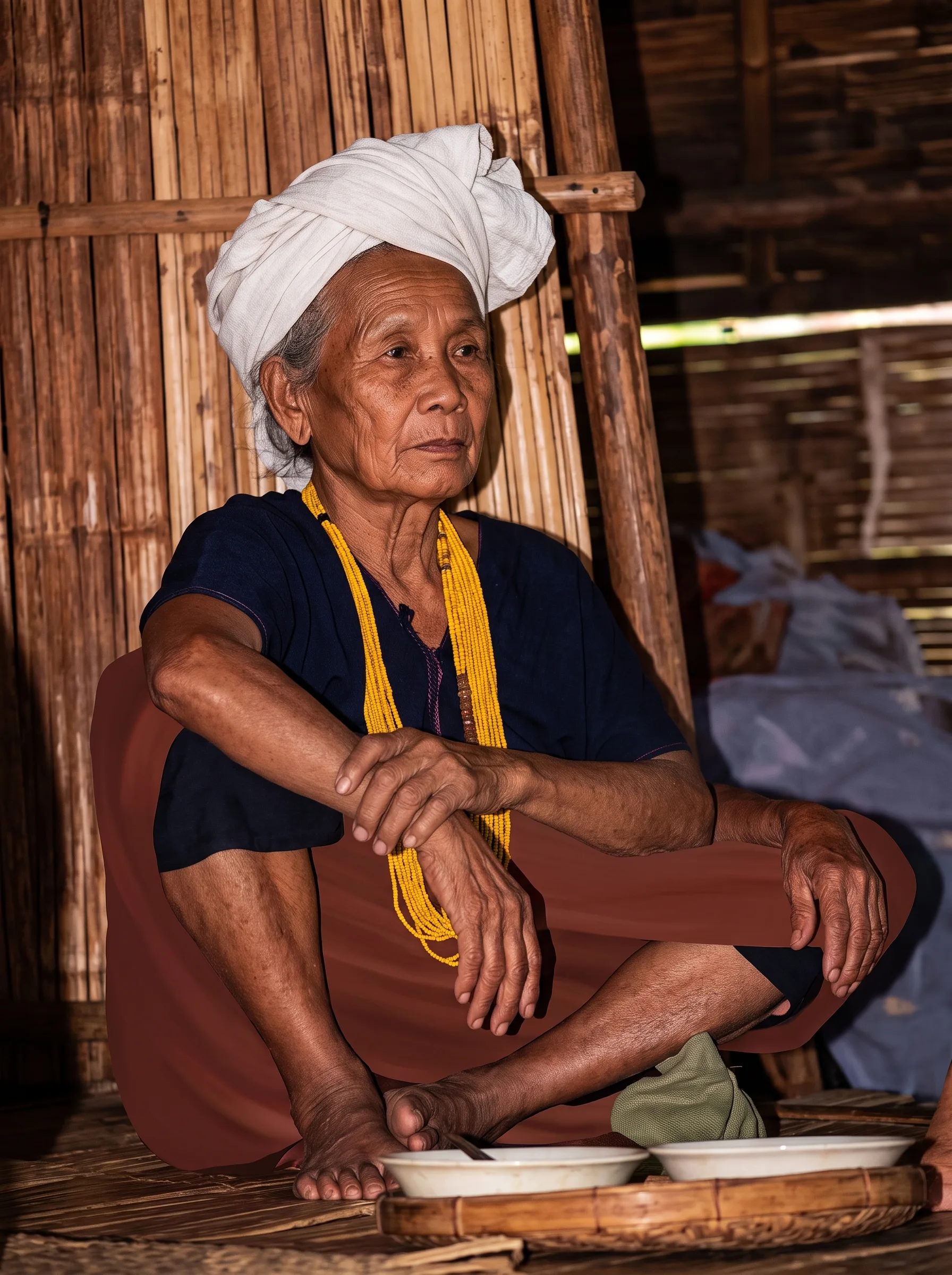
When speaking of the people of Chiang Mai today, this generally refers to those who call themselves khon mueang — "people of the city" — that is, those who speak Kham Mueang, the local dialect also known as Tai Yuan, as their language of communication. In reality, however, the population living in Chiang Mai province also includes people of many other ethnic groups and languages, such as the Tai Lue, Tai Yai (Shan), Tai Khoen, and various hill-tribe peoples, each of whom has its own distinct customs and traditions differing in detail. Here we shall describe the customs and traditions of the khon mueang, or Tai Yuan people, who form the majority of the province's population; the character of these local customs and traditions, as practiced by the people of Chiang Mai, is set out as follows.
The Beliefs of the People of Chiang Mai
The people of Chiang Mai hold beliefs similar to those of the Lanna people elsewhere — that is, a blend of many different beliefs held together, which can be summarized, as they appear today, as follows:
Belief in spirits (phi). This belief in spirits is of long standing. Besides the belief that a "phi" is a soul that persists after death, spirits are also divided into two kinds: good spirits and malevolent spirits. Good spirits are those that protect and watch over the members of a family or community so that they may live well and happily; this category includes ancestral spirits, called Phi Pu Ya ("grandfather-grandmother spirits"), the guardian spirits of the town (phi ban mueang, who watch over the settlement), the household guardian spirit (phi suea ban), the town guardian spirit (phi suea mueang), and the spirit of the water source (phi khun nam), among others. However, individuals must conduct themselves in keeping with the proper conduct expected by each spirit — good conduct toward family and community — in order to receive its protection and care. Malevolent spirits, on the other hand, are generally regarded as wandering souls attached to various places, who died without being reborn and who can cause illness, especially to those who trespass against them, whether intentionally or unintentionally. Such trespasses are of two kinds, and must be appeased or remedied through prescribed offerings — for example, an offering of liquor, or a pair of chickens, and so on.
Buddhist beliefs, such as belief in the law of karma (good deeds bring good results, bad deeds bring bad results), belief in merit and demerit, belief in rebirth across lifetimes, and belief in heaven and hell, among others — blended together with Brahmanical beliefs, such as belief in the devas, in Brahma, and in the Four Great Kings who guard the four directions, among others. This can be seen in the fact that whenever any rite is performed, if the Buddha, the Dhamma, and the Sangha are invoked, various deities are generally invoked as well.
Belief in the occult, such as the use of magical spells and incantations, tattooing with sacred designs (yantra), and the practice of love charms, among others.
Belief in astrology, such as belief in fortune-telling, horoscopes, omens and auspicious timing, dreams, and misfortune, among others.
Belief in other supernatural powers, such as the power of sacred objects, magical potency, ill-fortune, and curses, among others.
These beliefs are reflected in the customs and traditions found throughout Chiang Mai society and culture in many forms, which may be divided into the following three categories.
Chareet Prapheni (Moral/Taboo Customs)
Chareet prapheni refers to customs which society regards as gravely wrong to violate or fail to observe, since doing so may bring trouble upon the individual, the family, and the community. These are bound up with morality and with rules that society holds to be authoritative, manifesting as wrongdoing of the following kinds:
Phit Phi ("offending the spirits"). This concerns customs governing young unmarried men and women: for example, trespassing against, or secretly meeting, without following proper custom, constitutes an offence against the household spirits and ancestral spirits. If any member of a family commits such a trespass without informing the elders beforehand, the guardian spirits, who otherwise protect the descendants and family, may withdraw their protection and inflict punishment — causing illness or various misfortunes, for instance. A rite of apology must then be performed by the offending man, who must prepare offerings of food and other items as prescribed, following the custom of having informed the elders. If this is properly followed it is called sai phi ("entering the proper procedure with the spirits"); if not, it is called sia phi ("offending the spirits" / a breach that goes unresolved).
Phit Khrua or Phit Tuet ("breaking with customary practice"). This is the performance of an act that deviates from the established customary practice of a family or community — for example, the rite of feasting the household or village guardian spirit is normally performed during Songkran, but if it is instead moved to another month, this constitutes phit tuet; likewise, if the prescribed offerings to the ancestral spirits — traditionally one chicken and one bottle of liquor — are replaced instead with noodles or other convenience foods, this too is regarded as phit tuet. If the household or town spirits are displeased by such conduct toward them, various misfortunes may befall the individual or the community as a result.
Phit Khlong (or Phit Khong, "breaking with the moral order"). This is divided into "worldly order" (khlong lok) and "moral/dhammic order" (khlong tham). An offence against the worldly order is an act that violates the customs generally observed by ordinary people — for example, taking one's own daughter as a wife, taking one's own son as a husband, or engaging in similarly improper relations. An offence against the moral order is an act that violates the moral teachings of religion — for example, killing or harming another person, stealing another's property, or failing to care for one's parents or benefactors. Among the Lanna people, who are predominantly Buddhist, any transgression against monks — such as speaking ill of or insulting them — is likewise regarded as wrongdoing that incurs demerit.
Phit Khru ("offending one's teacher"). This is a lack of respect toward one's teachers. The Lanna people believe that, whatever subject one studies, one must first pay homage to a teacher; and once knowledge has been gained and put to use...
...to good effect, one should continue to honour one's teacher regularly, especially before putting that knowledge to use, at which time a rite of homage to the teacher (wai khru) is performed. For this reason, households in earlier times would maintain a shrine for this purpose. Anyone who fails to show respect to his teachers is not only guilty of ingratitude, but the offended spirit of the teacher (phi khru) may cause him to fall ill, lose his sanity, or fail to prosper in life.
Phit Pa ("offending the forest"). This concerns conduct considered improper when entering the forest — such as speaking badly while in the forest, cursing the forest and hills, quarrelling with one's travelling companions, or uttering words that constitute a bad omen. Such conduct may bring misfortune upon the individual and the group travelling together — for example, becoming lost in the forest, being attacked by wild animals, or falling ill. It is believed that the forest is inhabited by spirits — the guardian spirits of the forest and hills — who watch over that place, and who may cause harm if their domain is violated.
Phit Ban ("offending the village"). This concerns the violation of a village's rules — for example, cutting down the tree that serves as the village's guardian tree, known as the "mai si ban" or "mai nam ban" — which is regarded as an offence against the village and may bring trouble or danger upon the whole community.
Phit Mueang ("offending the town"). This concerns wrongdoing committed against the order of the town, whether by the ruling lord, his ministers, or the common people — for example, a ruling lord passing judgement without proper investigation or acting outside the bounds of justice; ministers accepting bribes; inciting division among the people of the town; converting what had been a village into something else; or demolishing what had been a bridge so that no bridge remains. Wrongdoing of these kinds constitutes an offence against the town.
Phit Kot ("breaking the rules/regulations"). This concerns the violation of rules established by a community or town — for example, the rule that members who share the use of water from the same irrigation weir must all help maintain and repair it, and that the use of water from the weir must follow agreed regulations; anyone who violates these regulations commits an offence and must be punished according to the law of the land. In the land of Lanna there existed a body of law upheld from ancient times, clearly established from the reign of the very first king of Chiang Mai, known as the Mangrai-sat (the Laws of King Mangrai), which prescribed judgements and punishments for various offences — such as the theft of cattle, buffalo, and livestock; assault; sexual violation between men and women; and quarrels between individuals, among others.
Furthermore, besides the trouble such wrongdoing brings upon individuals and the community, any transgression against the prescribed customs — whether committed knowingly or unknowingly — is believed to bring inauspiciousness, misfortune, ruin, suffering, or anxiety of various kinds, which is termed sit (affliction/curse). This is of four kinds: sit tok tua, affliction falling upon a single individual alone; sit tok reuan, affliction falling upon everyone within a family or household (in Lanna usage, "reuan" means "house," while "ban" means "village"); sit tok ban, affliction that occurs within a village or to the village itself, unrelated to any particular person — such as a fire or the loss of buffalo; and finally, sit tok mueang, affliction that befalls the entire population of the town.
Khanop Prapheni (Established Customs)
Khanop prapheni refers to customs jointly established by society, setting out how something ought to be done, when, where, and in what manner — including customs concerning the stages of life, and customs concerning...
The customs of the people of Chiang Mai may be classified as follows: customs relating to livelihood (such as the Haek Na rice-farming inaugural rite, the Su Khwan Khao–Khwan Khwai rite for the spirit of the rice and of the buffalo, the offering of firewood to warm the Buddha image, and the offering of khao lam and khao chi rice sweets); religious customs (such as Poi Noi, Poi Poek, Poi Luang, the veneration or ritual bathing of relic stupas, the Than Salakaphat almsgiving festival, the Tang Tham Luang great sermon, entering the Rains Retreat, leaving the Rains Retreat, the Kathin robe-offering, and the Pha Pa robe-offering); seasonal customs (such as the New Year–Songkran festival and Yi Peng); customs relating to the family and the town (such as the feast for the ancestral spirits, the Mot and Meng spirit-dances, the life-extension rites for individuals, villages, and the town, and the Inthakhin pillar festival); and customs relating to funerary rites (such as Poi Khao Sang). Because Chiang Mai's customs and traditions are so numerous, what follows presents the customs observed throughout the year in Chiang Mai, arranged according to the traditional month in which each occurs, as set out below.
Customs of the Seventh Northern Month (around April)
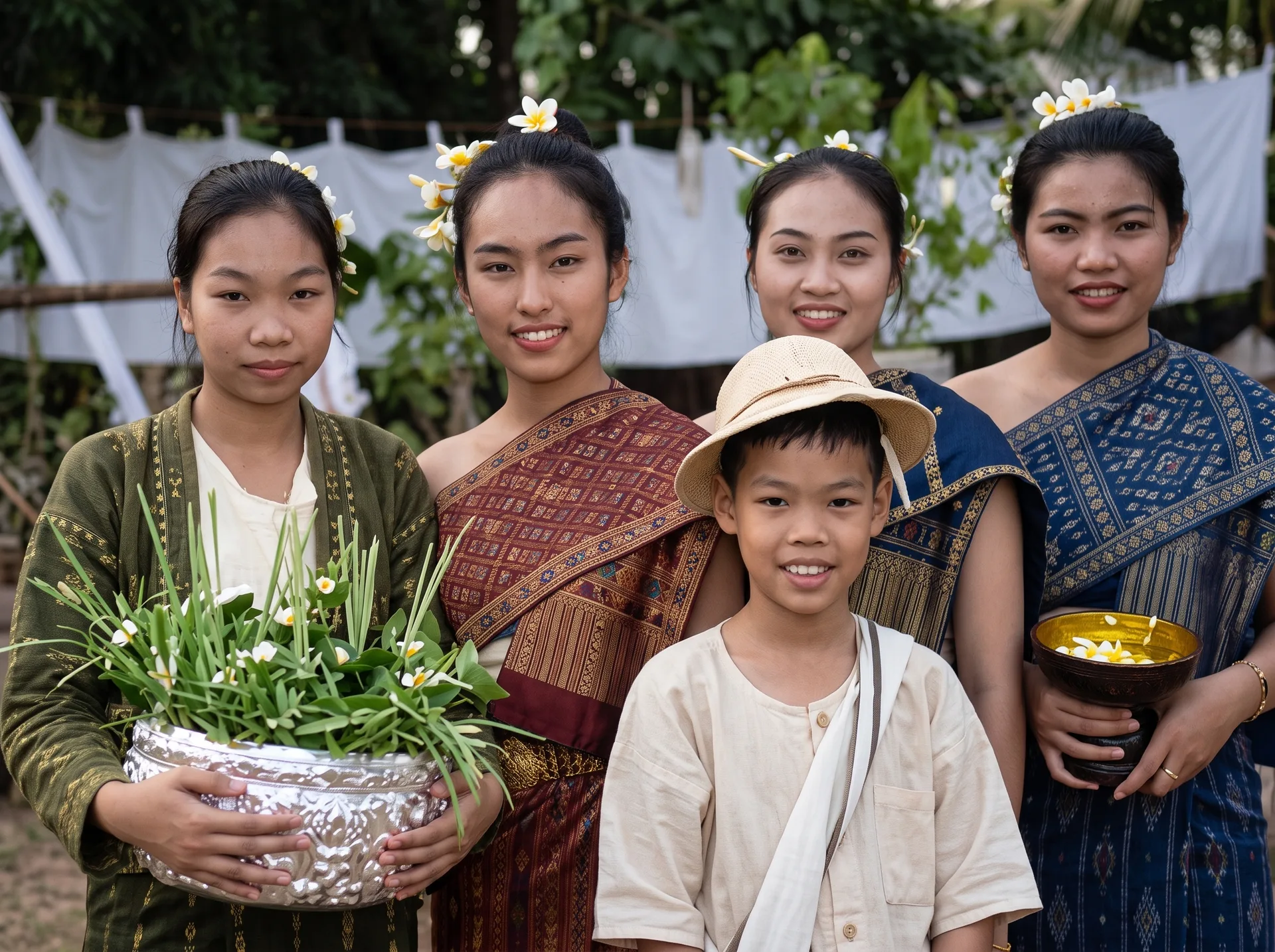
Pawenee Pi Mai (the Songkran Festival)
The Songkran festival is known to the Lanna people as "Pawenee Pi Mai" (the New Year celebration). It lasts five days, during which people take a break from work to celebrate the occasion through both religious observance and ritual. According to the Lanna astrological calendar, Songkran is reckoned by the day on which the sun moves from Pisces into Aries — this is called "Wan Sangkran Long," or the Great Songkran Day — which does not always coincide with the officially designated 13 April (today, the officially announced date is generally followed). The festival comprises several distinguishing days and accompanying rites and games, as follows.
Wan Sangkran Long is the Great Songkran Day, the day the sun moves into Aries. According to Lanna belief, it was said that the ruler of Lanna would perform a ceremonial bathing rite, at a time calculated by the royal astrologers, in the Ping or Wang River, among others. Everyone would go down to the river to bathe and wash their hair, called "pai sa klao dam hua." Some would gather their children and grandchildren together with an offering tray and use tamarind-leaf-infused water (nam som pom) to anoint the heads of all the young family members; some would have their children plant cuttings of green plants and use dried buffalo dung as fertiliser, believing that this would please them and let them witness their descendants flourish and grow, just as the plants they had cultivated grew and flourished. In Chiang Mai, it is customary to arrange a procession carrying the city's principal Buddha images — the Phra Buddha Sihing and the Phra Setangkhamani — through the streets, after which they are enshrined so that the public may come and pay homage and perform the ritual bathing of these images as well.
Wan Nao (also called Wan Nao or Wan Nao/"Rotten Day") — from an astrological standpoint, this is the day the sun and the year's ruling planetary sign meet, being the day immediately following Wan Sangkran Long; but in common pronunciation it is generally called "Wan Nao" ("Rotten Day"), giving rise to the belief that it is forbidden to do anything inauspicious on this day. It is said that anyone who curses another on this day will have their mouth "rot," and the ill-effect will not be undone. This day is a day of preparation: villagers go out to buy the food and goods needed for the following day, Wan Phaya Wan. Homes are decorated, and sand is carried into the monastery and piled up to build sand stupas (chedi). This carrying of sand into the monastery is said to represent restoring the sand a person has carried out of the monastery grounds on their feet over the course of the year. For this reason, Wan Nao is also called "Wan Da," since it is the day for "da" — that is, preparing — the various things to be used in the following day's merit-making.
Wan Phaya Wan is New Year's Day proper, the start of the new Chulasakarat era. On this day, religious merit-making begins early in the morning: people bring sweet and savoury food to offer to the monks at the monasteries (called "tan khan khao"), dedicating the merit to their departed ancestors. Some also bring rice and fish to offer at the stupa, in honour of grandparents, elders, or revered persons, in what is called "than khan khao heun thao." Afterward, prayer flags (tung) prepared for the occasion are planted upon the stupa; it is held that the merit of offering such flags can help even those who have died burdened with heavy sin and fallen into hell to be released from that suffering. On this day some also prepare forked wooden props to offer as supports for the Bodhi tree, symbolizing their willingness to help sustain and prop up the religion so that it may endure. Ritual bathing is performed for Buddha images and stupas, and water is poured over the monks as well. In the afternoon, people go to pay respects to their elders — parents, relatives, older siblings, benefactors, and other revered persons — pouring lustral water over their hands as a gesture of apology and seeking forgiveness, in return for which the elders bestow their blessings.
Wan Pak Pi ("the mouth of the year") — on this day, those who do not go to the monastery instead prepare a place at home to make merit: at the site of the house's central spirit pillar (sao chai ban) or the "navel" of the house, or wherever misfortune is to be sent away, and at the shrine of the village guardian spirit (suea ban), where in the morning misfortune-reducing rites are performed — people bring clothing they have already worn to be used in this misfortune-reducing ritual, believing that doing so will bring support and sustenance to the household. In addition, there is a rite of worshipping the planetary deities, that is, worship of the nine groups of devas, in the belief among the Lanna people that this will bring protection throughout the coming year. Some villagers also bring tamarind-infused water in the morning to present to those they revere — this custom of continuing to observe such days proceeds in sequence through what are called Wan Pak Duean ("the mouth of the month"), Wan Pak Wan ("the mouth of the day"), and Wan Pak Yam ("the mouth of the hour"). On these days there are also many enjoyable games played during the Songkran season, such as playing "makok bat" (a form of top-spinning or ball game) or tossing the "look choeng" ball, among other diversions during Songkran. But the most enjoyable game of all, and the one most distinctive of the city's yearly cycle, is "playing at splashing water for the New Year" — that is, the water-throwing that marks the New Year festival itself.
The Life-Extension Rite (Suep Chata)
This is a rite for extending one's lifespan, according to Lanna belief; formerly the officiant conducting the rite would be a ritual master, though today it is common to invite monks to perform it. The rite is classified into life-extension for individuals, for villages, and for towns. In earlier times, life-extension for individuals was typically performed when someone fell ill, but today it is also performed on other occasions — such as moving into a new house, a birthday anniversary, a promotion in rank or position, or a wedding, among others. Life-extension for a village is typically performed during Songkran, between 16 and 18 April; if unrest occurs within a village, such as an epidemic, a village life-extension rite is also commonly arranged. Life-extension for a town follows a similar pattern to that for an individual, but is performed annually; for the city of Chiang Mai, this rite is today fixed for the full-moon day of the ninth northern month. It is also customarily performed whenever the town experiences trouble of some kind.
Customs of the Eighth Northern Month (around May)
The Custom of Ascending to the Relic Stupa or Bathing the Relic Stupa
Chiang Mai has several important relic stupas, such as those at Doi Suthep and at Wat Phra That Sri Chomthong, where a rite of ritually bathing the relic is performed every year on the full-moon day of the eighth northern month, coinciding with Visakha Puja. Some relic stupas are situated atop hills, and in earlier times required a climb to reach them — hence the custom is called "khuen phra that," or "ascending to the relic stupa." This ascent is also an occasion for pilgrims to make merit of various kinds along the way. In earlier times, some relic stupas fell into neglect owing to war or other calamities, and the merit gained by making the pilgrimage to venerate the stupa was reckoned to include the opportunity to help clean the stupa itself as well. Crowds of people go to venerate the relic stupa, particularly the stupa associated with their year of birth; upon arrival, they clean the surrounding area; in the evening, prayers appropriate to the year are chanted; late at night, further chanting and meditation take place; and at dawn, alms are offered to the monks.
Customs of the Ninth Northern Month (around June)
The Rite of Feasting the Ancestral Spirits (Liang Phi Pu Ya)
Phi Pu Ya are the ancestral spirits of a lineage, passed down through the female line, and descendants are obliged to show them reverence — customarily by setting up a household shrine as a place of veneration, and by holding a rite whenever there is a wedding, or on the appointed day for feasting the spirits (generally set during the eighth or ninth northern month). This rite ought to be performed regularly according to the tradition each lineage has inherited, with offerings such as chicken, liquor, or other foods the ancestral spirits are believed to favour, presented at the appointed time to propitiate the Phi Pu Ya — so that they will, in turn, continue to protect their descendants and ensure their lasting wellbeing.
The Rite of Feasting the Spirit of the Water Source (Liang Phi Khun Nam)
This is an offering made to the spirit dwelling at the headwaters of a stream. Before the rice-farming season begins, the villagers who share the use of water from a common source arrange to gather and perform this rite together, so that the guardian spirit of the water source will ensure an abundant supply of water to nourish the rice throughout the growing season, and so that no disputes will arise over the use of water for farming.
The Mot–Meng Spirit-Dance Rite
This is a form of ancestor veneration performed by groups of people descended from a common lineage founder, involving the spirits known as Phi Mot, Phi Meng, and Phi Mot Chon Meng. It is performed during the eighth and ninth northern months; some lineages hold it every year, others once every three years. A ritual pavilion is erected and word is sent to kin of the same lineage to attend; a pi phat musical ensemble performs, and the ancestral spirits are invited to possess the bodies of descendants of the lineage, who then come forward to receive the offerings and dance together. The rite is usually held over two days.
The Bok Fai (Rocket) Festival
This is the custom of firing bamboo rockets (bong fai) as an act of homage to the Buddha; originally it likely served other purposes as well, though the timing varies from place to place. In some locations it is held together with the rite of ritually bathing a relic stupa — for example, at Wat Phra That Doi Noi Muang, in Wiang district, it is fixed for the fourteenth and fifteenth waning days of the ninth northern month; at Wat Phra That Doi Suthep, it is fixed for the full-moon day of the eighth month (corresponding to the seventeenth full moon). For the rocket festival, villagers from each locality typically send out a joint procession, with dancing and music, before the rockets are launched as an offering. There are several types of bamboo rockets — bok fai khuen, bok fai muen (a type of firework), bok fai tok (another firework type), bok fai chang rong ("the trumpeting-elephant rocket"), and others.
The Inthakhin Pillar Festival (Khao Inthakhin)
This is the rite of paying homage to the Inthakhin pillar, or the city's "navel pillar" (sao sadue mueang), held annually at Wat Chedi Luang Woraviharn in Mueang Chiang Mai district, during the period from the thirteenth waning day of the eighth month to the fourth waxing day of the ninth month — known as "the eighth month enters, the fourth month departs." Villagers bring flowers, candles, and incense to venerate the Inthakhin pillar, in what is called "sai khan dok" (offering the flower tray), so that the town may enjoy peace and prosperity. From ancient times, people have joined together to bring food to make merit, and to bring entertainment to share, so that enjoyment continues throughout the festival.
Customs of the Tenth Northern Month (around July)
Entering the Rains Retreat (Khao Watsa / Khao Phansa)
The custom of entering the Rains Retreat — which the Lanna people pronounce "khao watsa" — refers to the period during which monks remain in a single residence without travelling elsewhere for a period of three months, called "khao watsa," beginning on the first waning day of the tenth northern month (the eighth month in the central Thai calendar) and continuing until the fifteenth waxing day of the eleventh northern month ("duean kiang," the eleventh month in the central Thai calendar). This is a highly significant day, being the last occasion for special joint merit-making before the retreat begins; Buddhists gather in the evening to offer candles for the Rains Retreat, together with bathing robes for the monks to use during the rainy season. Before the day or time set for offering the candles, a candle procession is carried through the various villages, a joyous occasion, often accompanied by processional vehicles and shared trays of food, together with offerings made to living parents and grandparents as well. Throughout the Rains Retreat, most villagers go to make merit at the monastery on every holy (Wan Phra) day, where sermons are preached and the Dhamma is expounded; elderly people often stay overnight at the monastery to keep the precepts. On this occasion the villagers will designate a lay leader to act in place of the abbot in preparing what is needed, in order to invite the Buddha's presence for the entry into the retreat as well. Ordinary lay people may keep the precepts for a period of seven days, and some abstain from meat throughout the entire retreat, among other practices.
The Haek Na Custom (Inaugural Rice-Farming Rite)
The Haek Na rite of the Lanna people carries a meaning close to that of the Royal Ploughing Ceremony of central Thailand — that is, it marks the beginning of rice cultivation, comprising such stages as haek thai (first ploughing), chon wan (first broadcasting/sowing), haek pluk (first transplanting), haek kiao (first harvesting), and haek ti (first threshing), among others — performed so that the rice in the paddies will grow abundantly, free from any harmful influence. The Haek Na rite requires the selection of an auspicious day or hour (the day of Sarat is forbidden for planting rice, in the belief that various creatures would otherwise damage the crop). For the first ploughing, various implements must be prepared, beginning with a buffalo fitted with a complete set of harness and equipment (including a harrow, hoe, spade, knife, and axe used in farming), and offerings are made to the Four Guardian Kings of the World and to Mother Kosok (the Rice Goddess, Mae Phosop).
Customs of the Eleventh Northern Month (around August)
The Custom of Cooperative Rice Transplanting (Ao Mue Pluk Na)
This is the custom whereby villagers join their labour to transplant rice for one household after another, corresponding to the central Thai custom known as "long khaek" (mutual labour exchange). This is the season in which villagers begin transplanting; in earlier times there was no hired labour, but rather a pooling of effort so that each household's fields could be finished in turn. Anyone who had once helped another would, in turn, receive help when it came time to plant their own fields; the host household would, for its part, prepare food to feed those who came to help. Later, this custom gave way to paid labour, referred to as "chang kha" (hired hands).
The Custom of Listening to the Dhamma (Fang Tham)
During the Rains Retreat, sermons are held at which monks read from scriptures inscribed on palm-leaf manuscripts, the content generally concerning the Jataka tales. Those attending the monastery to listen to the sermon are expected first to bathe and dress neatly, and may bring offerings to venerate the Dhamma, together with alms items such as rice or fruit to present to the monastery, as well as monetary offerings, according to their means.
Terra Lanna Travel was founded out of a love for Lanna history and culture. We believe the stories of the northern land — its legends, traditions, temples, and the way of life of those who came before us — are a precious heritage worth recording, preserving, and passing on to future generations. That is why the core content of this website is centered on travel, history, and culture articles about Lanna.
Hotels & Tours: A Supporting Role
The hotel accommodations and tour programs featured on this site are a supplementary source of income, used to develop and maintain the website so it can continue in the long run — they are not our primary purpose.
Our Role
Our main role is to tell stories and share knowledge about Lanna history, so this cultural heritage can be preserved, protected, and passed on to future generations. We also translate our content into multiple languages so that international readers with an interest in Lanna culture can access and learn these stories too.
About Our Images
The images on this website include both genuine photographs and images restored using AI technology from old black-and-white photographs, so readers can see the atmosphere of those eras more clearly and vividly.
Privacy Policy / นโยบายความเป็นส่วนตัว
Last updated: 26 April 2026 | อัปเดตล่าสุด: 26 เมษายน 2569
This site contains affiliate links to Agoda, Viator, and Trip.com. When you click these links and make a booking, we may earn a commission at no extra cost to you. Hotel prices (Agoda) and tour prices (Viator) shown on this site are live prices pulled directly from our partners; Trip.com prices require clicking through to the partner's own site. Affiliate cookies are only set when you click these links directly.
คุกกี้สถิติและการวิเคราะห์ (Analytics Cookies): วิเคราะห์แนวโน้มการเข้าชมหน้าเว็บเพื่อปรับปรุงคุณภาพเนื้อหา ผ่าน Google Analytics (G-CSV1H77PY8)
We use cookies and similar technologies to enhance your browsing experience:
Preference Cookies: Remember your selected language and cookie banner consent status.
Analytics Cookies: Help us understand audience engagement and improve article quality via Google Analytics.
5. นโยบายโฆษณา Google AdSense / Google AdSense Advertising Disclosures
เว็บไซต์นี้ใช้บริการโฆษณาจาก Google AdSense เพื่อสนับสนุนการดำเนินงานและการผลิตเนื้อหาคุณภาพ เพื่อให้เป็นไปตามข้อกำหนดและนโยบายความเป็นส่วนตัวของ Google เราขอแจ้งให้ผู้ใช้ทราบดังนี้:
ผู้ให้บริการภายนอก ซึ่งรวมถึง Google ใช้คุกกี้ (รวมถึง DoubleClick cookie) เพื่อแสดงโฆษณาตามประวัติการเข้าชมเว็บไซต์นี้หรือเว็บไซต์อื่นๆ ในอินเทอร์เน็ตของผู้ใช้ในอดีต
การใช้คุกกี้เพื่อการโฆษณาช่วยให้ Google และพาร์ทเนอร์สามารถแสดงโฆษณาที่เกี่ยวข้องและตรงกับความสนใจของผู้ใช้ อิงตามประวัติการเข้าชมเว็บไซต์ของเราและ/หรือเว็บไซต์อื่นๆ ในเครือข่ายอินเทอร์เน็ต
ผู้ใช้มีสิทธิ์เลือกปิดการใช้งาน (Opt-out) โฆษณาที่ปรับแต่งตามโปรไฟล์ความสนใจส่วนบุคคลได้ทุกเวลา โดยเข้าไปที่ Google Ads Settings หรือเข้าไปที่เว็บไซต์ www.aboutads.info เพื่อปิดการใช้คุกกี้ของผู้ให้บริการภายนอกสำหรับการโฆษณาตามความสนใจ
This website partners with Google AdSense to display advertisements. In strict accordance with Google AdSense Publisher Policies, please be advised:
Third-party vendors, including Google, use cookies (including the DoubleClick cookie) to serve ads based on a user's prior visits to this website or other websites across the Internet.
Google's use of advertising cookies enables it and its partners to serve personalized ads to users based on their visits to our site and/or other sites on the Internet.
Users may opt out of personalized advertising at any time by visiting Google Ads Settings. Alternatively, users can opt out of a third-party vendor's use of cookies for personalized advertising by visiting www.aboutads.info.
Terra Lanna Travel Chiang Mai — เชียงใหม่, ประเทศไทย
Terms of Service / ข้อกำหนดการใช้งาน
Last updated: 25 September 2026 | อัปเดตล่าสุด: 25 กันยายน 2569
1. เกี่ยวกับบริการของเรา / About Our Service
Terra Lanna Travel Chiang Mai ("เรา", "Terra Lanna") ให้บริการเว็บไซต์ที่รวมหลายส่วนเข้าด้วยกัน ได้แก่ ที่พัก Nampiangdin Boutique Hotel ทัวร์ฟาร์มออร์แกนิกที่ลำพูน โปรแกรมทัวร์คัดสรร ไดเรกทอรีโรงแรมพร้อมราคาสดจากพาร์ทเนอร์ บล็อกเรื่องราวเชิงวัฒนธรรมล้านนา และ "ห้องสมุดล้านนา" ซึ่งเป็นคลังหนังสือประวัติศาสตร์/วัฒนธรรมล้านนาที่แปลและเรียบเรียงขึ้นใหม่ การใช้งานเว็บไซต์นี้ถือว่าคุณยอมรับข้อกำหนดฉบับนี้
Terra Lanna Travel Chiang Mai ("we", "Terra Lanna") operates a website combining several parts: Nampiangdin Boutique Hotel accommodation, organic farm tours in Lamphun, curated tour programs, a hotel directory with live partner pricing, a Lanna culture blog, and the "Lanna Library" (ห้องสมุดล้านนา) — a collection of translated and re-edited Lanna history and culture books. By using this website, you agree to these Terms.
2. เนื้อหาบล็อกและห้องสมุดล้านนา / Blog & Lanna Library Content
บทความบล็อกและหนังสือใน "ห้องสมุดล้านนา" เป็นผลงานที่เรียบเรียง แปล และดัดแปลงขึ้นโดย Terra Lanna จากแหล่งข้อมูลประวัติศาสตร์/วรรณกรรมล้านนาสาธารณะ โดยมีเจตนาเพื่อการสานต่อและอนุรักษ์วัฒนธรรมล้านนาให้เข้าถึงได้ในหลายภาษา เนื้อหาที่แปล/เรียบเรียงใหม่นี้เป็นลิขสิทธิ์ของ Terra Lanna ส่วนผลงานต้นฉบับยังคงเป็นของผู้ประพันธ์/สำนักพิมพ์เดิมตามที่ระบุไว้ในแต่ละเล่ม รูปภาพประกอบบางส่วนเป็นภาพถ่ายจริง และบางส่วนสร้าง/บูรณะขึ้นด้วยเทคโนโลยี AI จากภาพถ่ายเก่าขาวดำ (ดูรายละเอียดที่หน้า About Us) เนื้อหาทั้งหมดจัดทำขึ้นเพื่อวัตถุประสงค์ด้านการศึกษาและวัฒนธรรม ห้ามคัดลอกหรือนำไปเผยแพร่ซ้ำเพื่อการค้าโดยไม่ได้รับอนุญาตเป็นลายลักษณ์อักษร
Blog articles and books in the "Lanna Library" are compiled, translated, and adapted by Terra Lanna from public Lanna historical/literary sources, with the intent of continuing and preserving Lanna culture in multiple languages. This translated/re-edited content is copyrighted by Terra Lanna; original source works remain the property of their original authors/publishers as credited within each volume. Some accompanying images are genuine photographs, while others are AI-restored or AI-generated from old black-and-white photographs (see the About Us page for details). All content is produced for educational and cultural purposes. Copying or commercial redistribution without written permission is prohibited.
3. การจองผ่านลิงก์พาร์ทเนอร์ / Bookings via Partner Links
Hotel (Agoda) and tour (Viator) prices shown on this site are pulled live from our partners, but the actual booking is completed on the partner's own website and is governed by that partner's own terms and cancellation/refund policy — not Terra Lanna's. We act only as an affiliate referrer and are not a party to that booking contract, and are not responsible for service issues, cancellations, or disputes arising from the partner. (See Privacy Policy for affiliate commission details.)
You may not use this website to: violate Thai or applicable law, scrape or bulk-extract content without permission, or attempt unauthorized system access.
We provide information on this website "as is" and make reasonable efforts to keep it accurate and current, but do not guarantee that content, prices, or availability are correct, complete, or error-free at all times. To the maximum extent permitted by law, Terra Lanna is not liable for indirect, incidental damages, or loss of profit arising from use of this website or our partners' services.























 ภูมิปัญญาดินอินทรีย์ · 4 นาที