







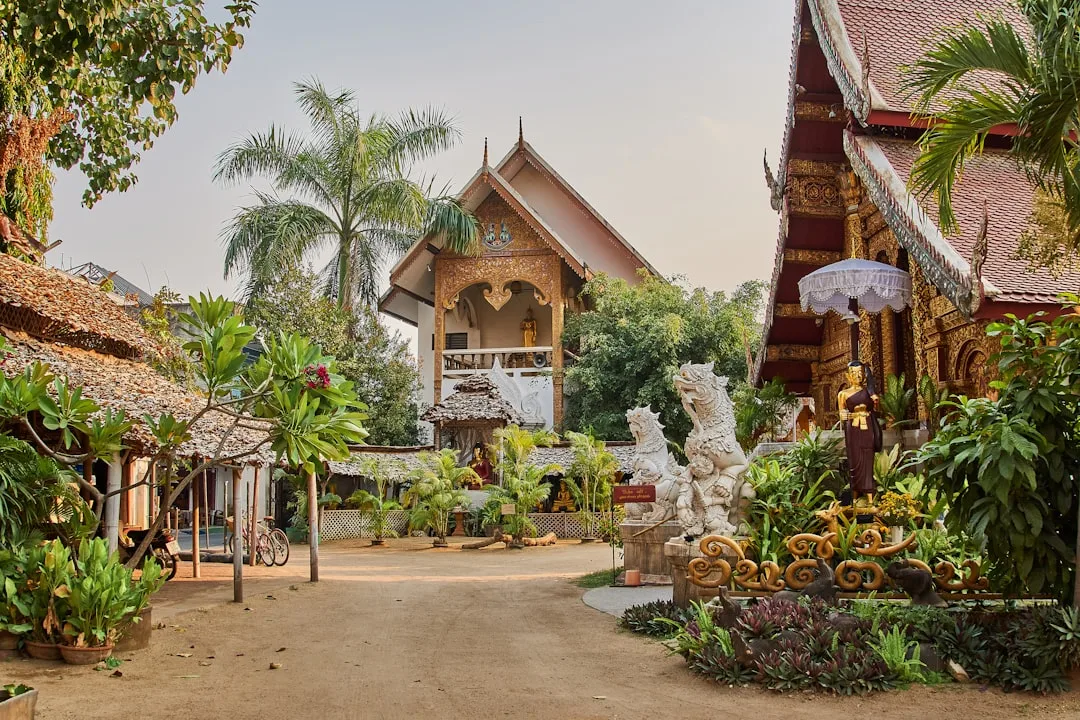







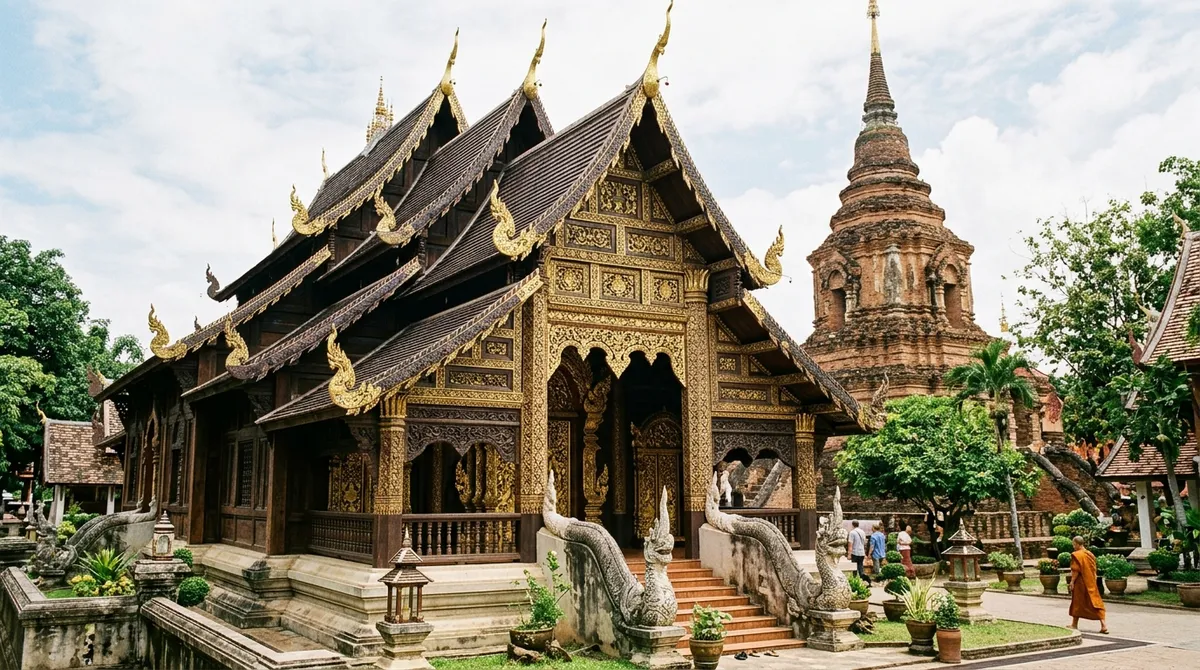
Wat Lok Moli in Chiang Mai (often spelled Wat Lok Molee), situated on Manee Nopparat Road along the outer northern moat just 400 meters west of Chang Phueak Gate, is one of the most historically significant royal monasteries of the ancient Lanna Kingdom. Restored to royal status in 1527 CE by King Mueang Kaeo, the sanctuary is renowned for its monumental unplastered brick prasat-style chedi, ancient arched gate, and a masterfully carved dark teakwood assembly hall (viharn). Open daily from 06:00 to 18:00 with free admission.
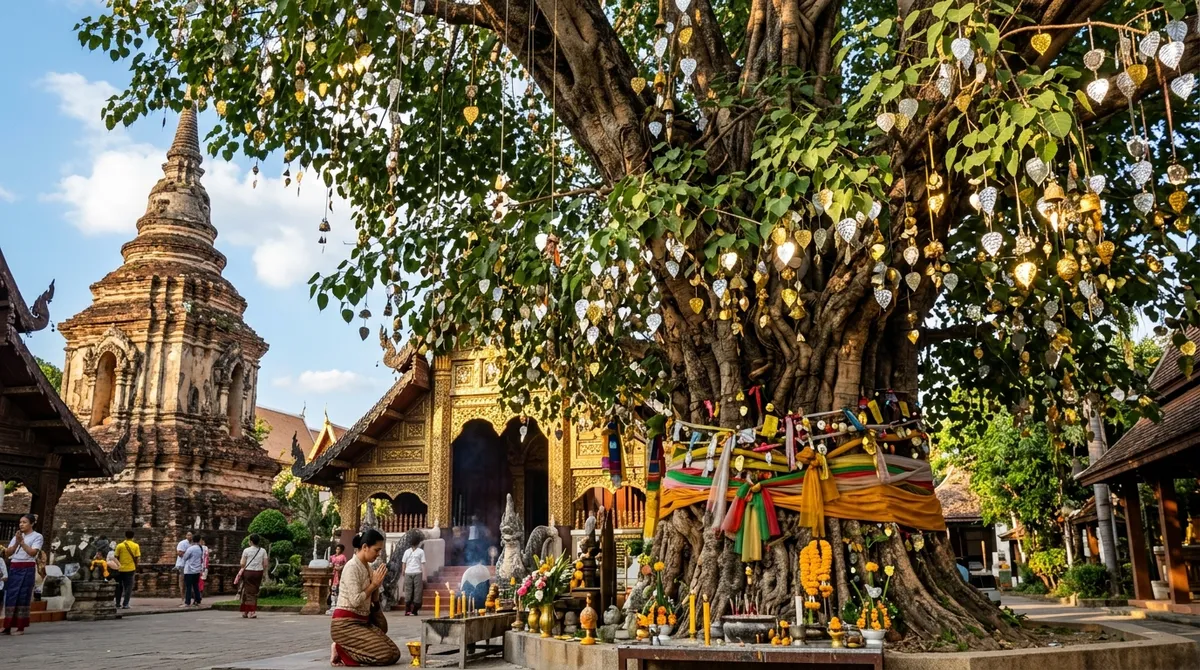
500 Years of Royal Heritage: Necropolis of the Mangrai Dynasty
While chronicles note that Mon monks from Burma were accommodated on these grounds during King Kuena's reign around 1367 CE, Wat Lok Moli achieved historical prominence in 1527 CE when King Mueang Kaeo and his royal mother formally elevated the complex into a royal dynastic temple. Throughout the 16th century, the monastery served as the royal crematorium and necropolis for the House of Mangrai:
- King Ket Chettharat (King Phaya Ket): Assassinated by court nobles during a succession crisis in 1545 CE, his royal cremated remains were interred inside the great brick stupa.
- Queen Wisutthi Thewi: The sovereign queen of the Mangrai Dynasty who reigned over Chiang Mai under Burmese vassalage until her death in 1578 CE; her ashes were likewise enshrined in the chedi.
Following the Burmese-Siamese wars, Wat Lok Moli was abandoned for centuries until the Fine Arts Department and the local monastic community initiated comprehensive archaeological excavation and restoration between 2001 and 2002.
3 Architectural & Cultural Masterpieces
1. The Monumental Bare-Brick Prasat Chedi
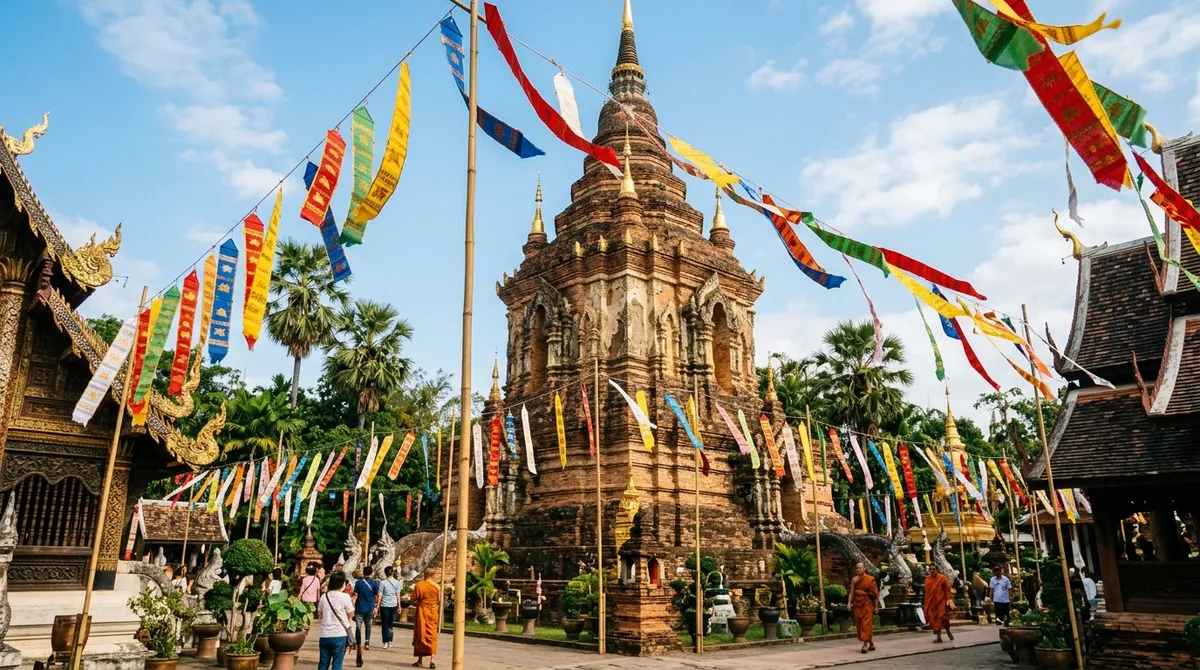
Dating from the early 16th century, this stupa represents the pinnacle of late-classical Lanna brick masonry. It survived regional earthquakes and wars completely intact. The exterior consists of exposed, unplastered terracotta bricks displaying precise courses of historic brickwork. Built on an indented square base, the central cube (Prasat) features arched niches on all four cardinal directions housing Buddha statues guarded by coiled stucco nagas.
2. The Ancient Brick Gateway (The Torana Gate)
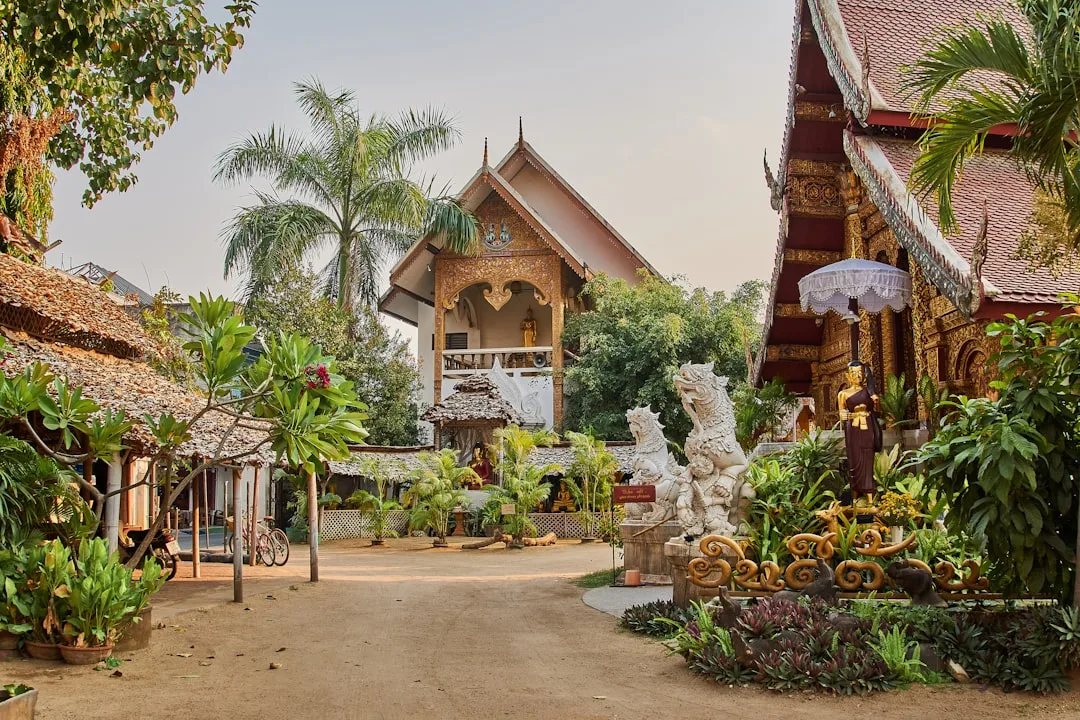
Greeting visitors from the street is an antique stucco-and-brick archway known as a Pratu Khong. Its tapering profile and ornamental gables act as a sacred threshold separating the profane city traffic from the monastic courtyard.
3. The Carved Teakwood Viharn
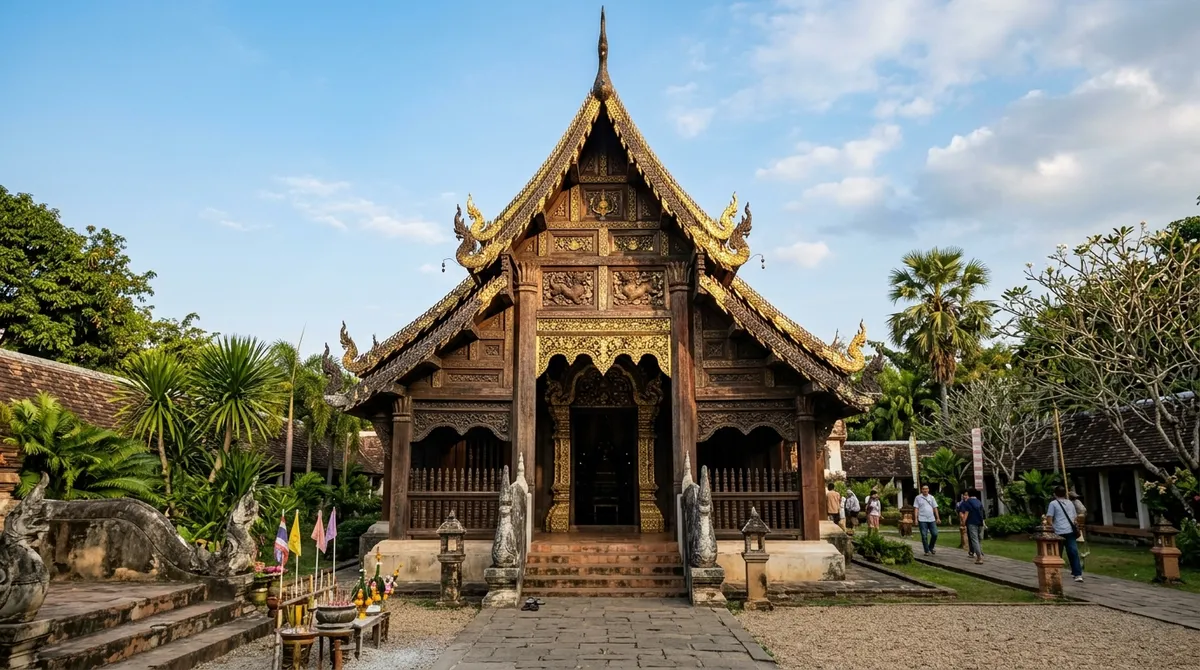
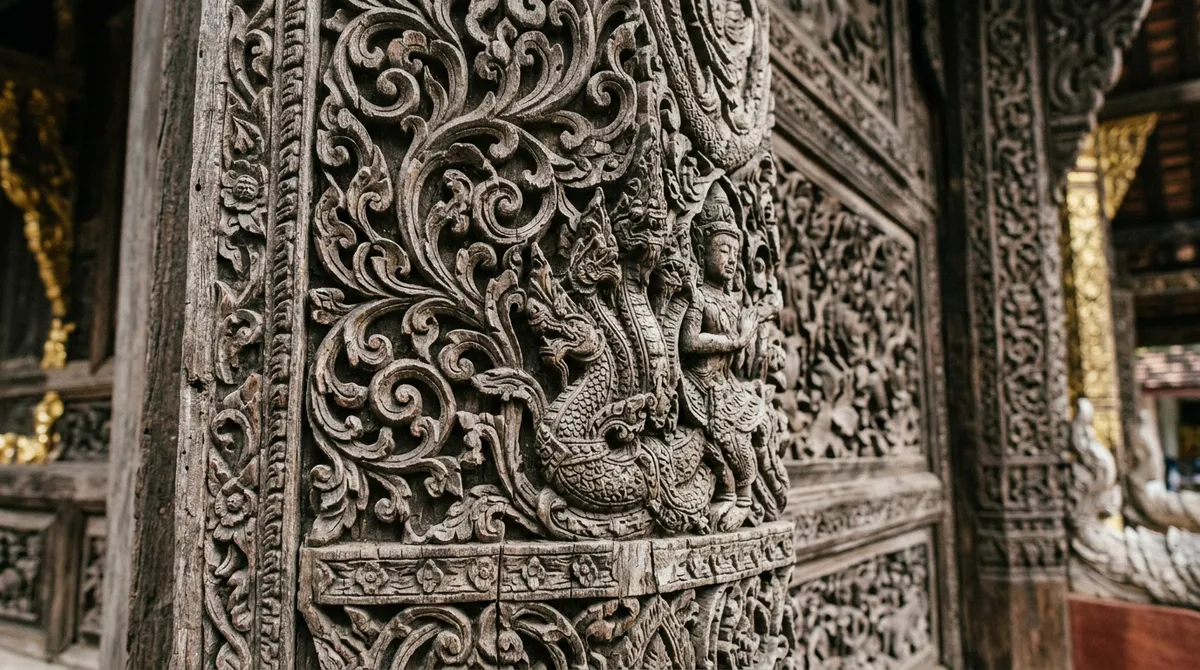
Constructed in 2002 to replace the lost wooden original, this hall follows strict classical northern architecture. It features three-tiered, low-slung sweep roofs and a masterfully carved dark teak gable showcasing peacocks (Nok Yung), celestial swans (Hong), and scrolling floral vines studded with colored mirror glass.
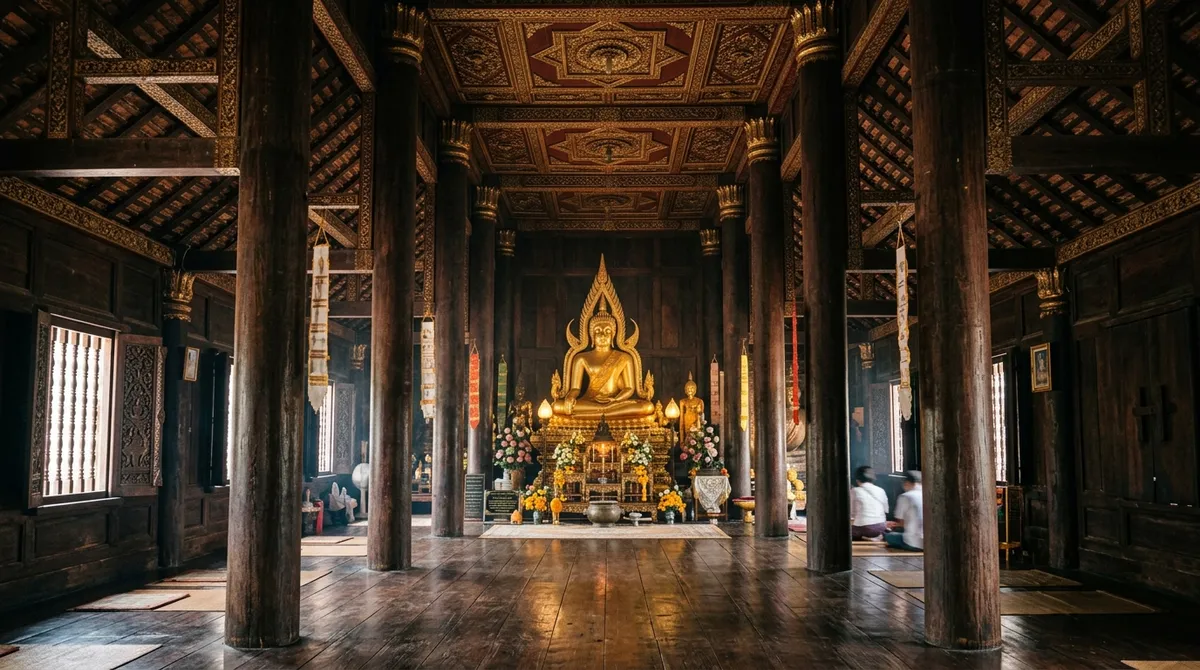
Enshrined inside is Phra Phuttha Santi Chirabophit, an alabaster white jade Buddha in the meditation posture.
Monument Directory & Key Facts
- Prasat Chedi — 1527 CE (16th Century), exposed red-brick tiered stupa, enshrines ashes of King Ket and Queen Wisutthi Thewi
- Torana Archway — Late Mangrai Period, brick-and-stucco ceremonial gate, sacred boundary transition into temple grounds
- Teak Viharn — Reconstructed 2002 CE, low-eave dark teak prayer hall, enshrines the white jade Buddha image
- Queen's Pavilion — Contemporary, teak open shrine behind stupa, memorial to the last queen of the Mangrai Dynasty
Local Insider Tips
- The Late Afternoon Lighting Window: The optimal time for photography is 16:00 to 17:30. The low-angled golden sunlight illuminates the exposed brickwork on the western face of the chedi, producing warm amber tones that contrast sharply against the dark carved teak of the main hall.
- Yi Peng Lantern Festival Spectacle: During the annual Yi Peng (Loy Krathong) festival in November, hundreds of vibrant, multi-colored hanging Lanna lanterns (Khom Khwaen) are strung across the sandy courtyard around the stupa, making it one of the premier night photography locations in Chiang Mai.
- Queen Wisutthi Thewi Shrine: Behind the stupa stands a dedicated pavilion commemorating Queen Wisutthi Thewi. Local residents, particularly female university students, regularly offer fresh white jasmine garlands to pray for academic success, love, and protection.
Wat Lok Moli is only a few minutes from Chang Phueak Gate and the Old City moat — continue on foot to explore our Old City walking guide or pay a visit to Wat Chedi Luang, another landmark temple on the same route.
Uncover Lanna's Royal Heritage with Terra Lanna
Delve into the storied lineage of Chiang Mai's monarchs with unparalleled sophistication. Settle into our handpicked luxury boutique hotels near the northern moat and Chang Phueak Gate or book an exclusive private archaeological tour of royal Lanna temples curated by Terra Lanna.
Learn more: Chapter 3 (II): More Temples, Sites & Monuments