









Chapter 4: The Sacred Effigies of Luang Pu Mun: The Ancient Stupa Bronze, the Suan Saeng Tham Foundry, and the 1949 First Cast Legend
Chapter 4: Sacred Effigies of Luang Pu Mun: The 520-year Chedi Luang ancient bronze alloy, the Suan Saeng Tham foundry, and the 1949 first cast legend.
The Consecration at Suan Saeng Tham (23 December 2002 CE)
As the construction of Vihara Buraphachan advanced smoothly, disciples resolved to cast a monumental effigy to stand as the visual soul of the sanctuary. On Monday, 23 December 2002 (B.E. 2545) at 10:19 AM, at Suan Saeng Tham in Phutthamonthon District, Nakhon Pathom, a historic foundry liturgy took place: the pouring of molten bronze for a 1.73-meter-tall standing statue of Phra Acharn Mun Phuritatto, finished in polished black patina.
The ceremony carried immense spiritual gravity. Luang Ta Maha Bua Nanasampanno of Wat Pa Ban Tat personally presided over the casting kiln, joined by Phra Phuttha Photchanawaraphon (Jan Kusalo), Abbot of Wat Chedi Luang, and an assembly of over a hundred senior meditation masters of the Forest Tradition intoning victory parittas (Jayamangala Gatha).
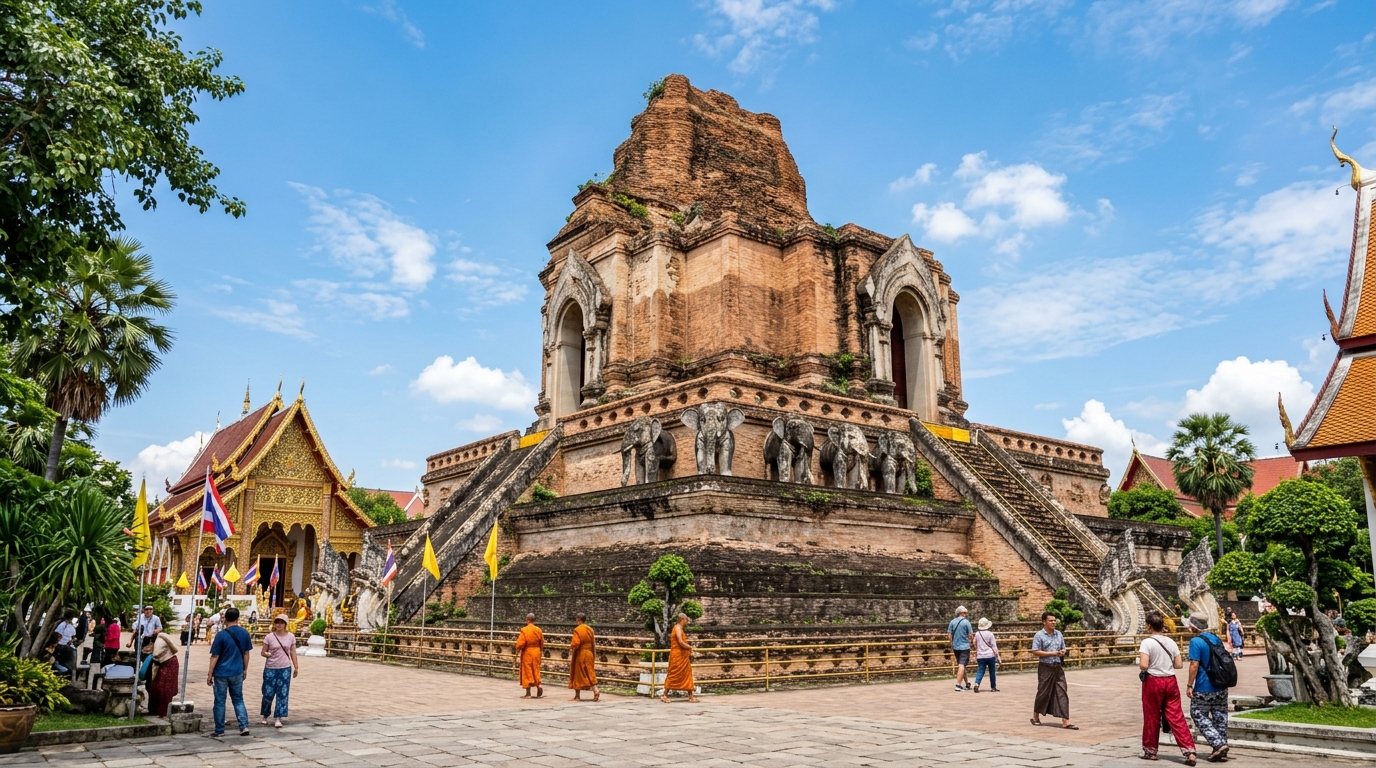
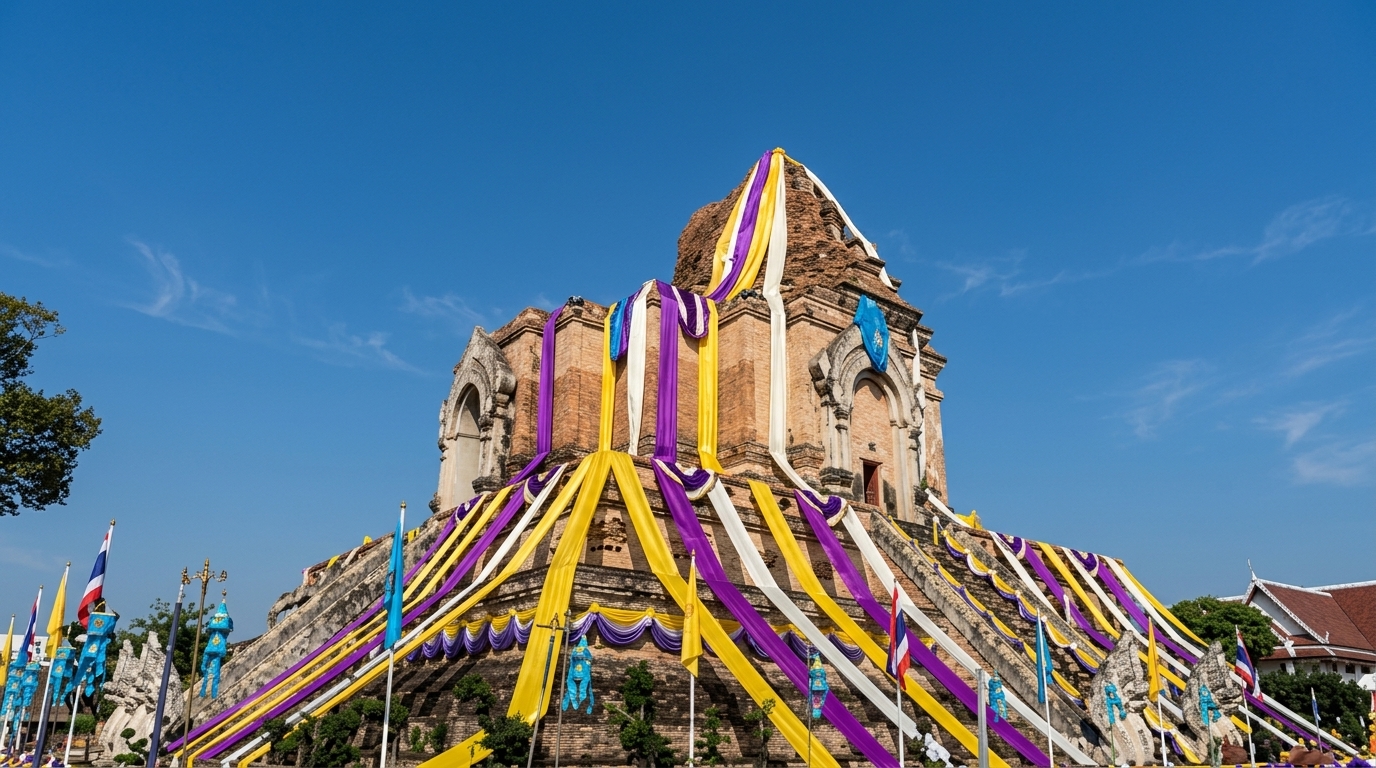
The supreme historical significance of this bronze lies in its metal composition. Intermixed into the crucibles were substantial fragments of ancient sheet copper-gold alloy (Phaen Thong Changko) excavated directly from the Great Stupa of Wat Chedi Luang during its 1990–1992 restoration. These historic plates originally adorned the upper tiers of the stupa, consecrated by King Tilokaraj of Lanna in 1479–1481 CE (B.E. 2022–2024). Melting this 520-year-old imperial metallic relic into the effigy of Luang Pu Mun forged an indissoluble metaphysical alloy uniting the temporal sovereignty of Lanna's greatest monarch with the spiritual enlightenment of modern Thailand's supreme forest saint.
The Inter-Provincial Triumphal Procession (18 April 2003 CE)
Following final chasing and black chemical patination, the statue was welcomed with extraordinary pomp on 18 April 2003 (B.E. 2546). A multi-vehicle religious caravan formed at Pratu Li in Lamphun, parading the image across the provincial boundary into Wat Chedi Luang in Chiang Mai. It was temporarily placed within the Great Vihara Luang alongside the golden reliquary, awaiting permanent transfer to Vihara Buraphachan alongside a life-sized wax sculpture of Luang Pu Mun in seated meditation, commissioned by Khun Thawara Wanglee.
Register of Luang Pu Mun Effigies at Wat Chedi Luang
Wat Chedi Luang shelters three primary historical representations of the master:
- The 1974 Seated Bronze: A life-sized blackened bronze in meditation posture, cast in 1974 and venerated inside the Great Vihara.
- The 1998 Standing Bronze: A 1.73-meter blackened bronze cast on 20 December 1998, donated by Mrs. Thongmee Chaowasangket.
- The 2002 Changko-Alloy Standing Bronze: The presiding effigy cast at Suan Saeng Tham for Vihara Buraphachan.
The Legend of the First Life-Cast Effigy (1949 CE)
The chapter preserves a vital art-historical record regarding the first bronze statue of Luang Pu Mun ever created, dating to late 1949 (B.E. 2492). As the master lay critically ill in Sakon Nakhon, his devoted lay disciple Nai Wan Komanamool commissioned Nai Wichit Chaowasangket, a master sculptor from the Fine Arts Department, to model and cast a life-sized bronze effigy in Bangkok.
Seeking to avoid disturbing the frail elder, Master Wichit relied entirely on photographic plates to sculpt the clay archetype with photographic fidelity. By the time the bronze cooled in the foundry, Luang Pu Mun had entered final Parinibbana. That pioneering first cast is enshrined permanently at Wat Pa Suthawat in Sakon Nakhon, serving as the benchmark for all subsequent representations of the father of the Thai Forest Tradition.