












Chapter 3: Tan Khao Salak: Communal Lotteries of Faith, Grand Salak Chok, and the Maiden's Tower of Salak Yom
Explore Lanna's Tan Khao Salak: the sacred lottery of palm-leaf slips, the miniature mansions of Salak Chok, and the 10-meter Salak Yom of Tai Yong maidens.
Primacy of Sanctuaries: The Ecclesiastical Hierarchy of the Autumn Alms
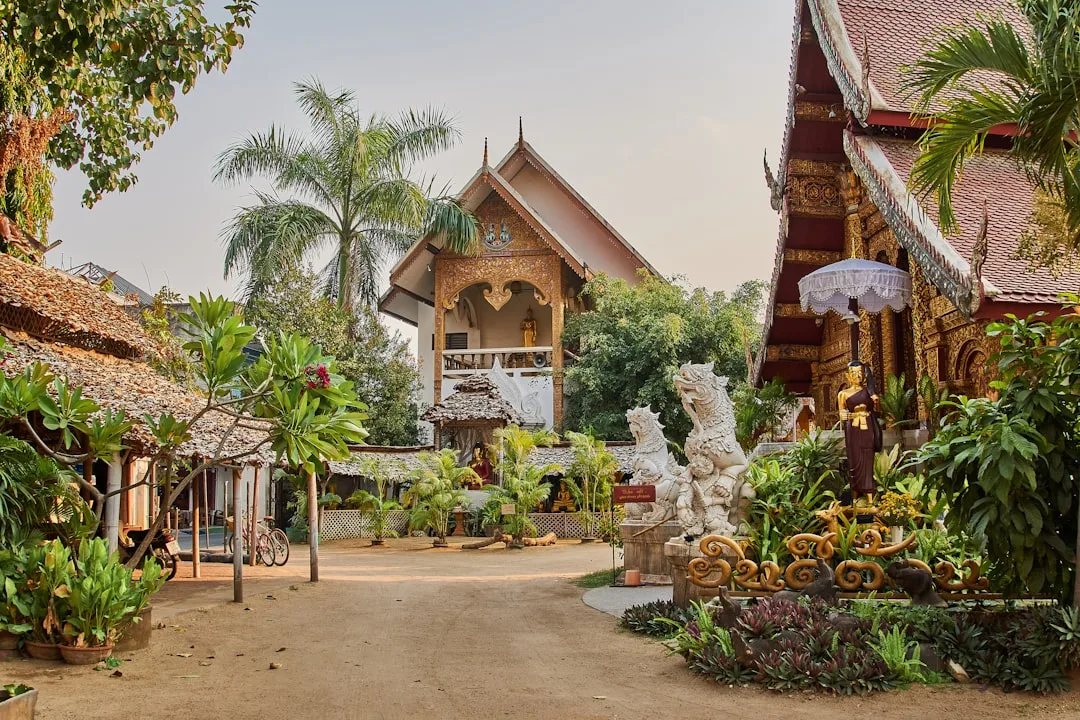
The tradition of Tan Khao Salak, regionally celebrated as "Kin Kuay Salak" (the northern manifestation of Salakabhat, the scriptural feast of lot-drawn alms), is the pinnacle of autumnal merit-making in Lanna. Spanning from the full moon of the twelfth northern lunar month (roughly September) through the waning of the first month (October), the festival observed a strict monastic hierarchy. In Chiang Mai, no outlying parish could launch its festival until Wat Chiang Man—the inaugural sanctuary founded by King Mangrai in 1296—consecrated its own. Likewise, in Lampang, the seasonal cycle was invariably inaugurated at Wat Pong Yang Khok, the ancestral cradle of the ruling Seven Princes Dynasty (Chao Chet Ton), while Lamphun converged upon the monumental Wat Phra That Hariphunchai.
The eve of the festival is "Wan Da" (the Preparation Day). Men harvest and shave bamboo splints to weave dozens of cylindrical hampers called "Kuay." Women prepare the contents, lining each hamper with broad banana leaves or tinted paper and packing them with dry provisions: coarse salt, dried shallots, garlic, shrimp paste, fermented fish (Pla Ra), smoked meats (Chin Ping), steamed chicken-and-fish packets (Ho Nueng), dyes, fruits, tobacco, and fermented tea (Miang). Atop each basket, banknotes are affixed to a bamboo skewer, forming the consecrated apex ("Yod").
The Epigraphy of Palm-Leaf Slips (Sen Salak) and Courtyard Revelry
The liturgical axis of the feast is the "Sen Salak"—slender ribbons of incised palm-leaf (Bailan) or indigenous mulberry paper (Sa) bearing the donor's name and karmic petition. These fall into two distinct theological categories:
- Dedications for the Future Self: Alms invested to furnish the donor's own celestial mansion in post-mortem rebirth.
- Suffrages for Departed Kin: Explicit petitions invoking the spirits of deceased ancestors, such as: "We, Nan Sena and Nang Bu, consecrate these fruits unto Nang Chanta, our departed mother; may this sustenance reach her in the shadows."
The collective mass of inscribed slips is piled before the central Buddha icon in the Vihara. The lay precentor (Achan Wat) tallies the attending monks and novices summoned from peripheral villages, distributing the slips into equitable lots while withholding an institutional share designated as "Phra Chao's Portion" (the Temple Lottery). Cash affixed to the Buddha's slips is deposited into the structural maintenance treasury, while edibles are divided equitably among the novices and temple acolytes (Kha-yom).
Once distributed, monks disperse beneath the shade of banyan trees across the temple compound. A magnificent auditory chaos erupts as temple boys and novices shout the inscribed names into the crowd: "Faithful Nan Jaiyawong of the Upper Parish, where art thou?!" Thousands of villagers clutching laden baskets weave through the courtyard in a joyous labyrinthine search. Courting youths seize the moment, aiding maidens in locating their designated clerical recipients. Once located, the monk verifies the inscription on the palm leaf, accepts the hamper, and intones the lustral blessing.
Salak Chok: The Aristocratic Microcosm of Heavenly Mansions
For the wealthy patricians of Lanna, humble bamboo hampers were insufficient. They constructed "Salak Chok" (The Fortune Lottery)—architectural marvels built as miniature timber cottages. These pavilions were fully furnished with bronze cooking vessels, ceramic bowls, bedding, pillows, mosquito netting, handwoven textiles, live sugarcanes, and fruit trees, topped with hundreds or thousands of baht in currency.
In elite households, genuine heirloom gold necklets, silver girdles, and gemstone bangles were tied to the rafters of the miniature house. Upon formal dedication, the donor would "buy back" (Bucha Khuen) these heirlooms with equivalent cash donations to the temple. This pious theater was grounded in the firm cosmological belief that surrendering one's most opulent terrestrial treasures guarantees their immediate replication as divine finery in the celestial palaces of the Devaloka.
Salak Yom: The Monumental Towers of the Tai Yong Maidens
In the province of Lamphun, among the Tai Yong (Tai Lue diaspora originating from Mueang Yong in the Shan States), this feast evolved into one of the most astonishing folk-art monuments on earth: the "Salak Yom."
The Salak Yom is an exclusive, once-in-a-lifetime sacrament reserved strictly for unmarried virgin maidens. From the onset of puberty, a Yong girl weaves, saves, and accumulates her dowry specifically to sponsor this towering obelisk of merit:
- The structure takes the form of a colossal artificial tree rising 4 to 5 Wah (8 to 10 meters high), crowned by an umbrella of gossamer silk.
- The central mast is wrapped in dense sheaths of straw, bristling with thousands of protruding skewers bearing dyed wools, mirrors, combs, sewing needles, silks, silver ornaments, cosmetics, and seasonal produce.
- Classical Yong customary law maintained: "A maiden who hath not yet erected her Salak Yom is not yet worthy to wed." The colossal pillar stands as the public vindication of her industry, moral purity, and economic self-sufficiency. Having surrendered her youth's treasury to the Buddha, she steps into marriage regarded as a paragon of virtue, assured of domestic harmony and spiritual nobility across lifetimes.