



















Chapter 4: Aew Sao and Sia Phi: Nocturnal Courtship Aesthetics, Lyrical Poetics, and Lanna's Ancestral Spirit Jurisprudence
Explore Lanna's nocturnal courtship (Aew Sao): the poetics of lute serenades, veranda shadows, and the sacred spirit fines (Sia Phi) protecting women.
The Sanctity of the Clan: The Matrilineal Cult of Ancestor Spirits (Phi Pu Ya)
In traditional Northern Thai ontology, a woman's physical body and maidenhood were not regarded as privatized individual assets; they constituted consecrated territory placed under the protective suzerainty of her matrilineal ancestor spirits (Phi Pu Ya Ta Yai). Sanguan Chotisukharat underscores that Lanna society was fundamentally organized around matrilineal descent lines. Every village compound maintained a domestic spirit shrine ("Ho Phi"), overseen by the eldest matriarch or clan elder, designated as the "Kao Phi" (the Root/Head of the Spirit Lineage).
During Songkran or major rites of passage, all married-in sons-in-law and descendants converged upon the residence of the Kao Phi, presenting sacrificial offerings of boiled pig heads, fowl, sticky rice confections, liquor, and flowers. Through formal invocations chanted by the Kao Phi, the living sought forgiveness from the ancestral shades. This animist lineage cult functioned as the foundational bedrock of Lanna sexual ethics and civic discipline.
The Nocturnal Promenade (Aew Sao): Music, Poetic Wits, and Veranda Shadows
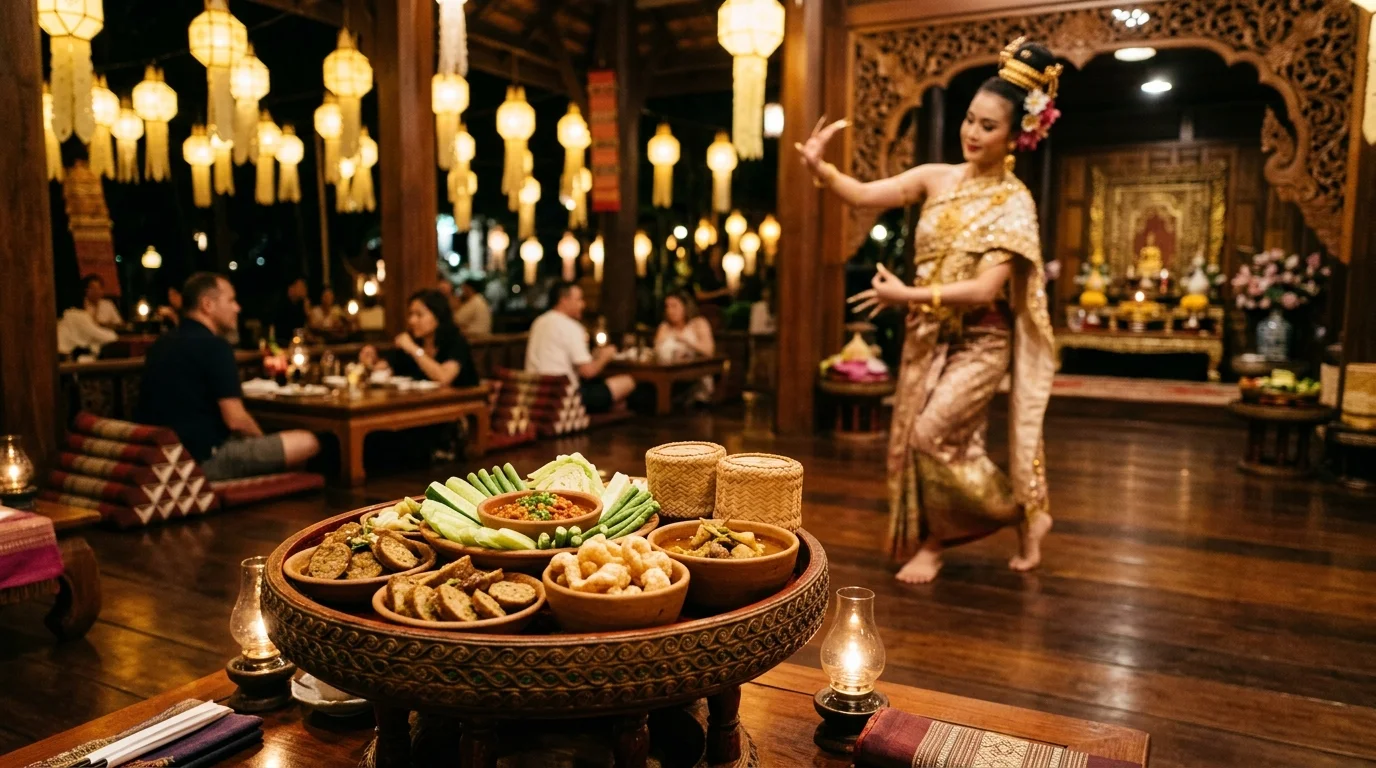
Following evening agricultural labors, Lanna youth were accorded expansive liberty in courting, yet this freedom operated under the strict surveillance of the ancestral spirit code. Young bachelors groomed their hair, applied scented powders to their cheeks, and traversed the dirt footpaths carrying indigenous stringed instruments—the four-stringed plucked lute (Seung) or the bowed two-string spike fiddle (Salaw)—strumming lyrical melodies in the dark. This nocturnal excursion was known as "Aew Sao" (promenading to court maidens).
The maiden awaited her suitors upon the "Teun"—the open-air wooden reception veranda of the raised stilt home. To mask her natural bashfulness, she engaged in evening domestic handicrafts: spinning wild cotton with a hand-spindle (Phein) or slicing and threading betel nuts into dried loops (Mak Sieb). Her parents retired to the adjacent inner bedchamber, granting the courting couple privacy while remaining auditory sentinels. Formal courtship etiquette strictly dictated that suitors never arrived prior to 8:00 PM (to avoid intruding upon the family dinner) and often extended their lyrical vigils until two or three in the morning. Walking home under the moonlight, departing suitors sang "Joi"—melancholic, high-pitched vocal serenades drifting over the rice paddies, expressing romantic longing or tender sorrow.
The intellectual zenith of courtship was the duel of "Kham Khruea" (improvised poetic riddles). The maiden deliberately sat veiled in the deep shadow cast by the house's structural pillars, leaving her suitor to negotiate her countenance in near-darkness. Suitors had to deploy stratagems—such as leaning forward under the pretense of lighting a rolled tobacco leaf—to catch a fleeting glimpse of her visage. Courters exchanged witty strophes memorized from master Lanna epics, such as the classical poetry of Phraya Phromwohan:
- The fair maiden sits concealed within the shadows of the pillar; only the unsightly suitor sits boldly exposed in the glare.
- Thy lips speak vows of truth, yet thy heart follows not; 'tis but splashing clear water upon the face to fashion a mask of grace.
The Ironclad Code of "Phit Phi": Spatial Transgressions and Restorative Fines (Sia Phi)
Despite the relaxed atmosphere of veranda courtship, Lanna customary law enforced absolute bodily inviolability: any unauthorized physical intimacy was strictly prohibited until mutual matrimonial commitment was confirmed.
Grasping a maiden's hand, touching her arm, or initiating unsolicited advances constituted "Phit Phi" (Offending the Clan Spirits). Society treated such boundary violations not merely as interpersonal misconduct, but as an act of cosmic desecration against the woman's ancestral spirit lineage. The transgressor was subjected to severe familial ostracism, judicial retribution, and heavy restorative fines. Crucially, the spatial boundaries were absolute: even if a young man never laid a finger upon the maiden's flesh, merely crossing his foot over the "Khom Pratu" (the raised wooden threshold separating the open veranda from her private sleeping quarters) constituted an automatic verdict of Phit Phi.
Once a breach occurred, customary restitution required the ceremony of "Sia Phi" (or Sai Phi—Paying the Spirit Fine):
- "Sai Ao" (Paying to Wed): When intimacy occurred consensually and both parties affirmed their desire to become lifelong partners. The suitor brought sacrificial heads of boiled swine, fowl, liquor, and the prescribed bridal indemnity—historically paid in silver Indian rupees (Ngoen Rupee) or cast silver ingots (Ngoen Chiang)—presenting them to the Kao Phi to seek ancestral absolution and formally seal the marriage.
- "Sai Mai Ao" (Compensatory Fine Without Marriage): When a suitor committed a physical breach, but the maiden (or her clan) refused his hand in marriage. The transgressor was still legally compelled to pay a mandatory spirit fine—set at half the full bridal indemnity—to purge the lineage of mystical pollution and publicly restore the maiden's communal honor.
Thus, Sia Phi was never a commercial transaction of human flesh; it was a sophisticated legal-spiritual institution that checked male predatory behavior, sacralized female consent, and maintained moral equilibrium across generations.