












Chapter 4: Chronicle of Wat Chet Yot: The Great Bodhi Sanctuary of Lanna, the Replicated Sattamahasathan of Bodh Gaya, and the Monastic Abbacy
Chapter 4: Chronicle of Wat Chet Yot: Founded in 1455 by King Tilokaraj, replicating Bodh Gaya's Sattamahasathan, and its monastic succession.
The Consecration of the Mahabodhi Tree (1455 CE / B.E. 1998)
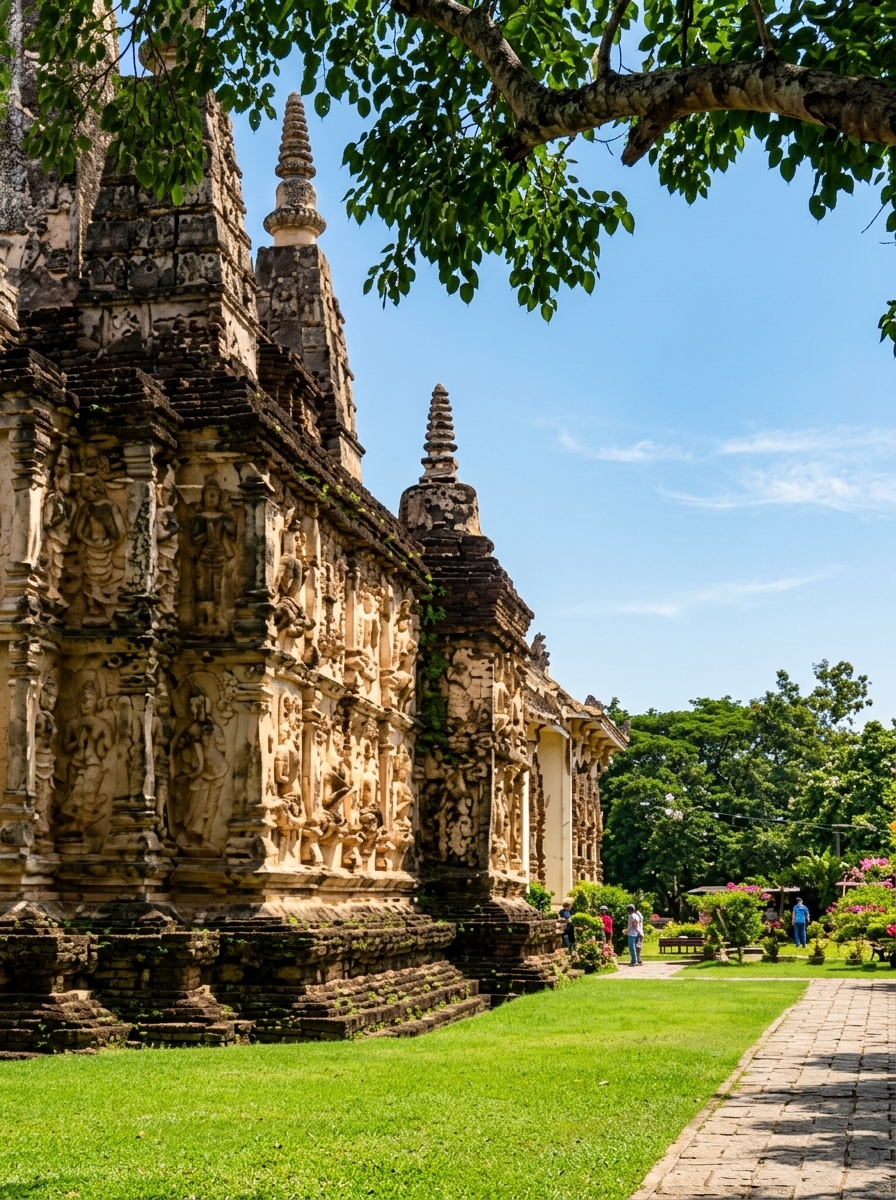
Wat Chet Yot (originally consecrated under the canonical Pali title Wat Photharam Mahavihara, "The Great Monastery of the Bodhi Grove") is situated along the Chiang Mai Superhighway in Tambon Chang Phueak, Mueang District, Chiang Mai. The sanctuary was formally inscribed as a National Ancient Monument in the Royal Gazette on 8 March 1935 (B.E. 2478).
According to the Tamnan Wat Chet Yot, the sanctuary's genesis unfolded when King Tilokaraj heard an exposition on the immense spiritual merit garnered from cultivating a sacred Bodhi tree. Seeking an austere forest sanctuary (Aranyavasi) suited for intensive Vipassana meditation, the king dispatched his court ministers to identify a quiet topographic sanctuary outside the capital. They identified an elevated terrace along the banks of the Rohini River (the Mae Kha / Huay Kaew stream) northwest of Chiang Mai's walls.
In 1455 CE (B.E. 1998 / C.S. 817), Year of the Boar, King Tilokaraj ordered the ceremonial transplanting of a cutting of the sacred Maha Bodhi tree—originally brought from Anuradhapura, Sri Lanka, by northern monks and initially nurtured at the slopes of Doi Suthep (Wat Pa Daeng Luang)—to this newly sanctified grounds. The king erected monastic cells, perimeter walls, and an entrance archway (Pratu Khong), presenting the hermitage to Phra Maha Uttamapanya, an eminent master re-ordained within the Sri Lankan Mahavihara lineage. The monastery was christened "Wat Photharam Mahavihara".
Replicating Bodh Gaya's "Sattamahasathan"
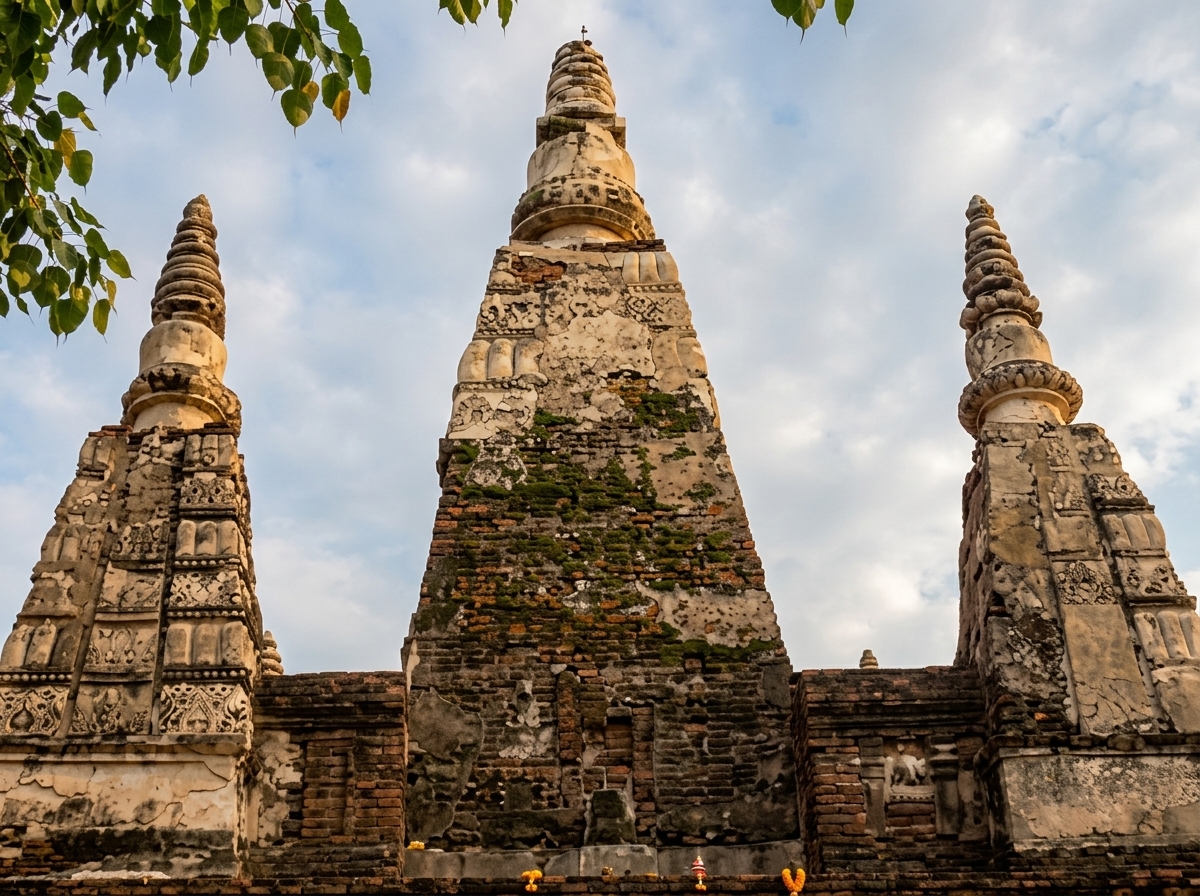
The distinguishing architectural achievement of Wat Photharam was King Tilokaraj's vision of replicating the complete cosmological layout of the Sattamahasathan (The Seven Sacred Stations of the Buddha's Post-Enlightenment Contemplation) directly from Bodh Gaya, India, filtered through Burmese Pagan models:
- Bodhi Pallanka: The jewel throne resting directly beneath the sacred Sri Lankan Bodhi tree.
- Animisa Cetiya: An octagonal brick tower to the northeast, marking the station where the Buddha stood for seven days without blinking, gazing upon the Bodhi tree in gratitude.
- Ratanacankama Cetiya: The raised jeweled ambulatory path to the north, commemorating the Buddha's celestial walking meditation.
- Ratanaghara Cetiya (The Jewel House): Situated to the northwest, commemorating the contemplation of the Abhidhamma where the six-colored rays (Chabbannaransi) radiated from his body.
- Ajapala Nigrodha: To the east, marking the banyan tree where the Buddha instructed arrogant Brahmins on moral equality.
- Mucalinda Lake: A sacred pond to the south, where the Naga king Mucalinda coiled his body to shield the Teacher from torrential storms.
- Rajayatana: To the south, marking the tree where the merchants Tapussa and Bhallika offered roasted barley cakes and became the first lay disciples.
Subsequent Dynastic Construction (1487–1526 CE)
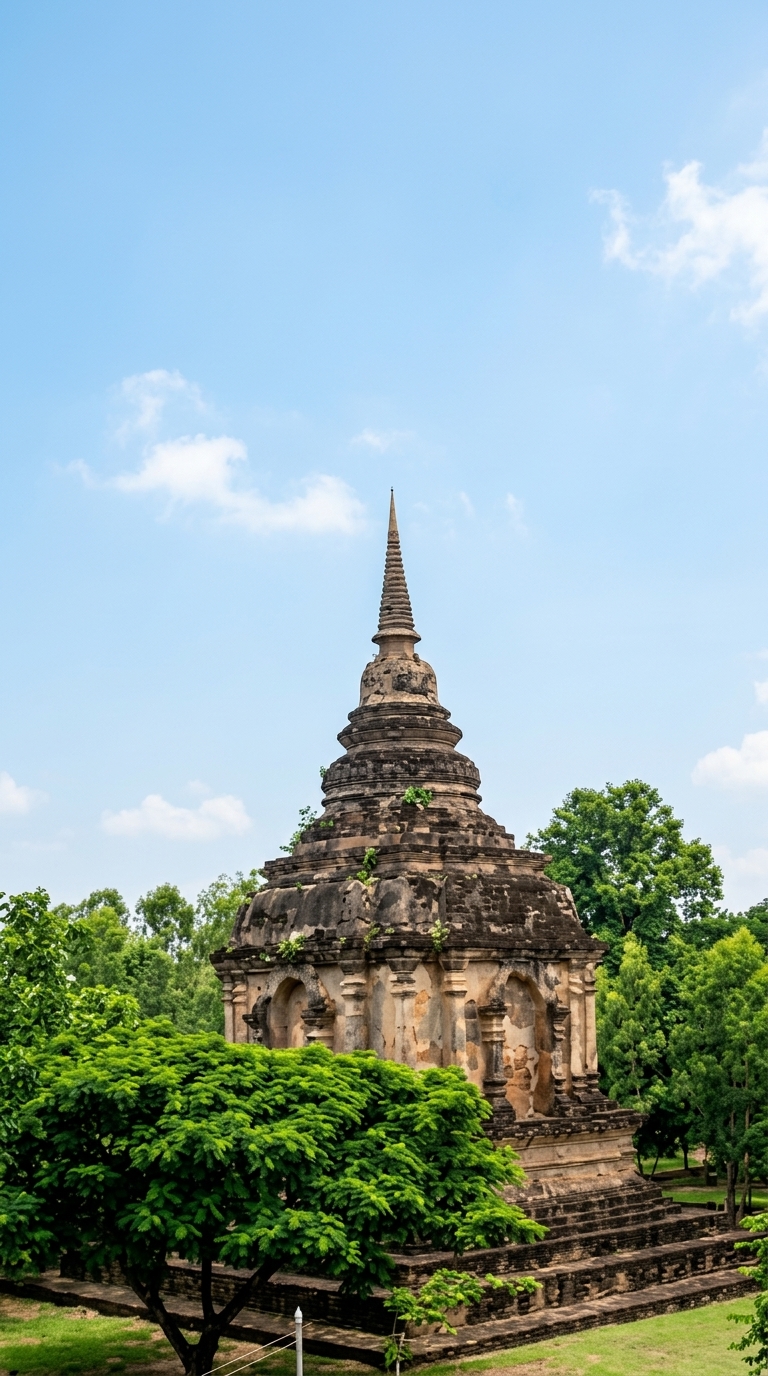
Following the historic Eighth Buddhist Council convened on these grounds in 1477 CE, successive Mangrai monarchs augmented the sacred compound:
- Reign of King Yot Chiang Rai (1487 CE / B.E. 2030): Following the passing of King Tilokaraj, his grandson and successor erected a monumental stepped prasat-style reliquary stupa north of the Vihara to permanently enshrine the cremated royal ashes of the great emperor.
- Reign of King Mueang Kaeo (1510–1526 CE): King Mueang Kaeo acquired additional adjacent land to expand the Uposatha precincts. In 1526 (B.E. 2069), he transferred the royal, sacred Red Sandalwood Buddha (Phra Kaen Chan Daeng) from Wat Buppharam (Wat Suan Dok) to be enshrined within a specially constructed vaulted mondop at Wat Photharam.
The Succession of Monastic Patriarchs
Wat Photharam Mahavihara stood as the supreme seat of the Lankavamsa forest monastic fraternity (Aranyavasi), second in administrative hierarchy only to Wat Pa Daeng Luang. Historic chronicles record its eminent line of monastic abbots:
- Phra Maha Uttamapanya (1455 CE): The founding abbot who spearheaded the institutionalization of the Sri Lankan reform movement.
- Phra Samathera (1511 CE): Oversaw extensive boundary rectifications and the consecration of the brick Uposatha hall.
- Phra Satthammakhana (Phra Satthammathera): Elevated to the supreme clerical dignity of "Somdet Phra Mahaswami" (Supreme Patriarch) of the Lanna Lankavamsa order under King Mueang Kaeo.
- Phra Maha Sarabhangka (1526 CE): Spiritual preceptor to King Mueang Ketklao, subsequently elevated to the rank of Mahaswami.
Through its cosmic replication of the holy sites of Magadha, its forest meditative focus, and its imperial patronage, Wat Chet Yot established itself as the architectural and spiritual jewel of the Lanna Renaissance.