



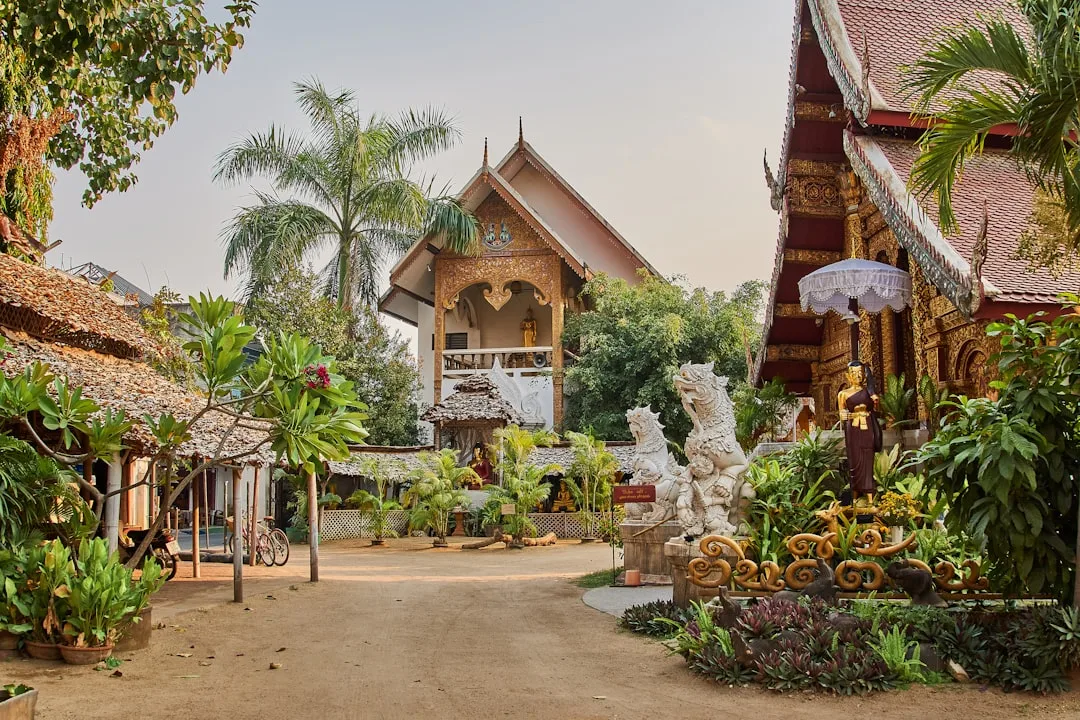







Chapter 5: Sacred Art and Architecture of Wat Chet Yot: The Mahabodhi Replica, 70 Celestial Stucco Devas, and Lanna Master Masonry
Chapter 5: Sacred Art of Wat Chet Yot: Analyzing the Mahabodhi-style Vihara, 70 celestial stucco devas, Ming cloud motifs, and ancient mortar science.
The Chet Yot Vihara: Bodh Gaya Architecture and Laterite Vaulting
The architectural masterpiece of Wat Chet Yot is its Seven-Spired Vihara (Vihara Chet Yot), an audacious northern recreation of the Mahabodhi Temple of Bodh Gaya, India, integrated with the sophisticated vaulted brick technology of Pagan, Burma. The ground floor comprises a massive, rectangular Laterite (Sila Laeng) core constructed with thick perimeter walls housing an elongated barrel-vaulted ambulatory nave. Within the wall thickness, narrow stairways ascend directly to an open upper terrace, which functions as a monumental plinth supporting seven distinct stupas:
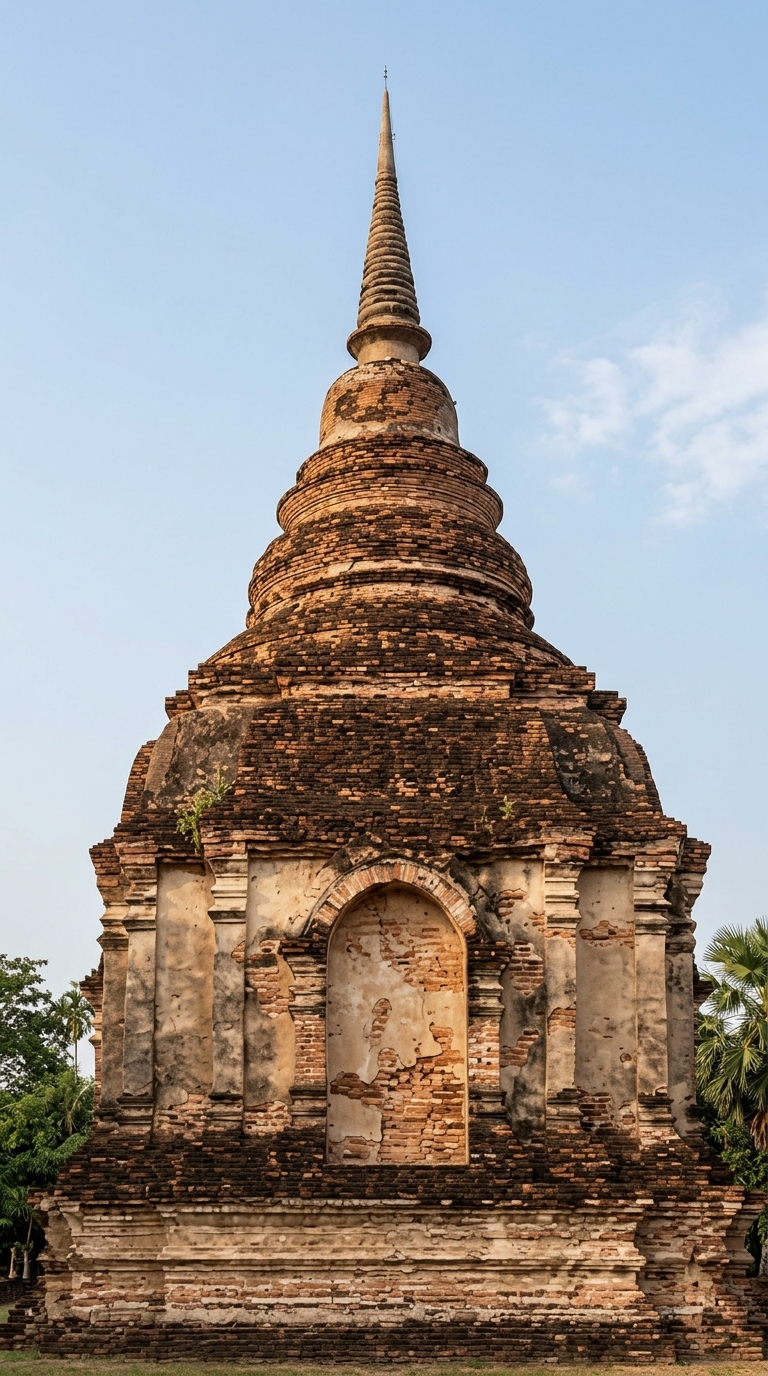
- The Central Great Spire: A pyramidal, tapering tower resembling the Indian Shikhara, punctuated by 27 exterior niches framed by flame-arches.
- Four Corner Subsidiary Stupas: Tiered, stepped square spires anchoring the four cardinal angles.
- Two Front Bell-Shaped Stupas: Cylindrical, bell-shaped reliquaries flanking the east entrance, reflecting Sri Lankan Theravada traditions.
Archaeologists emphasize that employing heavy laterite to support a two-story structure bearing seven masonry spires on its roof represents the absolute pinnacle of structural engineering in the 15th-century Lanna Empire under King Tilokaraj.
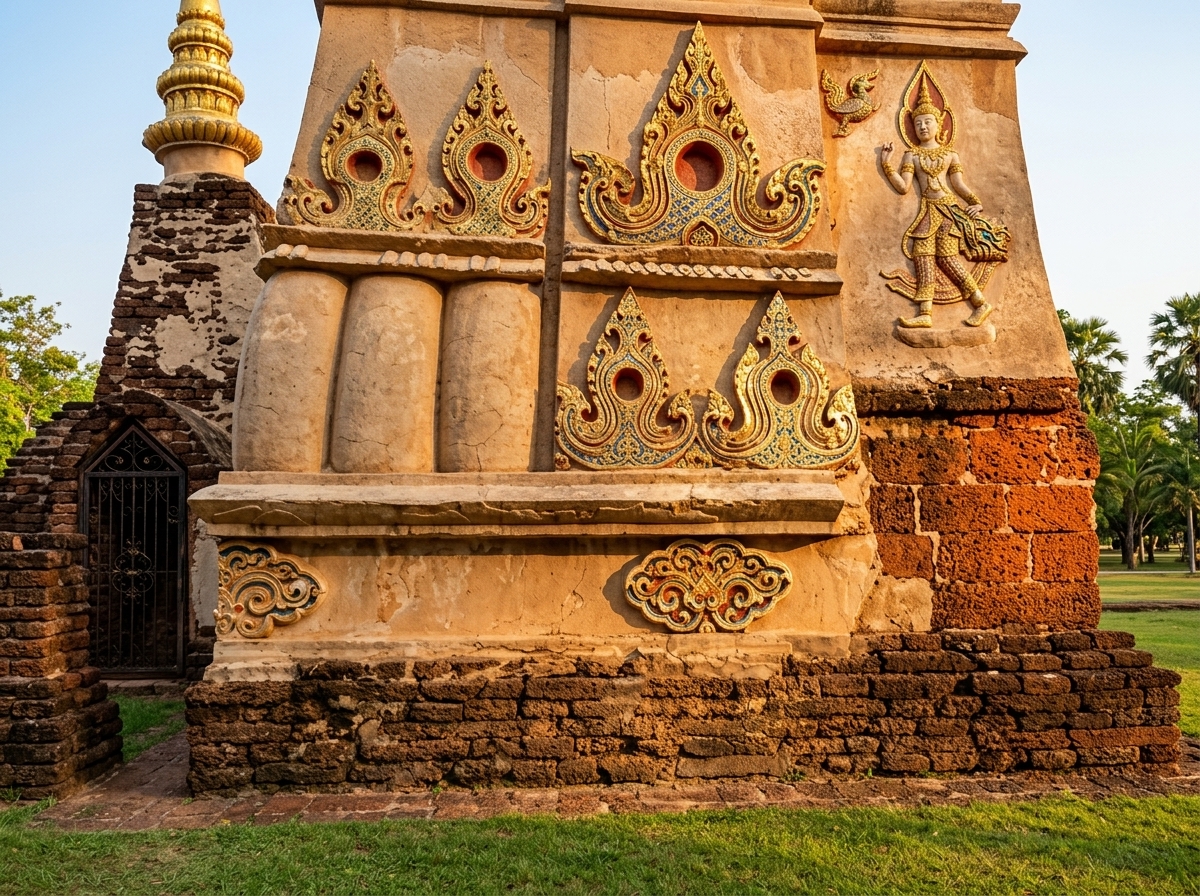
The 70 Stucco Devas: The Crown Jewel of Lanna Sculpture
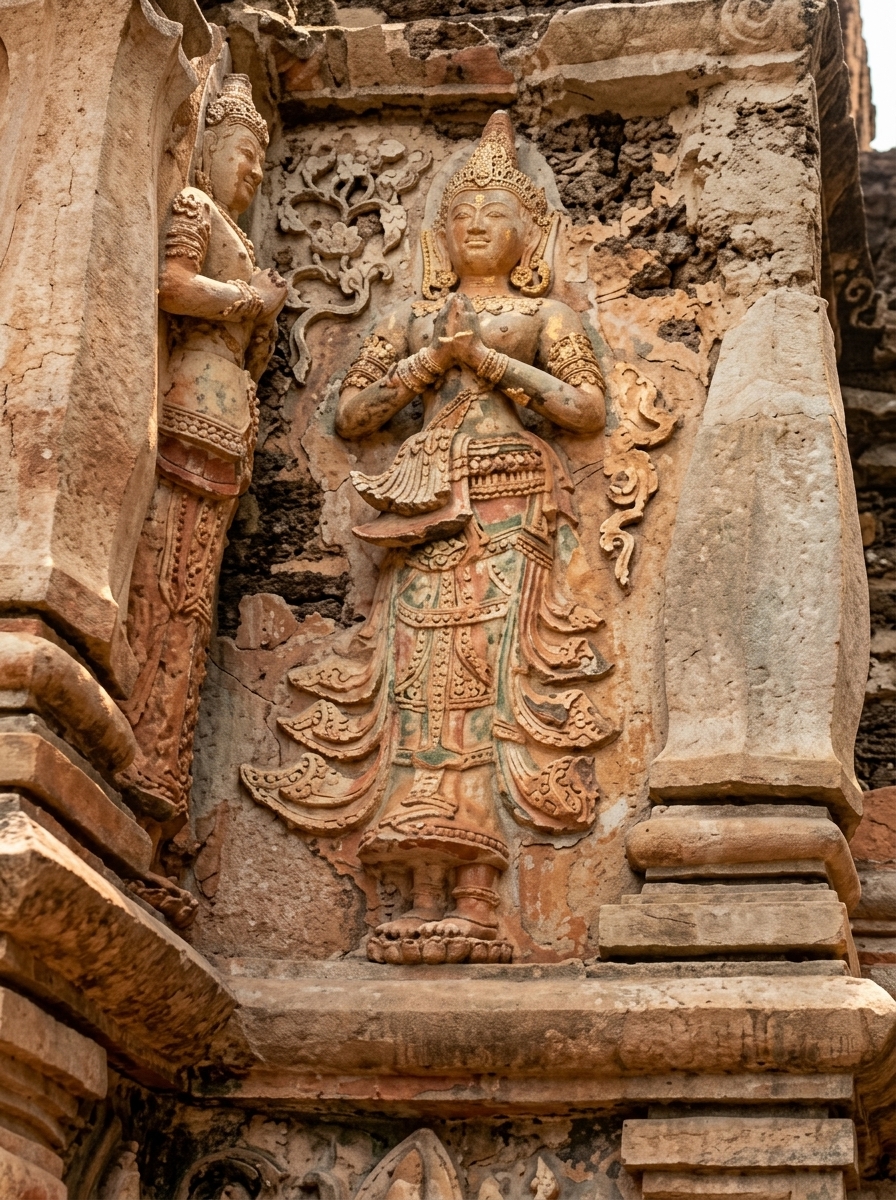
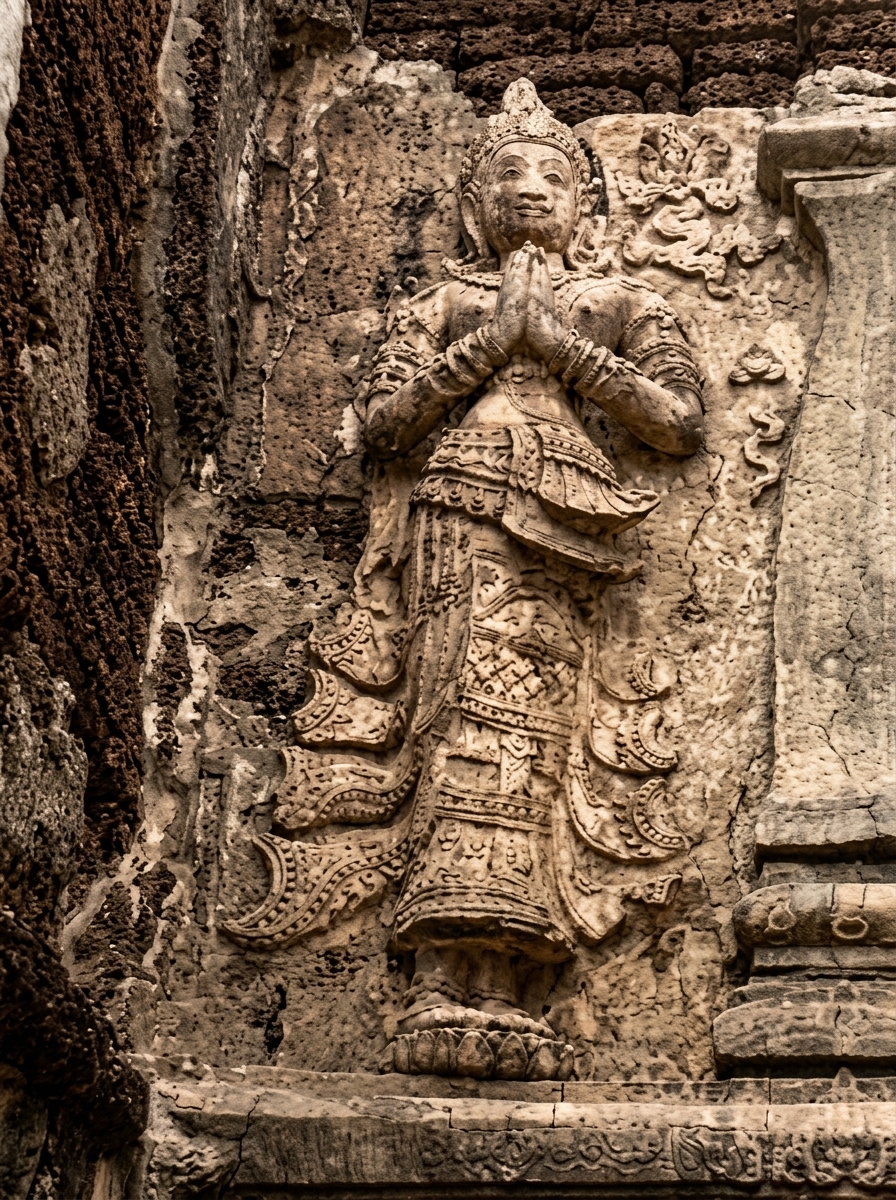
The exterior laterite facades of the Vihara are adorned with 70 high-relief and low-relief stucco figures of celestial devas (14 standing and 56 seated in meditative postures: Virasana and Vajrasana), capturing the cosmic assembly of gods venerating Gotama Buddha at the moment of his Enlightenment. The master sculptors articulated three distinct facial typologies:
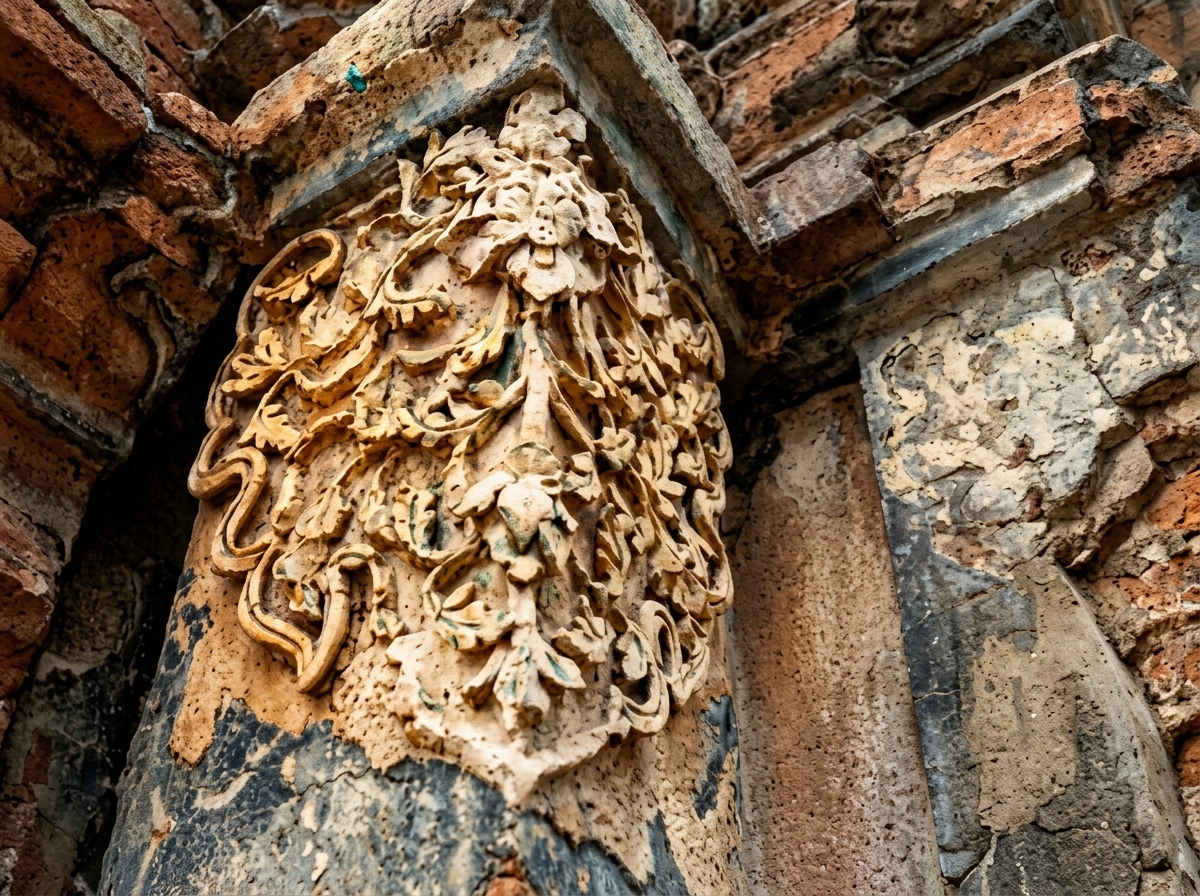
- Idealized Oval Countenance: Arched, delicate eyebrows joining at the bridge, meditative downcast eyes, and faintly smiling lips reflecting transcendental equanimity (reflecting Sukhothai and Si Satchanalai influences).
- Elongated "Feminine" Countenance (Na Nang): Graceful, slender contours with a high, sharp nasal bridge and rounded chin, evoking celestial tenderness.
- Square, Broad-Jawed Countenance: Defined by square jawlines and broad cheekbones, projecting earthly authority and divine power (reflecting U Thong and Early Ayutthaya influences).
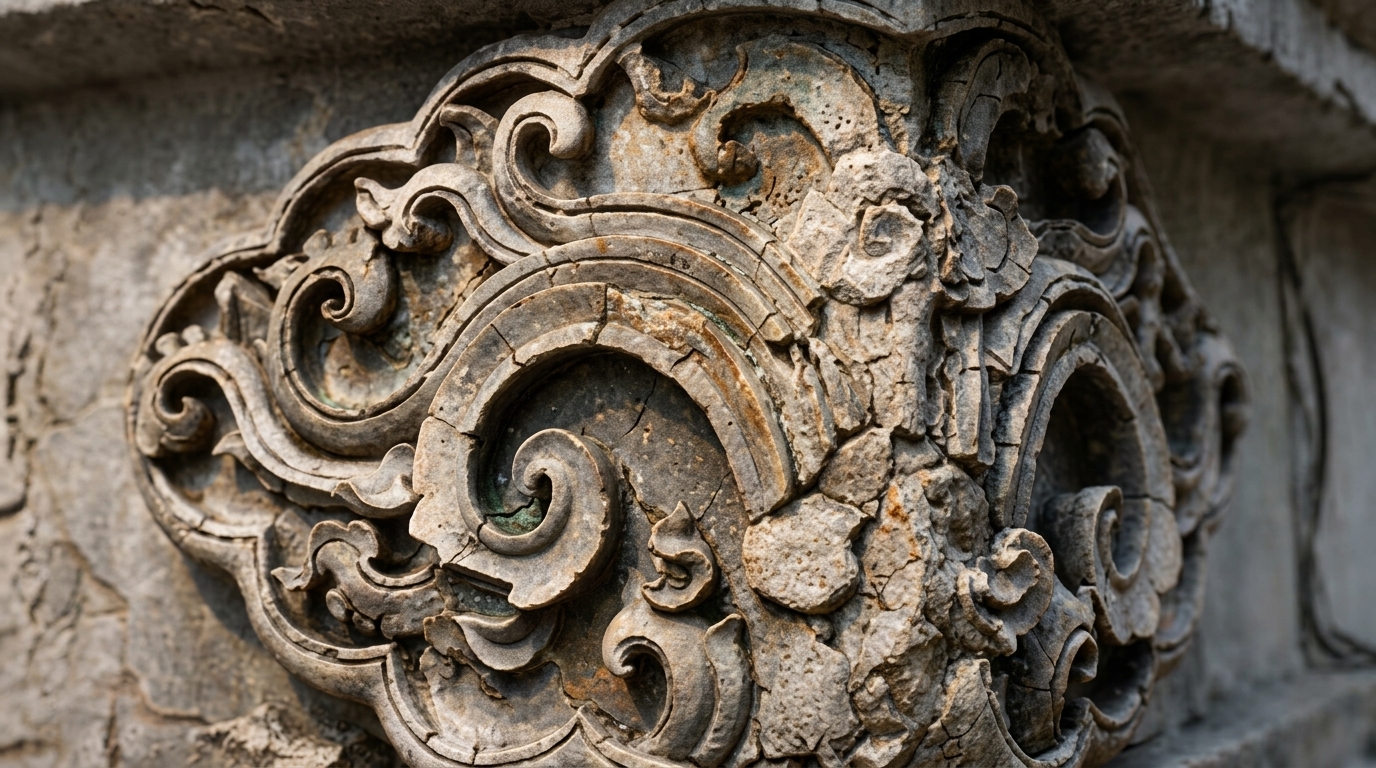
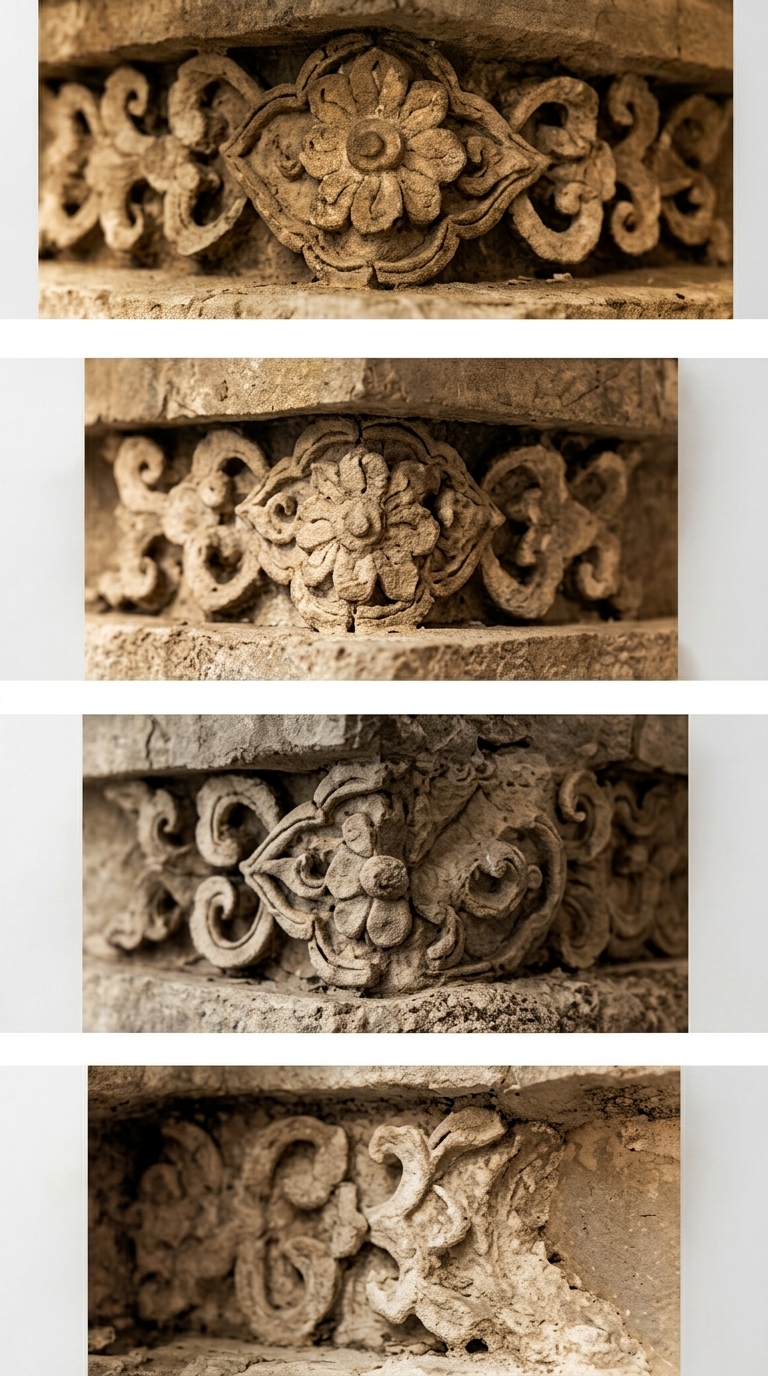
The devas' ornamental regalia is astonishingly intricate. Each deity wears a multi-tiered conical crown (Chada / Mukuta) with floral crests. Behind the head radiates an oval or Bodhi-leaf halo (Prabhamandala). They are adorned with floral ear pendants (Kundala), tiered beaded pectorals (Krong Kho), armlets (Pahurat), bracelets (Thong Korn), anklets (Thong Phrabat), and the sacred Brahmanical cord (Upavita / Say-dhu-ra) draped diagonally across the chest from the left shoulder to the right hip. Their lower bodies are wrapped in flowing, pleated dhotis (Pha Song) with fluttering sashes modeled with lifelike rhythmic fluidity.
Chinese Cloud Scrolls and Trans-Eurasian Synthesis
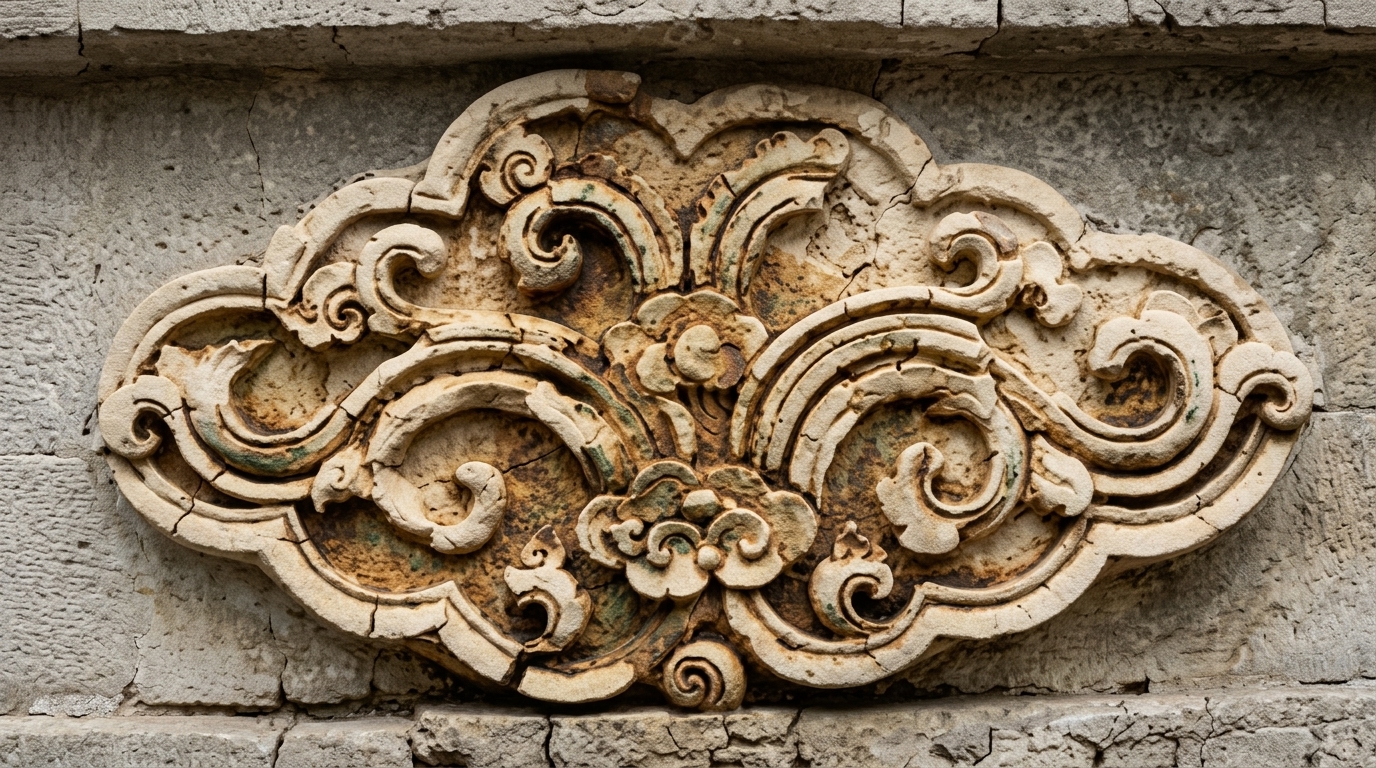
Beyond indigenous Lanna botanical arabesques (Lai Kkhruea and Lai Pracham Yam), the backdrops of the standing devas incorporate flowing, ribbon-like cloud scrolls (Lai Mek Chin). Art historians identify these as direct adaptations of ornamental motifs found on imported Chinese Ming Dynasty blue-and-white porcelain (Hongwu to Yongle eras). This reveals that 15th-century Lanna under King Tilokaraj was an active crossroads of Eurasian trade, synthesizing Indian monumental forms, Pagan brick engineering, and Chinese imperial decorative arts into a distinct Northern Thai classical idiom.
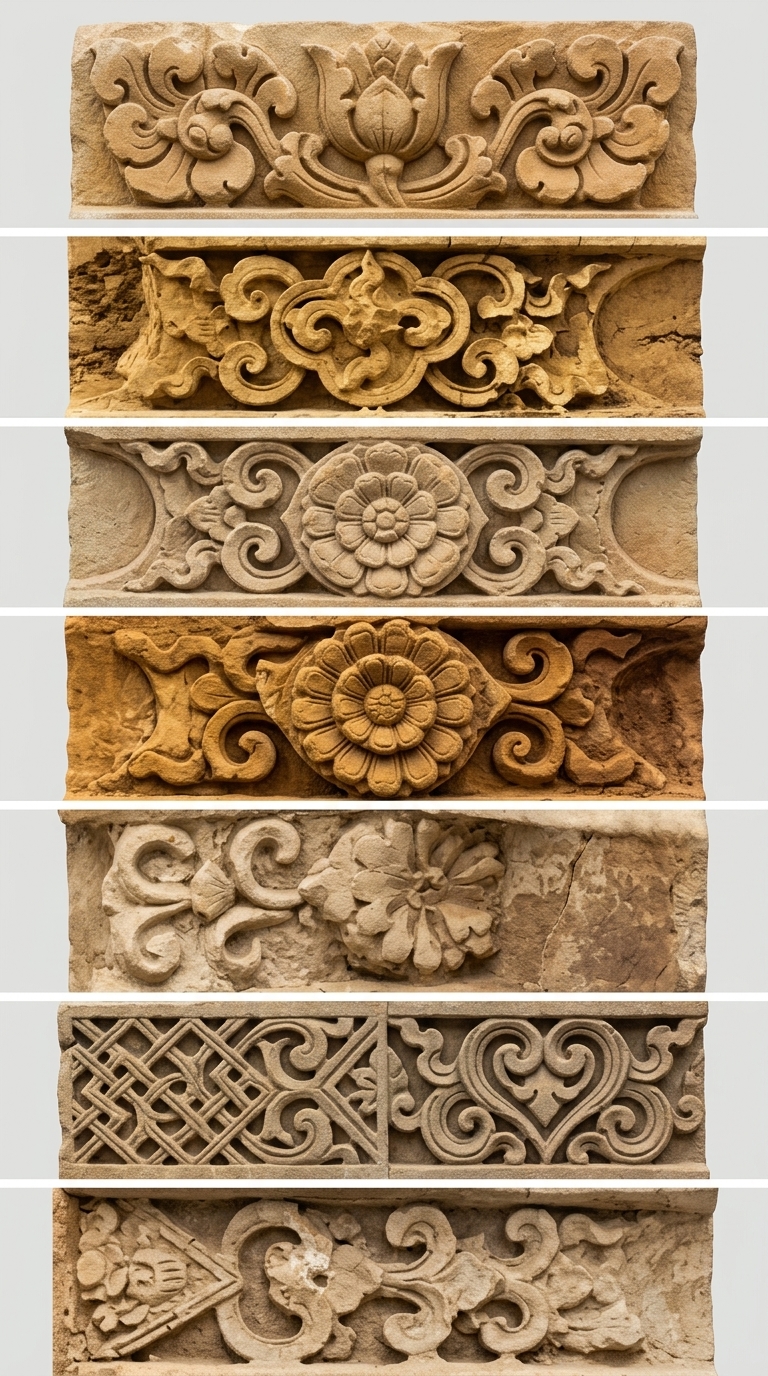
Ancient Material Science: Formula of the Plaster and "Chinese Spikes"
Archaeological excavations by the Fine Arts Department unlocked the material secrets that allowed these stuccoes to withstand tropical monsoons for over five centuries:
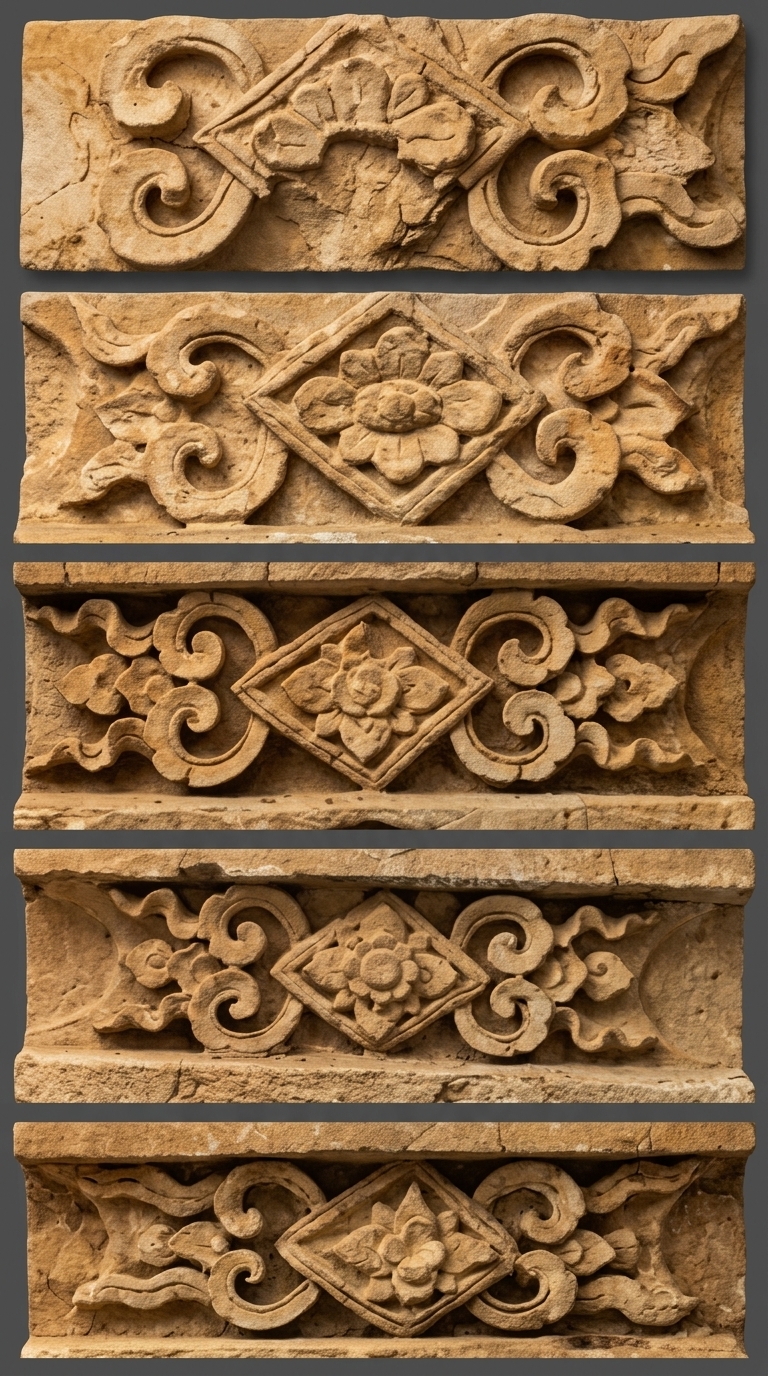
- Structural Armatures: Sculptors did not apply plaster directly to the raw laterite. They carved deep rectangular recesses (10–15 cm) into the stone, inserting burnt bricks as internal cores. At high-stress points, they hammered in "Chinese Spikes" (Tapu Jeen)—angled square-shank wrought-iron pins—to serve as tensile anchors.
- The Traditional Stucco Formula (Pun Tam): The mortar was an organic-inorganic composite consisting of slaked lime (fermented for weeks), purified river sand, concentrated cane sugar syrup (Nam Oi) acting as an organic plasticizer, boiled animal hide glue providing water resistance and elasticity, and macerated mulberry paper pulp (Kradat Sa) functioning as micro-fiber reinforcement. This hybrid matrix remained malleable during carving, setting into a stone-hard, weather-resistant shell that preserved the breath of Lanna's golden age.