














Chapter 2: The Succession of Eighteen Abbots: Monastic Lineage, Sacred Rites, and the Educational Citadel of Lanna
Wat Suan Dok Ch. 2: The 18 abbatial dynasties, ancient Lanna traditions of Tan Kuay Salak, and the rise of the Buddhist university citadel.
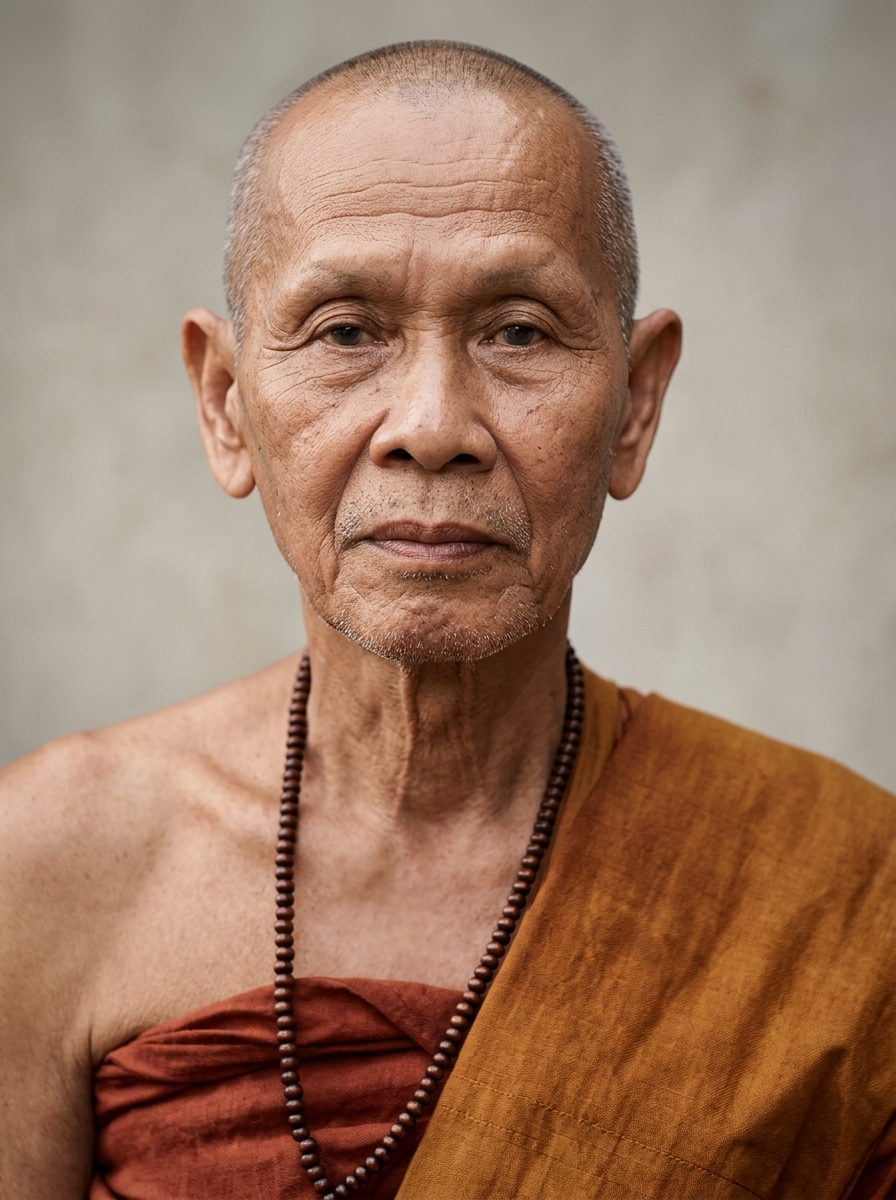
1. Administrative Governance and the Lineage of Eighteen Abbots
The administrative hierarchy of Wat Suan Dok operates under a disciplined canonical structure presided over by the Lord Abbot (Chao Awat), supported by the Vice Abbot and six Assistant Abbots. These monastic executives oversee six distinct portfolios: ecclesiastic administration, formal education, physical maintenance (sataranupakan), public welfare (sataranasongkhro), international propagation, and the secretarial chancellery.
Since the foundation of the monastery in 1371 CE (B.E. 1914), the chronicle of Wat Suan Dok preserves a documented succession of eighteen supreme abbatial epochs (Athibodi Song). This chronological record charts the peaks of scholarly achievement, the tragedies of wartime abandonment, and the 19th-century dynastic renaissance.
The Golden Age of the Mangrai Dynasty (1371–1500 CE)
The lineage was inaugurated by Phra Maha Sumana Thera (in office 1371–1388 CE / B.E. 1914–1931), the Sukhothai master who introduced the reformed Lankavamsa forest lineage from Mottama and governed the community for 18 rainy seasons until his death. He was succeeded by Phra Mahakassapa Thera (1388–1403 CE) and Phra Mahanandapanya Thera (1403–1418 CE), who enlarged the sacred boundary (khandhasīmā) of the Ubosot. Subsequent reigns included Phra Mahabuddhanyana Thera (1418–1420 CE), Phra Mahabuddhagambhira Thera (1420–1434 CE), and Phra Mahanyanarangsi Thera (1434–1441 CE), an erudite scholar who traveled to study in Pagan and Ava. Under King Tilokaraj and his successors, the monastery was governed by Phra Mahatipitaka Sangharaja (1441–1447 CE); Phra Mahabuddhadicca Thera (recorded in the Mulasasana Chronicle as Buddharakkhita, 1447–1459 CE), a master of Pali linguistics; Phra Mahanyanasakhon Thera (1459–1475 CE); and Phra Mahanakasena Thera (1475–1480 CE), under whose term the Great Cetiya was gilded. Following the brief tenure of Phra Mahanyanavajirabodhi Thera (1480 CE), the leadership passed to Phra Mahakuphamyana Sakhon Thera (1480–1490 CE), Phra Mahapurithewa (also known as Silathewa or Buddhanyano, 1490–1500 CE)—who authored the celebrated chronicle documenting 28 sacred relic shrines in Chiang Mai—and Phra Mahadhammabodhi, installed in 1500 CE.
Wartime Devastation and the Centuries of Desolation
Following the tenure of Phra Mahadhammabodhi, the geopolitical collapse of Lanna and the onset of Burmese suzerainty (beginning in 1558 CE) dragged Chiang Mai into prolonged warfare. Stripped of royal patronage, monastic life disintegrated; monks fled to rural fastnesses, and the once-glorious garden monastery deteriorated into an abandoned jungle of reeds and collapsing masonry for over a century.
The Kawila Restoration and Modern Succession
The revival of Wat Suan Dok commenced in 1814 CE (B.E. 2357) under Phra Chao Kawila, the warrior prince who liberated Chiang Mai from Burmese rule. Kawila formally consecrated Phra Mahavajirapanya as the supreme ecclesiastical head (Kruba Phra Maha Ratchakhru Mahasangharaja), establishing his seat at Wat Suan Dok. Following the 1931 civil restoration led by Kruba Srivichai, Chao Kaew Nawarat, and Princess Dara Rasmi, modern abbatial succession was institutionalized under Phra Khru Sukhandhasila (Luang Pu Kham Saen Inthachakko) (1946–1976), Phra Khru Pariyattayanurak (Fai Ñāṇavuḍḍho) (1983–1988), and Phra Khru Dhamma Senanuwat (Wann Khemaracārī) (installed 1989).
2. Living Rituals and Sacramental Traditions
Wat Suan Dok maintains three primary annual sacramental rituals rooted in medieval Lanna tradition:
- The Salakakhat Almsgiving (Tan Kuay Salak): Observed on the 8th waxing day of the first northern lunar month (Duean Kiang Nuea, corresponding to the 11th central Thai month). The faithful bring woven bamboo hampers (kuay) laden with fresh produce, rice, and household provisions, presented to the monastic assembly through a sacred lottery to transfer merit to departed ancestors.
- The Great Sermon Festival (Tang Tham Luang / Thet Mahachat): Celebrated immediately following the end of the Rains Retreat (Vassa), this ceremony features the continuous chanting of all thirteen cantos of the Vessantara Jataka in traditional northern Lanna rhythmic cadence, instilling the transcendent virtue of generosity (dāna).
- The Relic Bathing Festival (Song Nam Phra Borommathat): Conducted annually on the full moon of the third northern lunar month (Duean Sam Nuea). Monastics and lay devotees ascend the terrace of the Great Cetiya to bathe the golden shrine with consecrated, flower-scented water (sukandhodaka).
3. The Educational Citadel: From Palm-Leaf Archives to Buddhist University
In the classical period, Wat Suan Dok housed the Ho Tham (Scriptural Archive or Pitakaphra), functioning as the intellectual repository for Pali manuscripts across northern Thailand. In the 20th century, this academic tradition underwent a historic revival:
- The Pariyattidhamma Scriptural School: Established in 1953 (B.E. 2496) to provide rigorous instruction in Buddhist doctrine and classical Pali grammar.
- The Founding of Lanna Buddhist College: In 1983 (B.E. 2526), scholars from Chiang Mai University—including Asst. Prof. Rungrueang Boonyoros, Asst. Prof. Dr. Singthon Khamkhao, and Prof. Mani Phayomyong—collaborated with Phra Khru Pariyattayanurak to found Witthayalai Song Lanna within the temple grounds. Official provincial recognition was declared on March 1, 1984, with tertiary degree instruction commencing on June 18, 1984.
- Mahachulalongkornrajavidyalaya University, Chiang Mai Campus: On October 3, 1985 (B.E. 2528), the University Council formally incorporated Lanna Buddhist College as the northern regional campus of Mahachulalongkornrajavidyalaya University. Wat Suan Dok thereby evolved into a degree-granting center in Buddhist studies, pedagogy, and the humanities.
- Modern Propagation and Vipassana Programs: Complementary institutions include the Pali Demonstration Secondary School (est. 1990), the Sunday Buddhist Education Center (est. 1985), the Vipassana Meditation and Abhidhamma Center (est. 1995), and foreign missionary services sending monks abroad to preach in English.