










Chapter 3: The Torch of Dhamma Across the Mountains: The Mangrai Dynasty, the Mottama Mission, and the Miraculous Relic of Pang Cha
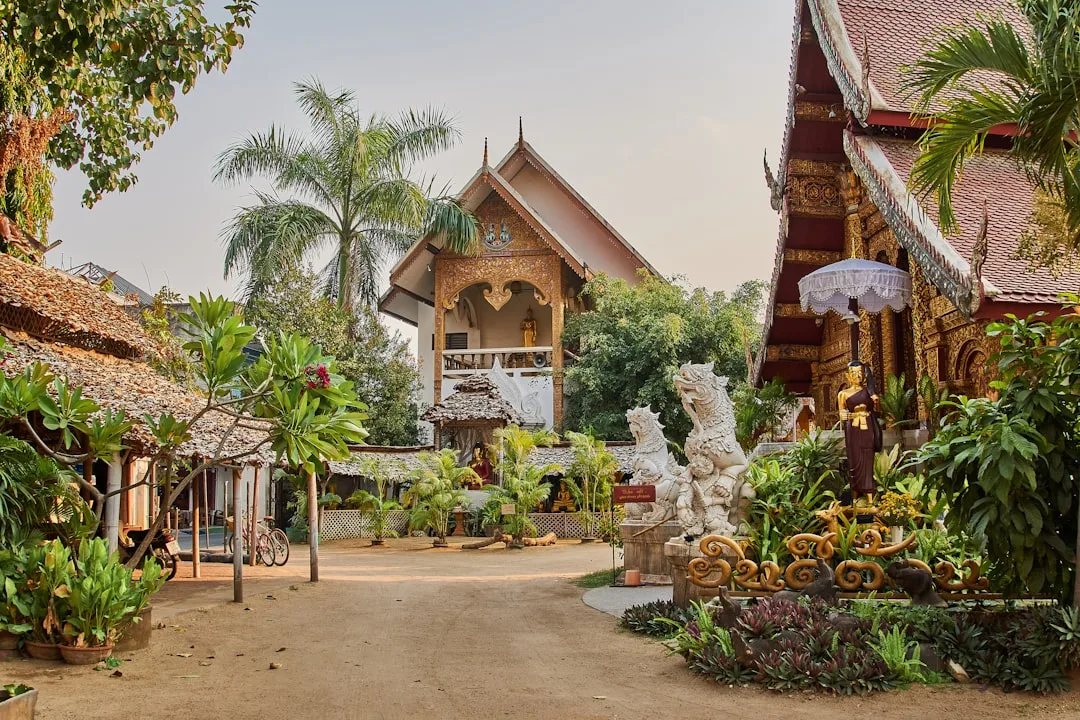
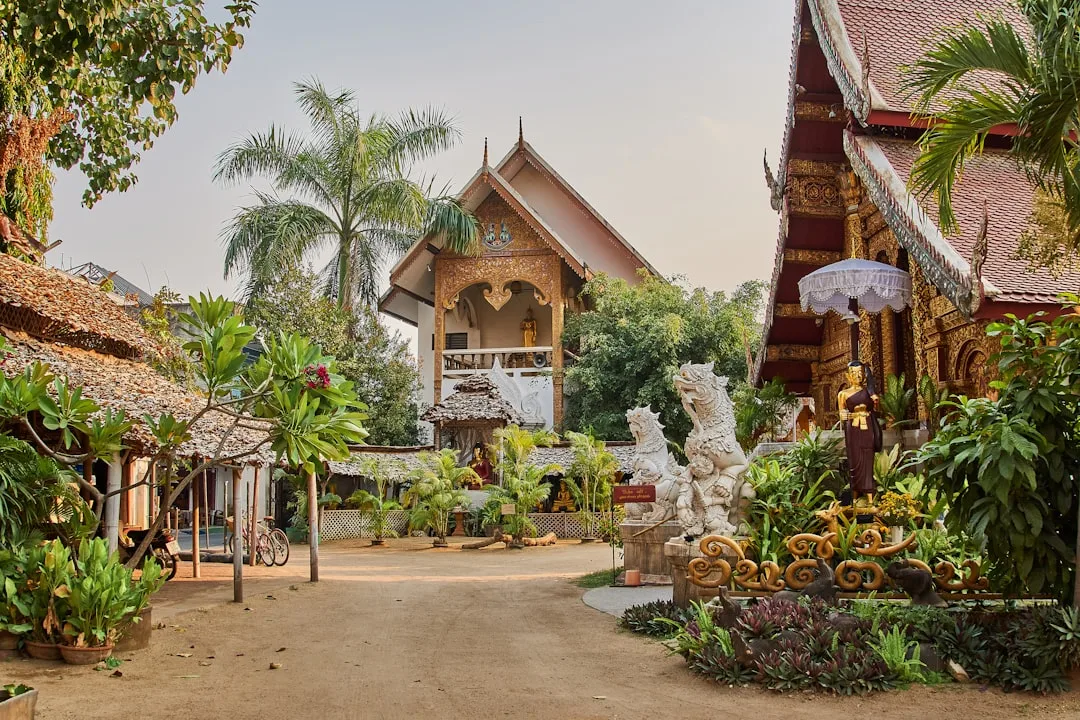
Wat Suan Dok Ch. 3: The 3 kings of Chiang Mai, the Mottama monastic mission, and the miraculous unearthing of the sacred Pang Cha relic.
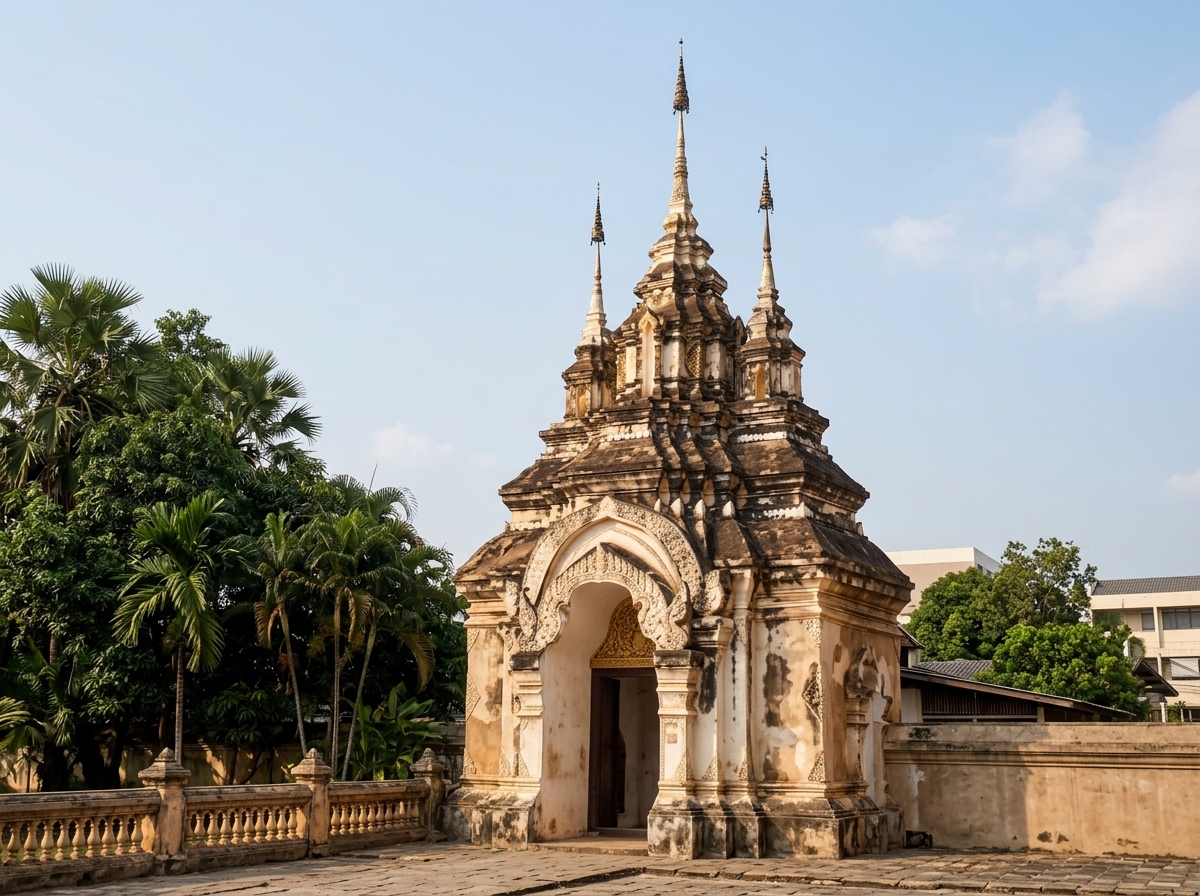
1. The Founding of Chiang Mai and the Lineage of King Mangrai
The institutional roots of Wat Suan Dok are inextricably intertwined with the genesis of the Lanna kingdom. In 1296–1297 CE (B.E. 1839–1840), King Mangrai the Great, the dynastic founder of Lanna, established his imperial capital along the fertile alluvial terrace at the eastern base of Mount Suthep. To ensure the spiritual and geopolitical auspiciousness of the new foundation, Mangrai invited his two sworn blood brothers: King Ngam Mueang of Phayao and King Ram Khamhaeng the Great (Phraya Ruang) of Sukhothai. The three sovereigns surveyed the terrain, laid out the moats and ramparts, and consecrated the royal palace, naming the capital Nop Buri Si Nakhon Ping Chiang Mai.
For over two centuries, the Mangrai Dynasty governed the northern valleys through an unbroken succession of eighteen monarchs. Under their rule, Lanna consolidated its defensive frontiers, enjoyed agricultural abundance in paddy and timber, and fostered an exceptional flowering of Theravada Buddhist literature and monastic architecture.
In 1355 CE (B.E. 1898), King Kue Na Dhammikaraja, son of King Pha Yu, ascended the throne of Chiang Mai as the sixth sovereign of the dynasty at the age of forty. A ruler of formidable intellect, King Kue Na was renowned not merely for his administrative firmness, but for his polymathic mastery across the traditional classical sciences (Sat): astrology and celestial mechanics (Horasart), classical linguistics including Mon and Burmese (Sabbasart), historical antiquities and dynastic chronicles (Nithan Uthet), sacred ceremonial liturgies, and the tactical science of war elephants (Khasart). Governed by the Tenfold Virtues of Kingship (Dasarajadhamma), King Kue Na commanded the respect of neighboring principalities. Yet his paramount ambition was spiritual: to bestow upon his realm an authentic, uncorrupted monastic lineage capable of purifying the Sangha of northern Thailand.
2. The Transmission of the Lankavamsa to Mottama: Udumbara Puppha Mahaswami
During the 14th century, the reformed Sri Lankan Mahavihara tradition (Lankavamsa)—celebrated for its uncompromising fidelity to the Vinaya monastic code and its emphasis on forest-dwelling asceticism (araññavāsī)—diffused across Southeast Asia. Its foremost regional citadel was situated at Mottama (Martaban / Damimanakhon), the Mon coastal emporium in Lower Burma.
According to historical chronicles, twelve Mon monks from Mottama obtained authorization from their sovereign, King Sudsoma, to undertake a perilous sea voyage to Sri Lanka. There, they received re-ordination in the lineage of Phra Mahakassapa Thera, immersing themselves in Pali canonical literature before returning to Lower Burma. King Sudsoma and the populace rejoiced, formally conferring upon the monastic leader, the venerable Anumati, the supreme ecclesiastic title of Phra Udumbara Puppha Mahaswami—an honorific evoking the blossom of the wild fig tree (Ficus racemosa), an ancient Buddhist metaphor for a presence exceptionally rare and auspicious in the world.
The spiritual renown of Mottama soon reached the central plains of Siam, attracting two brilliant young monks from the Kingdom of Sukhothai: Phra Anomadassi and Phra Sumana, disciples of the Supreme Patriarch Phra Maha Papata. Having completed advanced studies of the Tripitaka in Ayutthaya, both scholars journeyed westward to Mottama, seeking re-ordination under Udumbara Puppha Mahaswami to inherit the purified Sri Lankan monastic lineage. For five rainy seasons (vassa), they underwent intensive training in the canonical texts and the thirteen rigorous ascetic observances (dhutanga). Having achieved institutional independence (nissayamutta), they received permission to return to Sukhothai.
Sometime later, the two masters escorted eight additional Sukhothai monks (including Phra Ananda, Phra Buddhasakhon, Phra Sujata, Phra Khema, Phra Suvannagiri, Phra Piyadassi, Phra Vessabhu, and Phra Sitthattha) back to Mottama for canonical ordination. On this occasion, Udumbara Puppha Mahaswami appointed Anomadassi and Sumana as preceptors (upajjhaya), uttering a momentous prophecy: "This Lankavamsa dispensation shall flourish and remain steadfast across the lands of Siam for the full span of 5,000 years."
Upon their triumphant return to Sukhothai, King Li Thai (Mahathammaracha I) was captivated by the profound spiritual presence of Phra Maha Sumana Thera. In dedication, the king donated a royal mango orchard to establish a serene forest monastery, consecrated as Wat Ambavarama (popularly known as Wat Pa Kaeo), where Sumana Thera took up residence to instruct disciples in scriptural exegesis and vipassana meditation.
3. The Divine Vision and the Excavation of the Pang Cha Relic
While residing at Wat Ambavarama, Phra Maha Sumana Thera experienced an extraordinary visionary dream during the quiet watch of the night. A radiant celestial deva appeared, declaring: "O Noble Elder! An authentic bodily relic of the Lord Sakyamuni Buddha, interred centuries ago by Emperor Asoka the Great within an ancient cetiya in the deserted city of Pang Cha, now lies exposed. The monument has crumbled into earth, sheltered only by an overgrown clump of needle-flower bushes resembling a wooden couch. This holy relic possesses transcendent spiritual virtue, destined to become the supreme palladium of Nop Buri Si Nakhon Ping Chiang Mai, the royal capital of Lanna. Arise, journey thither, and exhume the relic for the welfare of gods and men!"
At dawn, Phra Maha Sumana Thera took formal leave of King Li Thai and hastened to the northern satellite city of Si Satchanalai, alerting its governor, Phraya Si Satchanalai. Overjoyed by the omen, the governor marshaled a corps of laborers and excavation tools, accompanying the elder into the overgrown wilderness of ancient Pang Cha.
Reaching the desolate ruins, Sumana Thera established a ceremonial pavilion, administering the Five and Eight Precepts to the assembly to ensure spiritual purity. In the twilight before daybreak, the elder sat in meditative concentration, making a solemn vow of truth (saccadhittana). Suddenly, a luminous golden effulgence burst upward through the roots of the couch-shaped needle-flower shrub, illuminating the jungle canopy. Sumana Thera immediately ordered a ceremonial banner planted at the exact source of the light.
When morning arrived, laborers began excavating directly beneath the banner. Digging downward through ancient strata to a depth of forty-four cubits (approximately 22 meters), they struck ancient brickwork encasing an outer stone reliquary chest. Prying open the stone lid, the elder revealed an extraordinary series of nested reliquaries: an outermost vessel of cast brass, a second tier of hammered silver, a third tier of pure refined gold, and an innermost vessel of coral crystal (Kaew Praphan).
Within the coral crystal urn rested a solitary bodily bone relic of the Buddha, measuring the exact size of a green mung bean, radiating a lustrous, unblemished complexion. Sumana Thera transferred the relic into a bowl of consecrated water perfumed with floral essences (sukandhodaka). At that moment, a profound miracle occurred: the relic levitated above the water's surface, slowly circling clockwise eight times through the air while emitting brilliant rays, leaving the assembled multitude weeping in devotional ecstasy.
4. The Hidden Miracle and the Destiny of Lanna
Following the discovery, Phra Maha Sumana Thera reported the event to the governor of Si Satchanalai, who wept with tears of faith and ordered an ornate spire-roofed wooden pavilion built to enshrine the relic. Upon the governor's arrival, the relic manifested a second miracle, discharging brilliant six-colored rays (chapphannarangsi) across the heavens.
Official missives were immediately dispatched to the royal court at Sukhothai. King Li Thai, intrigued yet cautious, reflected: "If this bone relic indeed possesses authentic supernatural sovereignty as reported, we shall construct a magnificent golden stupa (Suvanna Chedi) to enshrine it permanently within the heart of our capital city."
King Li Thai commanded that the relic be escorted with full imperial honors to Sukhothai, welcoming it with floral canopies, incense, and musical fanfares. However, when the king personally stepped forward to pour scented water over the crystal reliquary in a formal lustration ceremony, the relic remained entirely motionless. It exhibited neither radiance nor levitation, remaining submerged without manifesting the slightest sign of wonder before the Sukhothai monarch.
Witnessing no miraculous manifestation, King Li Thai's devotional fervor waned. Disappointed, the king concluded that the relic was not destined for his capital. Addressing Phra Maha Sumana Thera with courtly detachment, he remarked: "Venerable Elder, as this relic exhibits no miraculous power in our presence, pray retain it and keep it in your own care for private veneration as you see fit."
No one in the royal court of Sukhothai perceived the invisible hand of destiny at work. The holy relic had intentionally concealed its glory from the sovereign of Sukhothai because the cosmic forces of the Dhamma had designated its true resting place elsewhere: it was destined to travel northward over the mist-covered peaks of the Shan hills, there to become the spiritual heart of the Lanna Kingdom, enthroned forever in the fragrant flower garden of King Kue Na Dhammikaraja!