★ 9.4/10 EXCEPTIONAL ON AGODA & BOOKING.COM • ROYAL FLORA RATCHAPHRUEK CERTIFIED
Overnight Nature Farmstay • KAS Farmstay
KAS Farmstay (Private Farmstay Tent & Campfire)
Experience a peaceful private farmstay amidst our organic orchards in Lamphun. Cozy tent glamping, evening campfires under starry skies, and organic garden-fresh mookata BBQ. Official online booking is now live.
A collection of translated rare books on Lanna history and culture
Terra Lanna is gathering and translating rare books on Lanna history, beliefs, and way of life — preserving these stories and sharing them with readers everywhere.
Sort by:
Listen to Lanna Stories
Translating and gathering books — coming soon
Contact Us
Talk to us, or share your feedback to help us improve and grow.
Our Hotel
NampiangdinBoutique Hotel
4-Star Lanna Boutique Hotel in the Heart of Chiang Mai
★★★★ 4-Star Boutique46 Rooms15 Min from AirportFree Airport Transfer
Nampiangdin Boutique Hotel is a 4-star boutique property blending ancient Lanna architecture with modern comfort. Located in central Chiang Mai, 15 minutes from the airport, with a warm atmosphere, heartfelt service, a lush garden, outdoor pool, and a restaurant featuring local ingredients.
Rooms
Choose the ExperienceThat's Right for You
All rooms feature a private balcony, pool view, AC, free WiFi, minibar, and breakfast included
Sorted by guest review score — prices updated daily
Active & Available in Chiang Mai
Your Eyes, Ears & Boots on the Ground in Chiang Mai
Moving, investing, or sourcing in Northern Thailand? We provide what no remote tool or overseas agency can ever match: genuine local presence, native northern dialect negotiation, and zero-bias on-site execution.
Why Technology Cannot Replace Local Boots on the Ground
Overseas expats, digital nomads, and remote investors face significant friction when managing property or sourcing in Northern Thailand. Having trusted on-the-ground representation eliminates risks, protects your budget, and gives you total peace of mind.
Common Pitfalls of Managing Remotely
Misleading Listings: Online photos are frequently edited or years out of date. In reality, properties may have hidden mold, weak water pressure, noisy air-conditioning, or loud construction right outside your window.
Unwarranted Price Markups: Without local Thai and Northern dialect negotiation skills, foreigners often face inflated quotes—paying 20%–40% above true local market rates for rent, contractor labor, and artisan craft manufacturing.
Unreliable Wi-Fi Claims: Landlords routinely advertise 'high-speed internet' that turns out to be congested shared building Wi-Fi with high latency, dropping client Zoom calls and disrupting remote work.
Zero On-Site Emergency Recourse: When an air conditioner leaks, plumbing bursts, or a guest locks themselves out late at night, remote coordination across time zones is stressful and ineffective.
The Terra Lanna Advantage
Objective High-Definition Video Inspections: We physically inspect every corner of the property, testing plumbing pressure, air-con odor, noise decibels, and surrounding neighborhood conditions without bias.
Direct Native & Northern Dialect Negotiation: We speak fluent Thai and Kam Mueang directly with landlords, technicians, and workshop owners—securing authentic, fair local terms and lease conditions.
Certified On-Site Speedtests: We plug in directly to run certified Ookla Speedtests (measuring ping latency, jitter, download, and upload speeds) before you commit to any rental deposit.
Trusted Keyholding & Urgent Dispatch: Permanently stationed in Chiang Mai, ready to handle emergency lockout rescues, supervise contractors, and deliver structured photo/video reports directly to you.
Our 4 Core Capabilities
What Overseas Clients Hire Us to Do
Four specialized on-the-ground services tailored for expats, remote entrepreneurs, Airbnb owners, and international media agencies.
For Nomads & Expats
Local Fixer & Personal Assistant
Your personal problem solver in Chiang Mai. Whether you are landing soon or already living here, we eliminate bureaucratic stress, rental headaches, and language barriers.
Core Focus
Condo pre-lease walk-throughs, Wi-Fi stability tests, lease negotiation to kill farang markups, parcel reception, and initial government/immigration logistics guidance.
Key Deliverables
Detailed video walkthrough & timestamped photo inspection
Live Ookla Wi-Fi speedtest (latency, download/upload speeds)
Lease contract review & direct Thai landlord negotiation
Urgent parcel pickup, mail forwarding & local errands
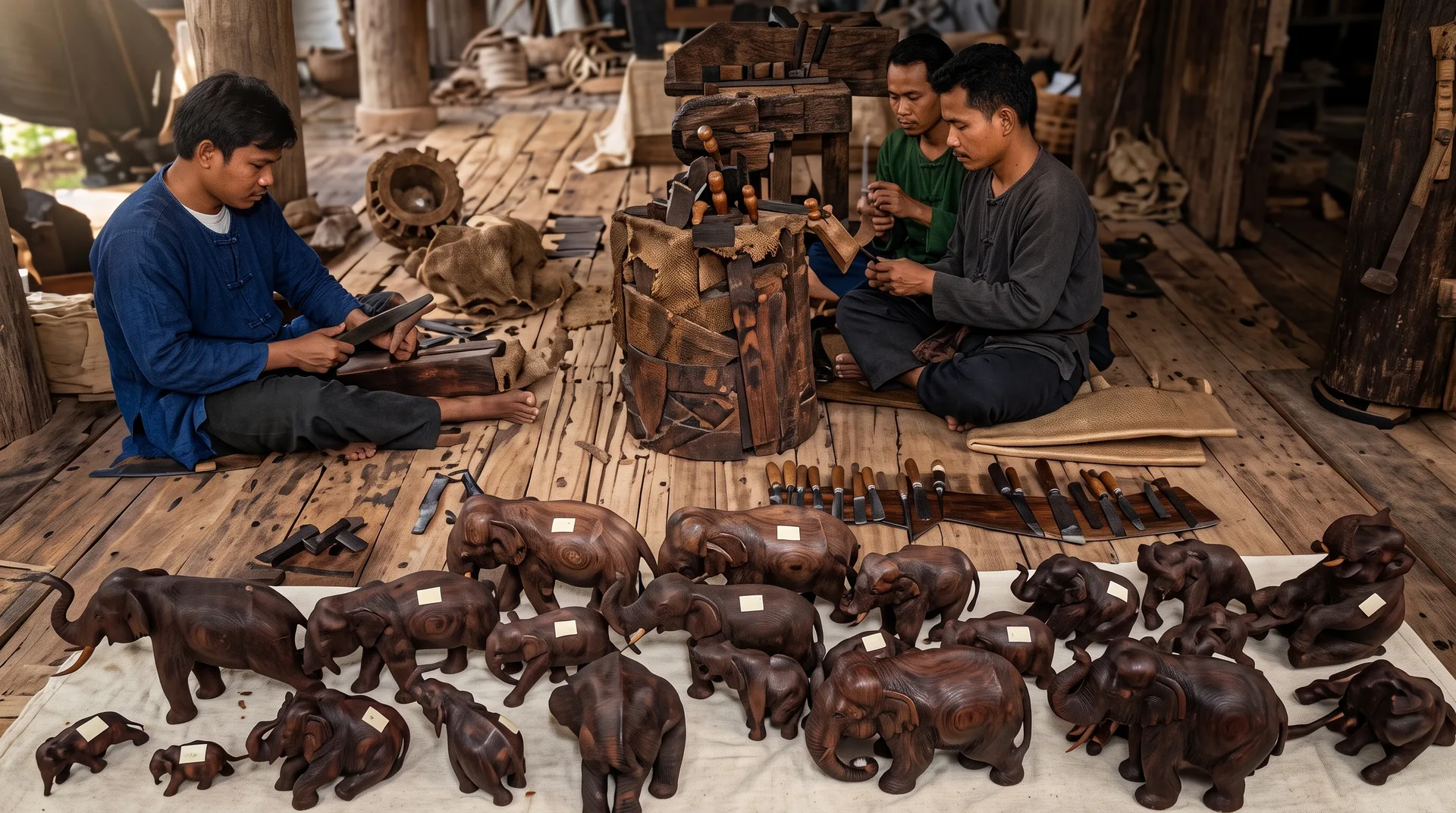
Overseas retailers and interior designers import handcrafted furniture, teakwood, ceramics, and textiles from Chiang Mai artisan hubs. We are your dedicated QC eyes on the workshop floor.
Geographical Advantage
We know the back alleys of Baan Tawai, San Kamphaeng, Bo Sang, Hang Dong, and Mae Rim. We talk directly to carvers and weavers in local dialect, preventing communication errors.
Key Deliverables
In-person workshop & factory visits across Chiang Mai & Lamphun
Foreign investors who own condos or pool villas in Chiang Mai for Airbnb need trustworthy local oversight. We inspect rooms after cleaning, hold emergency keys, and dispatch trusted tradesmen.
Timezone Synergy
We chat and report to you during your evening hours overseas, then execute daytime on-site checkups and maintenance across Chiang Mai during local business hours.
Commercial film crews, YouTube creators, and high-end travelers demand secret, authentic locations away from mass tourist traps. We scout hidden temple grounds, mountain overlooks, and private chef tables.
Exclusive Synergy
Seamlessly paired with Terra Lanna's private farmstead: organic orchard walks, botanical craft liquor workshops, and private campfire dinners in Lamphun.
Key Deliverables
On-site location scouting with lighting notes, acoustics & GPS coords
From initial inquiry to completed mission in 4 simple steps.
01
1. Send Your Brief
Share your requirements, links, or address via email or the booking form below.
02
2. Action Plan in 2 Hours
We confirm feasibility, provide an exact upfront quote, and schedule the on-site mission.
03
3. On-The-Ground Execution
We drive directly to the property, factory, or location with our equipment and live status updates.
04
4. Comprehensive Report
You receive comprehensive video walkthroughs, speedtest stats, defect photos, and our honest local recommendations.
Request a Fixer or Property Inspection
Tell us what you need done on the ground in Chiang Mai. We reply within 2 hours during active daytime hours.
Frequently Asked Questions
Everything You Need to Know
Online listings in Thailand frequently feature stale photos, hidden structural/mold defects, or inflated 'Farang' prices (20%–40% above local rates). Without speaking northern Thai or being physically present to smell the room, test the water pressure, and check for noisy construction, you risk getting trapped in an inflexible 12-month lease. We serve as your unbiased on-site representative.
We cover all major expat and residential districts: Old City (Sri Phum, Phra Sing), Nimmanhaemin, Santitham, Jed Yod, Chang Phueak, Chang Khlan / Night Bazaar, Wat Gate / Riverside, Mae Hia, Hang Dong, San Kamphaeng, Doi Saket, and Mae Rim. We also travel to Lamphun artisan workshops upon request.
Standard requests are completed within 24–48 hours. Urgent same-day emergency callouts can often be accommodated depending on current schedule. Contact us via email (terralanna67@gmail.com) for rapid dispatch.
We bring a laptop and mobile testing kit directly to the unit. We connect to the actual in-room router and run certified Ookla Speedtests measuring ping latency, jitter, download Mbps, and upload Mbps. We also check 4G/5G mobile signal backup coverage inside the room.
Never. Terra Lanna maintains a zero-kickback, zero-commission policy. When negotiating rent or product costs, 100% of the discount goes directly to you. You pay us solely for our time, expertise, and transparent on-the-ground service.
We accept Wise (formerly TransferWise), standard international bank wire transfer, Thai PromptPay / QR bank transfer, and major credit cards via Stripe.
Ministry of Education and Ministry of Interior, via the Fine Arts Department, with Chiang Mai Province · 1999 CE (B.E. 2542) · Chiang Mai
Chapter 3 (IV): Traditional Handicrafts
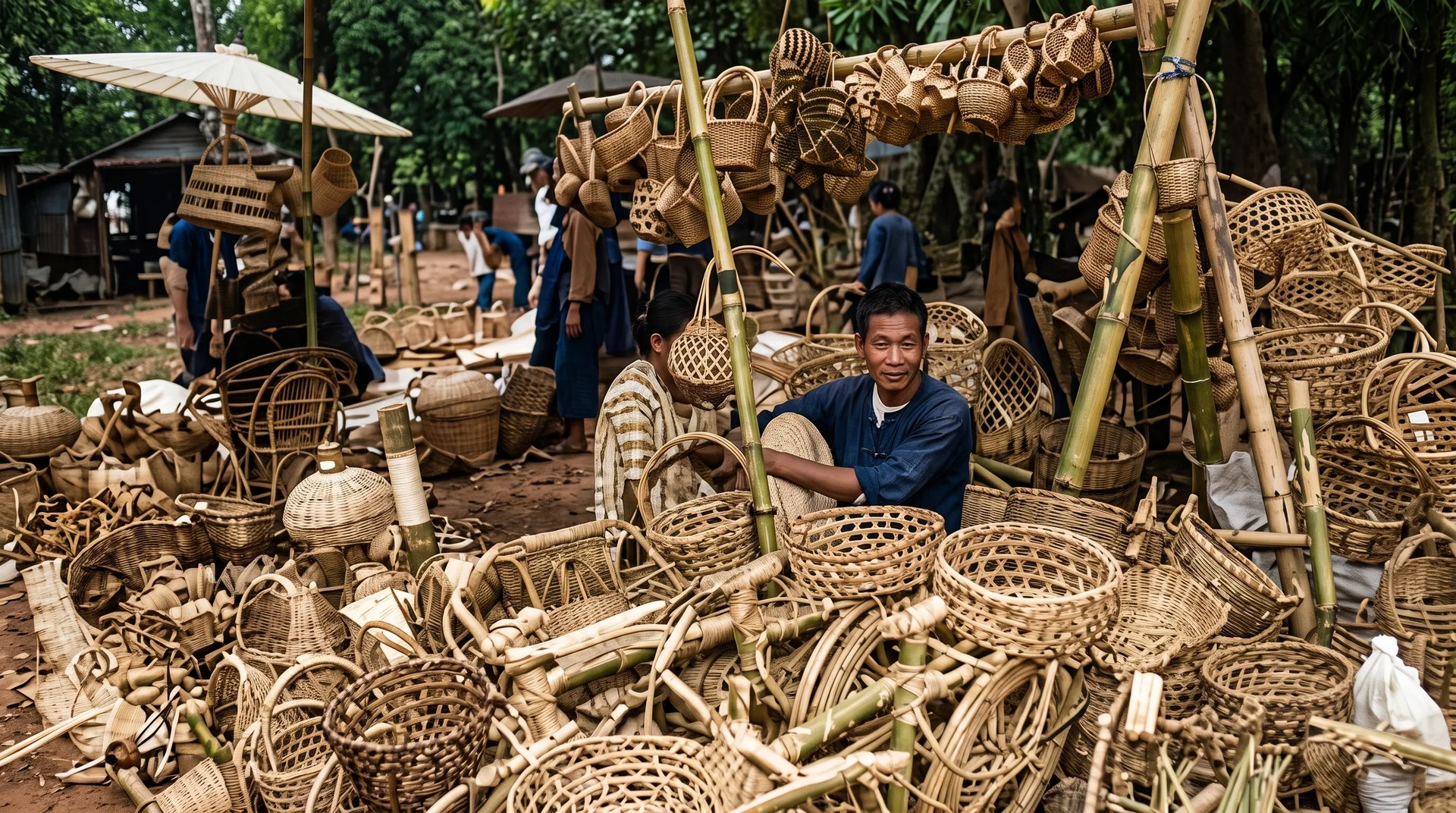
Chiang Mai's wood carving, basketry, and traditional pottery.
Handicrafts (continued)
Pottery (concluded)
The kiln is a brick kiln arranged in the form of [an anthill-shaped mound (?), term unclear in source], with firewood fed in from below. Preparing the clay: dried clay is pounded in a foot-operated mortar, or ground in a clay-grinding machine for speed, then sieved through a screen to remove debris, after which the clay is soaked in water until uniform and set aside for use. Forming: a suitable amount of clay is portioned out and shaped on a potter's wheel, or formed by hand depending on the type of vessel, so that the walls of the vessel are even and smooth. Finishing: before the vessel dries completely, the surface is finished with stamped or incised patterns, or with applied clay relief, then coated with a thin clay slip and touched with colour using red ochre or other pigments. Firing: the formed and dried vessels — such as water jars, spouted water jars, and decanters — are stacked in the kiln, with firewood fed in from below, and fired for approximately [a duration given in centimetres in the source, apparently an error] two to three [hours/days — unclear]; once the heat has subsided, the finished, fired vessels may be removed. Forms: the pottery of Ban Muang Kung is generally known for such forms as spouted water jars and decanters, earthenware pots, firecracker containers, oil-lamp holders, and lanterns, as well as new forms specified by individual customers.
Lacquerware
Lacquerware (khreuang khoen) refers to utensils made using lacquer resin and vermilion — items produced by a particular specialised technique, comprising a wood or bamboo core shaped into the desired utensil form, which is then finished and decorated by applying lacquer resin, pigment, vermilion, mother-of-pearl, gold leaf, or silver leaf as the principal raw materials.
Chiang Mai has been a source of Thai lacquerware from its earliest beginnings up to the present; it was a centre of lacquerware production and a gathering point for Thailand's lacquerware craftsmen. The village renowned for its established production of lacquerware is Ban Khoen, Tambon Hai Ya, Mueang District, Chiang Mai Province.
Lacquerware originated in China; according to its history, the method of producing lacquerware began in the Tang dynasty period, developed through the Jin dynasty up to the Qing dynasty, and spread to various places by way of the Ryukyu Islands, Japan, or the Tai Khoen of southern [Yunnan-bordering territory of China(?)] to Thailand. Lacquerware is named after its makers, the Tai Khoen, who were originally settled in the city of Chiang Tung and were forcibly resettled by King Ramathibodi I (King U Thong) while he was still a military commander, before ascending the throne, on a campaign to attack Vientiane; he brought these captives to settle at Chiang Mai and taught this handicraft to the people of Chiang Mai. Later, in the time of King Bayinnaung of Burma's invasion of Chiang Mai, the lacquerware craftsmen of Chiang Mai were forcibly resettled to the city of Hongsawadi (Pegu), and the king of Chiang Mai was obliged to send tribute consisting of elephants, horses, and silk, as well as being forced to hand over lacquerware craftsmen to Burma. After Burmese influence over Lanna weakened, King Kawila received the position of Lord of Chiang Mai in B.E. 2325 (1782 C.E.) and repopulated Chiang Mai under the policy of "gathering vegetables into baskets, gathering people into the city" ("kep phak sai sa, kep kha sai mueang"). King Kawila brought back the people of Chiang Mai who had fled, together with people from Sipsongpanna, the Tai Yai (Shan), Tai Lue, and Tai Khoen, and settled them in the Hai Ya area, Mueang District, Chiang Mai; thus lacquerware once again flourished with its base in Chiang Mai, becoming widely known as it is today.
The making of Chiang Mai lacquerware today may be divided broadly into two approaches: the traditional approach, which preserves the ancient identity, commonly using a woven bamboo or wood frame, coated red with vermilion lacquer or smoked black, decorated with gilt-lacquer patterns (lai rot nam) or "lai kammalo" [gilt outline-work]; and a newer approach, which commonly uses other frame materials, such as metal, plastic, or [fired clay(?)], commonly made as decorative ornaments, with colours and patterns varying according to present-day popular taste.
The method of making lacquerware, classified by pattern and decoration, comprises five types: patterned-set lacquerware, gilt-lacquer (lai thong rot nam) lacquerware, Japanese-style coloured lacquerware, and eggshell-inlaid lacquerware [only four types are actually named in the source, though it states five].
Raw materials used in making lacquerware. Lacquer resin, called by the Lanna Thai people "nam hak," comes from the lacquer tree, of which there are several varieties, the most commonly tapped for resin being the "mai hak yai," or "hak luang" (great lacquer tree) — a large-trunked tree with thin bark, grey on the outside with small scale-like patches, brown on the inner bark, and dark-red heartwood, growing to a height of 15–20 metres, with a girth of up to 3 metres, found chiefly in the districts of Chom Thong, Fang, and Mae Rim.
Tapping or scoring the lacquer resin can be done at three periods: from May to October, the resin obtained is of low quality, since it is mixed with rainwater and leaf debris; from November to January, the resin collected in this period is thick and sticky, cleaner than that collected in the rainy season, and of very good quality since it contains little water and dust — this is called "hak nai," or "frost lacquer"; the third period, in the dry season moving into hot season, yields resin that flows out sparsely and very slowly, and the resin that does emerge tends to dry at the tapping wound and must be scraped off, discolouring the wood's surface, which does not heal by the start of the rains, making it very dirty — this is called "hak bue."
Lacquer resin, for use in making lacquerware, is produced through methods of blending various components for different uses, comprising ground-coat lacquer, lacquer-and-clay putty (rak samuk), and clear lacquer (rak nam kliang). Ground-coat lacquer is obtained from filtered lacquer resin — mixed, if desired, with fine ash and clay, kneaded until sticky — used for modelling, raising relief, or finishing surfaces; clear lacquer, meanwhile, is obtained by mixing lacquer resin with oil so that the surface dries quickly and evenly with a glossy shine, and is applied over the lacquer-and-clay putty to give it a glossy finish.
Forms and Patterns of Lacquerware
In the past, lacquerware made for practical use was commonly produced in the forms of water bowls (o or thuan), trays (tai), betel trays (khan mak), boxes (talap or aep), including both single boxes and tiered/nested boxes (aep), rice-serving trays (khan tok), and cigarette boxes (khong mun), among others.
The development of the form and pattern of present-day lacquerware has been shaped by efforts to expand its market and by the transmission of influences following the trend of the tourism industry, which has expanded greatly over the past decade; lacquerware is accordingly found in forms and patterns very different from the traditional ones, designed more as souvenir goods than for practical use — such as photo frames, [a utensil whose name is unclear in the source], coasters, vases, bangles, and hairpins, among others. However, lacquerware of the original form still survives, only its role has shifted increasingly toward that of a souvenir item.
Patterned-set lacquerware (khreuang khoen lai chut) is lacquerware following the original vernacular style of Chiang Mai, commonly made in the area of Ban Khoen, Tambon Hai Ya, Mueang District, Chiang Mai. The method: split bamboo is woven into the desired vessel shape, then coated with lacquer and set aside to dry, after which the surface is scraped smooth; ground-coat lacquer is then applied both outside and inside, and when fully dry, the surface is polished smooth with stone, then coated once more with clear lacquer for shine; the pattern is then drawn by hand and carved into the surface with a sharp metal tool, after which colour is applied — commonly a solid black with the pattern grooves picked out in red — and finally the surface is rubbed with coconut oil to bring up a glossy shine.
Gilt-lacquer (lai thong rot nam) lacquerware is lacquerware made on a frame of "mai hia" wood, coated with lacquer in the same way as patterned-set lacquerware; afterward, however, the technique changes — [the frame may instead be] turned on a lathe, or made of plastic or fired clay. Once the vessel has received its final coat of lacquer, the pattern is worked with fine tools: an assistant applies a resist solution, and the pattern is drawn by following the lines already laid out; a swab is then used to apply lacquer resin over the pattern so that it becomes appropriately tacky, gold leaf is then applied over the pattern, and finally the piece [as with Japanese-style coloured lacquerware] is washed with water so that the gold-adorned pattern shows through with clarity and beauty.
Coloured lacquerware, or Japanese-style coloured lacquerware. Lacquerware could originally be made only in black lacquer and red (vermilion); later, Japanese coloured lacquer was blended with Thai lacquer, producing a range of colours. The steps and method of production do not differ greatly from the first two types described above, except that the pattern is finally drawn using coloured lacquer.
Eggshell-inlaid lacquerware. This type of lacquerware could likewise originally be made only in black lacquer and red; later, other materials were introduced for decoration, such as mother-of-pearl flakes and eggshell. Eggshell from ducks and chickens is especially favoured. The eggshell inlay is applied at the final stage, once the base pattern has been laid in coloured lacquer; the inlay method is to fix the eggshell firmly to the surface of the material, then place it in a drying cabinet, apply one coat of ground-coat lacquer, and dry it again; it is then lightly polished with No. 2 sandpaper, given a second coat of ground-coat lacquer, dried again, polished smooth with wet sandpaper, wiped with clear lacquer, and placed in the drying cabinet for one night; it is then polished to a shine with a polishing compound containing oil. This process is repeated three times, completing the piece.
Silverwork
If one traces back through the evidence and history of the silverwork used in the land of Lanna, Chiang Mai has a long history connected with the making of silverware, dating from as far back as the time of King Mengrai; it is regrettable, however, that surviving evidence of old silverware that can readily be found extends back little more than 100 years, and for a period within the history of Chiang Mai's silverware art the record is largely missing. Nevertheless, the character of Chiang Mai craftsmanship has continued to be passed down and is apparent in Chiang Mai silverware today — for instance, in the work of the "chang song bat" (alms-bowl-making craftsmen), whose hammering technique differs from the traditional Chiang Mai silverware style, which uses low-relief patterning.
Because Chiang Mai was the centre for a number of small ethnic groups of the upper North bordering Burma, Laos, and China, with various hill-tribe peoples scattered widely throughout the area, silverware came to be used extensively in Chiang Mai. It may be said that, among commoners, the people of the North were the greatest users of silverware, particularly [in comparison to] other Thai peoples.
Formerly, nearly all of the silverware used as utensils in Chiang Mai was obtained from Burma, China, and Laos; today, however, none of these old imported pieces survive in use. What remains in common production and continuous trade in Chiang Mai, and what has in some cases spread throughout the country, are the "khan," "than," or "salung" (a type of silver bowl) and betel-nut boxes; the khan and salung especially continue to be made throughout Chiang Mai. A distinctive feature of the Chiang Mai silver salung lies in its technique: the pattern is first worked from the outside, then the reverse side is hammered to raise it into relief following the contour of the design, generally using a technique of carving the pattern from the outside only. The distinctive character and form of Chiang Mai silverware has its own particular style; most people, when they think of Chiang Mai silverware, think of the "khan song bat" (alms-bowl-shaped bowl) with heavy relief patterning, but this is in fact the Burmese style of silverware — the Chiang Mai-style salung, by contrast, has a mouth that is taller and narrower [relative to Burmese ware], with the diameter at the middle section not differing greatly, giving it an almost straight, cylindrical form — quite different from the central-region style, whose mouth is wide and base narrow, known as the "cut lime" (manao tat) form.
As for pattern: Burmese salung commonly bear palace and lion motifs, while Chiang Mai relief patterns are not as deep as the Burmese style, though deeper than those of the central region. Later, patterns began to include the "chat" pattern, the acacia-blossom stamped pattern, the [an unclear flower name in the source] pattern, [an unclear pattern name], the sunflower pattern, the [unclear] pattern, the kanok-scroll pattern, and occasionally a corn-cob pattern.
As for the patterns used to decorate the flat, stamped sections of the salung, these represent a blending of the cultural ideas of the many peoples who lived in Chiang Mai — such as zodiac patterns combined with foliate patterns, or scrolling-vine patterns combined with "thep phanom" patterns; the arrangement of these compositions has a character particular to Chiang Mai. Study has found that the patterns appearing on salung may be divided into five broad groups:
Animal patterns, most commonly the twelve zodiac-year animals. These twelve zodiac patterns are so called because of a longstanding belief connecting them together; one framed panel is called a "song," and a large salung bearing the complete set of twelve zodiac animals within twelve framed panels is said to have a full set of twelve "song." [The passage continues with a comparison to central-region practice — text unclear/garbled in the source — noting that central-region ware is not divided into more than four panels, and that, besides the outer border, some pieces bear acacia-blossom and sunflower motifs surrounding the twelve zodiac animals.]
Plant and flower patterns take the distinctive features of a plant or flower and adapt them into decorative patterns — such as the sunflower pattern, the "dok khruea kaeo" pattern, and the acacia-blossom pattern, which is designed with round, radiating petals and long leaves rising above, resembling animal horns rather than an actual acacia leaf; the sunflower and pineapple patterns, similarly, are adapted from the acacia-blossom pattern in every respect except for the pineapple-like form of the flower itself, likewise with long leaves above unlike an actual pineapple leaf.
Patterns relating to humans and deities adapt observed human postures — walking stances, dance postures — into decorative patterns, such as the thep phanom pattern and other deity patterns, as well as single dancing-figure patterns. Patterns relating to household goods and utensils, and border-ornament patterns, are used separately or to decorate along the framework of the main patterns — such as the fish-roe pattern, the fish-head pattern, the wire-line pattern, the bead pattern, the spiral-shell pattern, and the black-line pattern, among others.
As larger salung became popular in Chiang Mai in more recent times, silver feet were added — sometimes as round knobs, sometimes in a lotus form — supporting the salung on three or four even feet, to prevent the base from scraping the ground; this feature is a relatively recent development. Today's large salung commonly have feet or supports in various forms — some in the shape of three or four elephants, the weight of the elephant feet alone sometimes exceeding 100 baht [a traditional unit of weight, roughly 15 grams, here referring to weight of silver]. Later large salung are even bigger than the earlier ones, but tend to have patterning confined to the border only, with an all-over pattern in the older single-salung style no longer commonly made on the larger pieces.
At present, Chiang Mai's silverware industry has not stood still; even though the old-style khan and betel boxes are no longer made, silver bowls have been developed into a greater variety of forms and sizes, aimed at sale as souvenirs. Imitations of other kinds of vernacular household items have also been made in silver — such as stands in the style of turned wooden trays and rattan basketry, and earthenware spouted water jars. In addition, other materials, such as aluminium sheet, have been developed, decorated using silverware techniques with images of historical legends and tales — the most popular subject being scenes from the Ramakien, together with Himmaphan forest creatures, and, not to be left out, auspicious elephant motifs in their natural Northern style (these often fetch very high prices, since they hold particular appeal for buyers of means among foreign visitors who appreciate the value of the tourism craft industry, which has been a factor in generating new kinds of ornamental goods produced increasingly for sale as souvenirs).
Sources of Chiang Mai silverware include craftsmen scattered across various villages, such as Ban Mae Yoi in Amphoe San Sai, Amphoe Fang, Amphoe Mae Chaem, and the Chiang Mai community of Wualai Road — the traditional home of silverware since ancient times — with sales extending to the jewellery markets of [Pa Bong and Pa Sang(?), names unclear], and Amphoe San Kamphaeng, where silverware is produced on-site for demonstration to tourists.
Saa (Mulberry) Paper
More than 600 years ago, the native people of Lanna, who felled trees for use in daily life, found that certain species of tree, once cut, could send up new shoots and extend the length of the trunk further without breaking apart — this was the starting point for discovering how to make use of the fibre of this kind of tree. The local people named this species the "sa tree." After the development of paper-making in this manner in the Lanna capital, it spread widely, employing a basic traditional technique: once the fibrous bark of the sa tree had been beaten into a smooth pulp on a screen frame, it was set out to dry in the sunlight — the traditional method handed down from ancestors. In the past this traditional method of saa-paper making was received, but its use was not especially wide, being used mainly to make folded palm-leaf-style manuscripts (samut khoi) recording religious texts and various local treatises, called "pap nangsue" (folded books). In the Lanna region, at Bo Sang, Amphoe San Kamphaeng, people began fashioning saa paper into umbrellas as it is known today, using the fibre obtained from the sa tree, which, once beaten into a thin pulp and mixed with water, was then treated so as to become water-resistant for a period of time.
Today, saa paper is produced in a wide variety of product forms, as a local good that generates income from tourists and from exports amounting to several hundred million baht, creating handicraft employment for many Thai people; product quality and new forms continue to be developed through the cooperative efforts of both the public and private sectors, making it one of the handicraft goods of Chiang Mai Province.
How saa paper is made. Saa paper is made by taking the bark from branches aged between one and three years, soaking it in water for about 24 hours, then boiling it in an ash-lye solution for about 4–6 hours — or, if a faster method is wanted, using caustic soda, which softens the bark more quickly, taking only 50–60 minutes — after which it is washed clean before being bleached with calcium hypochlorite for a further 30 minutes and then washed again, yielding boiled, bleached-white sa bark, ready to be beaten or pounded further, which produces differing results in detail, as follows:
The pounding method: the boiled bark is laid on a section of log and pounded with a mallet until the fibres separate, but the result retains fibres that remain somewhat bonded together in strands, not reduced to a fully soft pulp, producing a paper sheet that is tougher and more durable than pulp produced by machine-beating.
The machine-beating method: bark that has been boiled and bleached is fed into an installed beating machine, breaking the sa fibres into small pieces very quickly; paper made from this pulp comes out smooth and even, but tears more easily than paper made by hand-pounding with a wooden mallet.
Sheet-forming is done by two methods:
The scooping (dipping) method: the prepared sa pulp is mixed with colouring, then dissolved in a square cement tank about 40 centimetres deep; a stick is used to stir the pulp until evenly dispersed, and a wire or plastic mesh screen is used to scoop and lift a sheet. This method can be done quickly, producing 300–600 sheets per day per person.
The "tae" (pour-and-spread) method: this method replaces the cement tank with a raised tray or trough; sa pulp in the amount required for the desired thickness of each sheet is mixed in a can or wooden tube to disperse it evenly, then poured onto the screen and spread evenly across the sheet by hand; if a floral decoration is wanted, real flowers may be laid onto the sheet, then covered over with a thin layer of pulp applied with the back of the fingers before setting it out to dry. This "tae" method is slower than the scooping method, producing only about 40–100 sheets per day.
[Caption: Handicrafts provide income for the elderly.]
Paper craft popularly used to decorate rituals and beliefs; some types can be made simply, while others require skill and practised craftsmanship to produce beautifully. Examples include:
"Tung roi paet" (108 banners), used in the life-extension (suep chata) rite, to dispel misfortune, and to make offerings to the planetary deities; commonly made from coloured kite paper or saa paper cut into small triangular pennants of about 4 × 10 centimetres, folded onto a wooden skewer and inserted into a straw-bound frame, using 108 such pennants inserted to form a bushy cluster.
"Cho nam than" (offering bouquets), of the same materials and general form as the "tung roi paet," but larger and commonly cut with fretwork patterning for beauty; strips of paper are cut fine and folded onto a stem, then set into offerings for religious donation (khreuang thai than), a plantain-stem or banana-stem base, together with the requisites for the Kathin robe-offering ceremony, or planted into a pile of sand chedi during the Songkran festival.
"Tung sai mu," or "tung phayayam" banners, made from square sheets of kite paper of a single colour, stacked together and folded diagonally into a triangular shape 3–4 layers thick, then cut with scissors in a zigzag pattern and unfolded, then tied to tree branches, mounds of sand, or hung inside buildings, as decoration and an act of Buddhist devotion.
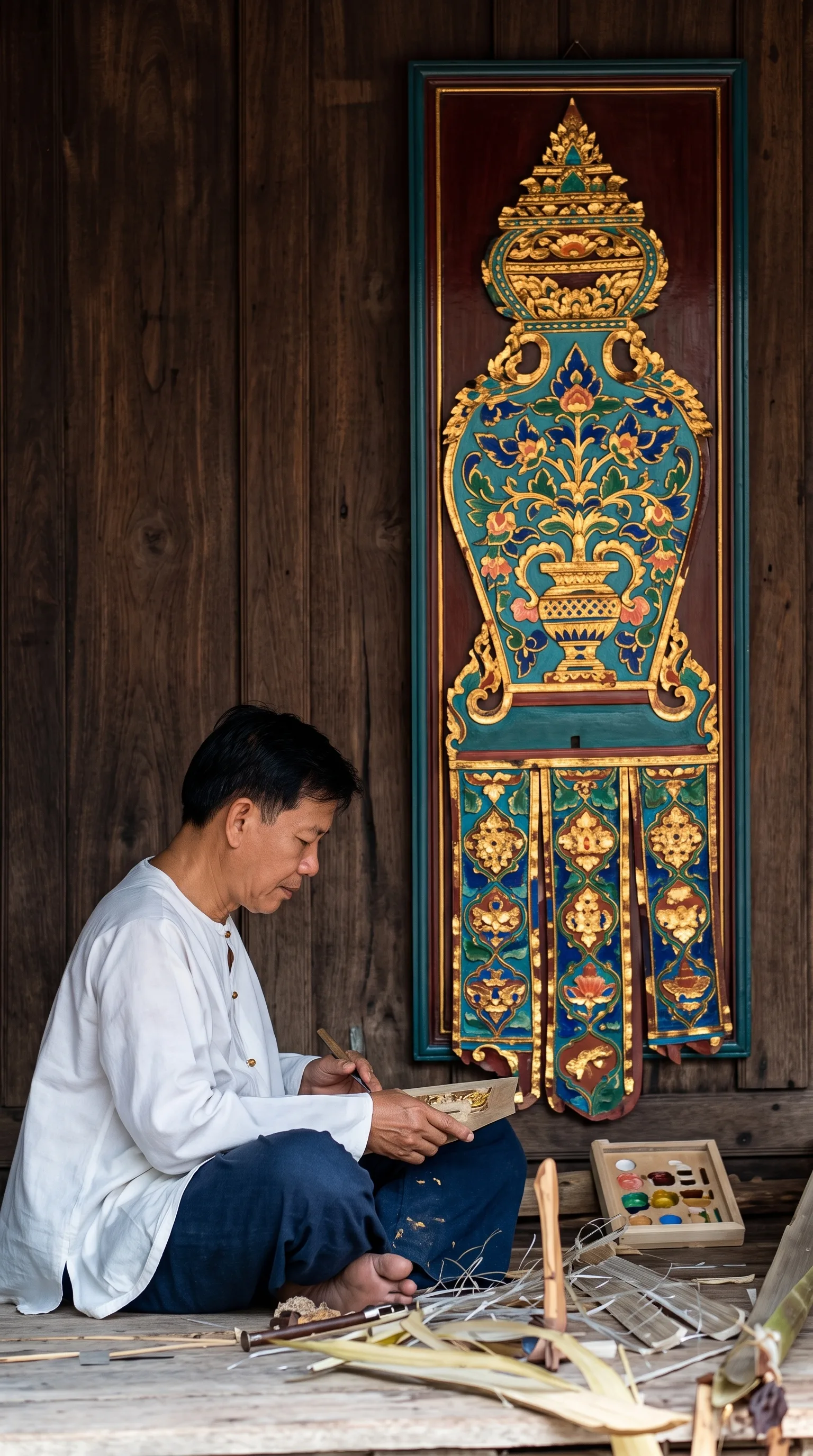
"Tung chai," or "tung chai" (victory banners), taking the form of a long sheet of paper or cloth, commonly hung so as to drape down both outside and inside buildings, about 10–30 centimetres wide, composed of a head section, a body section, and a tail section; the tail is commonly made in the form of a "prasat" (palace-spire), decorated with auspicious patterns such as elephants, chedi, flowers, and palaces, among others. Commonly offered to Buddha images, hung within religious buildings, or hung from the tip of a bamboo pole planted along the path to a temple to indicate that a festival marking a particular occasion (a ceremony held on that day of the week) is being held there.
The "hu maeo" (cat's-ear) lantern, a hanging lantern whose frame is built of bamboo in an octagonal shape, [with the corners folded in, then folded together]; the upper section of the frame is fitted with a triangular shape with four flared "ears," and the waist section is joined to a tail that hangs down. Once the frame is complete, paper is applied over it and decorated with silver and gold paper cut into beautiful patterns. Besides the "hu maeo" lantern, popular for decorating venues during joyful festival occasions, lanterns are also made from other kinds of paper, such as crepe paper, kite paper, and clear cellophane, shaped in various forms through adaptation according to need — such as the Ngiao-style lantern, the "tung" lantern, the "kao" lantern, the Japanese lantern, and the Chinese lantern.
The floating lantern (khom loi), a lantern commonly made for release during the Loi Krathong festival; the popular size uses 14 sheets of kite paper, folded and joined into a cylindrical shape, with the base formed by a bamboo hoop bent into a circle to control the shape of the lantern body, so that when the fire is lit, the lantern rises and floats evenly balanced.
The "tung kha khing" banner is cut to a length equal to the height of its dedicatee, about 20 centimetres wide, then decorated with silver and gold paper cut into patterns applied along the body and border of the banner. The tung kha khing is commonly used in the life-extension (suep chata) rite, to dispel misfortune, and at housewarming ceremonies.
The "tung sam hang" banner, or "tung sup khan," or "tung mi hai" banner, made of coloured paper cut into a rough outline comprising three parts — a head section, a body section, which also has a stem, and a tail section with three trailing strips, hence the name "three-tailed banner" — used [in funerary rites] to lead the spirit of the deceased on its way to heaven or to the cremation ground.
The funeral prasat (cremation tower), its structure built of wood, designed to be beautiful in accordance with the belief that it serves as the vehicle carrying the deceased to heaven, then decorated with paper in the colour associated with the deceased's day of birth, or with silver and gold paper cut into beautiful, popular patterns, used to decorate the tower and to conceal the wooden frame from view.
The umbrella, or "chong", whose frame comprises several important parts: the shaft, which may be of "mai ruak" bamboo or softwood; the crown piece, of a softer wood than the shaft; the joint knob [term as given], a small section of young bamboo shaped to fit the required size; and the ribs, of two lengths — the long ribs, tied to the crown piece, and the short ribs, joined to the long shaft — which together control the frame so that it opens and closes as intended when the umbrella is folded or spread for use.
Once the umbrella frame is complete, saa paper or brown paper is applied over the frame using a natural adhesive [term unclear in source], and once dry, it is coated on both the outside and inside with coconut oil to make it waterproof, after which it is painted with decorative designs to make it beautiful.
Woven Textiles
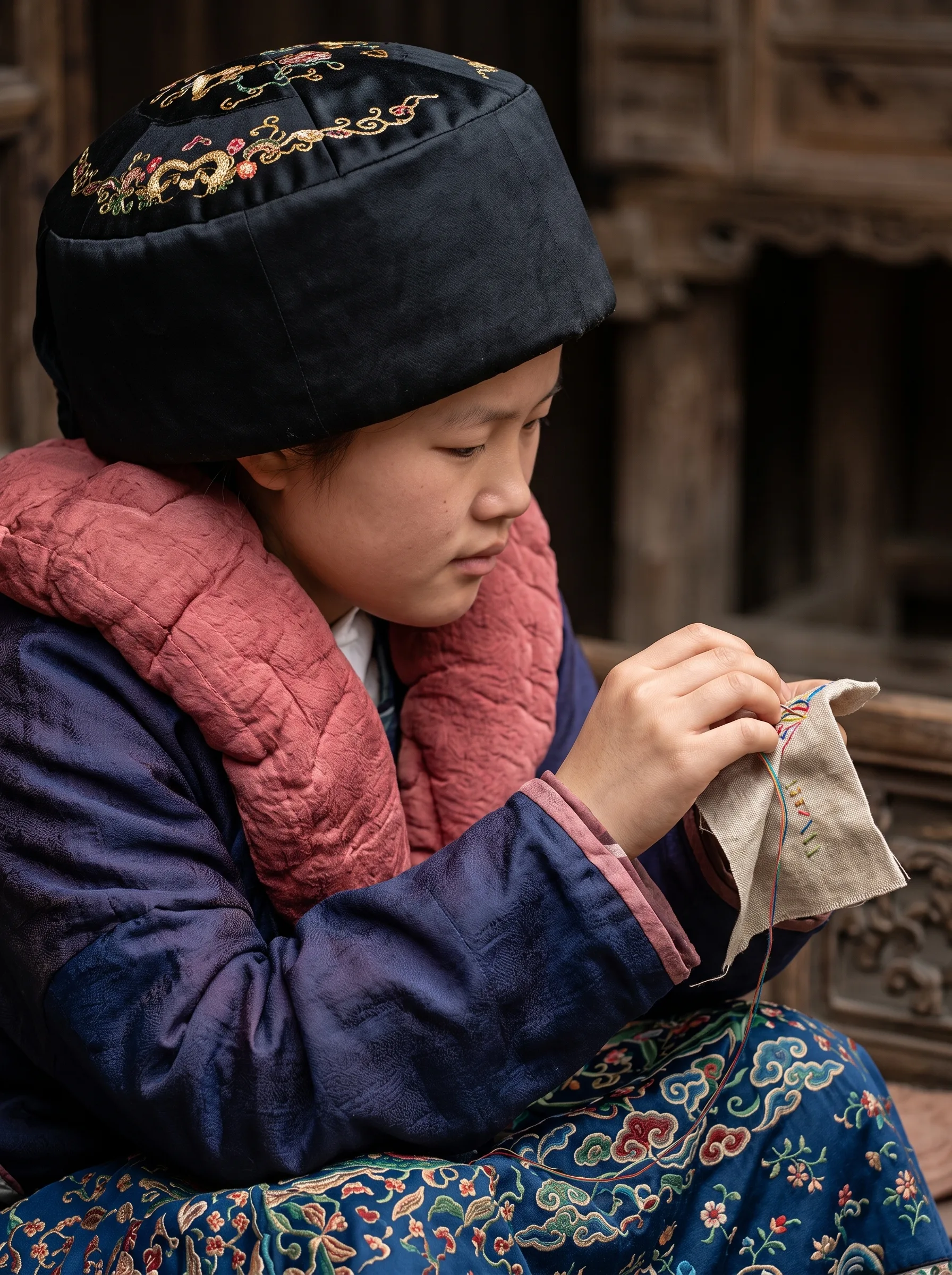
Weaving is a folk handicraft practised generally throughout the countryside, since cloth is a necessity of daily life — used for clothing, bedding, and various household items. In addition, woven cloth has always been used in rituals and woven as an offering to temples and to the religion — beginning with the robes of monks and novices, shoulder bags, scripture wrapping cloths, and banners (tung), among others.
In the past, weaving was a cultural practice and part of the social system of women, passed down chiefly through the family institution, through instruction and learning from experience handed down from mother to daughter and onward through the generations. A woman who did not possess skill in weaving was not considered ready to establish a household, since weaving was regarded as a quality a woman should possess to offer to a husband, and daughters would be expected to have this skill for their wedding ceremony as well. Furthermore, weaving on the occasion of religious and other merit-making events also provided an opportunity for young men and women to get to know one another and learn each other's character, helping to lead toward love, marriage, and the building of a family.
The vernacular woven textiles of Chiang Mai Province of particular note are as follows:
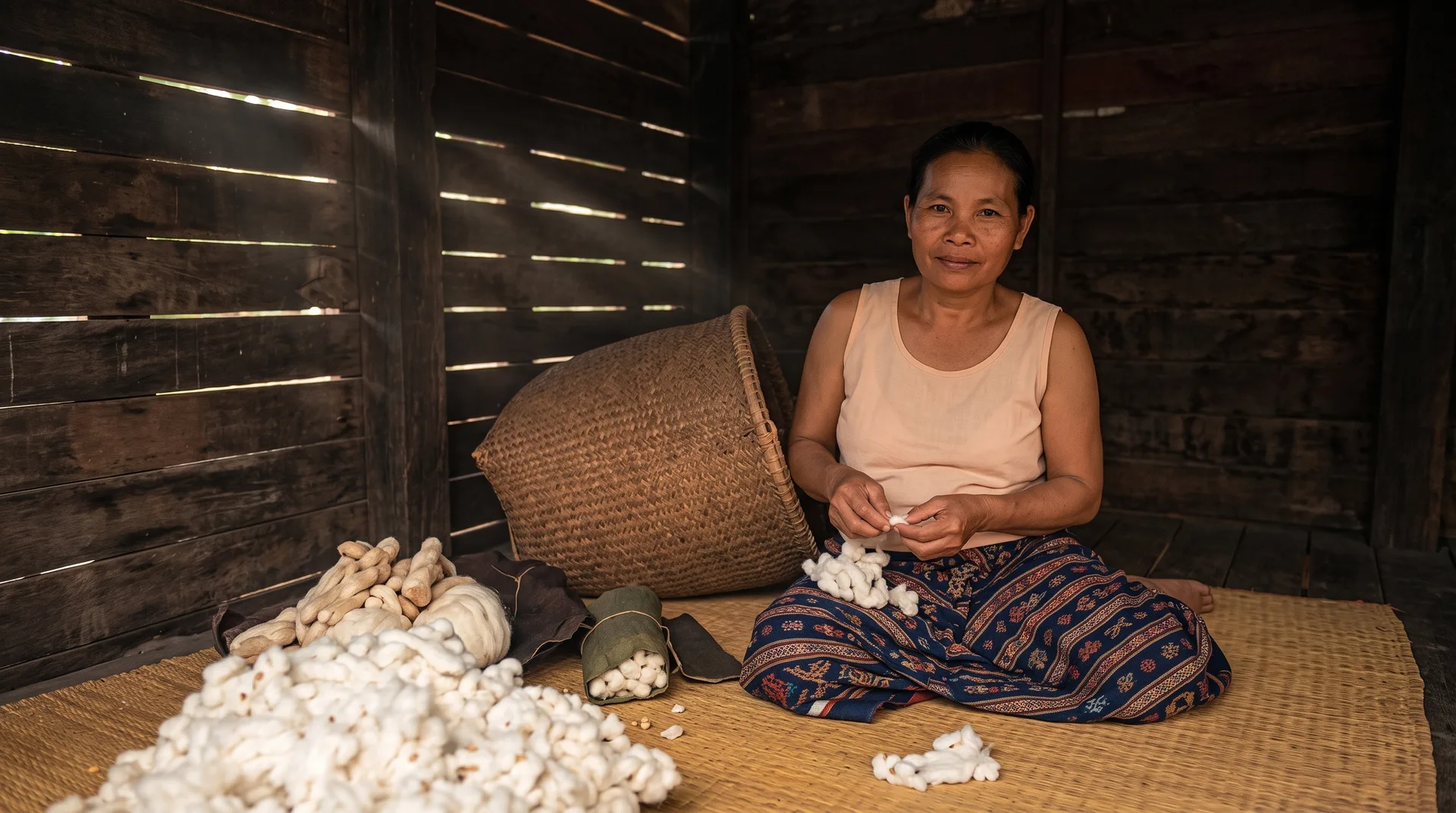
Cotton cloth is produced from cotton, of which there are two local varieties — white cotton and brown, or "seam," cotton — a variety with the special quality of soft, strong fibres; the brown cotton in particular has a beautiful natural quality. Handwoven cotton cloth, besides being used in its natural colour, is commonly dyed using the "mat mi" (ikat) resist-dyeing technique on the warp threads [technique details as given, though partly unclear in source], together with natural and herbal dyes, producing cloth with a charming beauty and a soft, gentle hue, unlike the flat, lifeless tone of chemically dyed cloth.
Handwoven cotton cloth is woven both as plain cloth — cloth of a single colour, whether the natural colour of the cotton or a single dyed colour, woven in a continuous length for practical use, such as being cut and sewn into clothing or other items — though today it is also commonly woven with beautiful patterns. Sources of cotton weaving are found throughout nearly every district of Chiang Mai Province; renowned centres include the source of "teen jok" cloth weaving in Amphoe Mae Chaem, and naturally dyed cloth using the warp-ikat technique in Amphoe San Pa Tong and Amphoe Doi Tao.
Silk cloth is woven from silk thread produced from silk cocoons, prized for its beauty; in the past it was found only in the households of the high nobility, the raw silk thread being ordered from China by way of Burma. Today, the renowned centre of silk weaving is the source of "yok dok" (brocade) silk weaving in Amphoe San Kamphaeng, where weaving is carried out as a large-scale industry, producing both plain cloth and brocade cloth with beautiful raised floral patterns.
Language and Literature
From the past, Chiang Mai has been a land that has brought together a great diversity of ethnic groups — both local peoples of the lowlands and the highlands, and foreign peoples of different languages — living together within the same area, owing to the abundance of resources conducive to sustaining life; this has led Chiang Mai to develop in various fields until it became the religious, political, economic, and social centre for the other cities of the Lanna region round about, down to the present day.
The coming together of groups of people speaking different dialects — even though their systems of writing possess their own distinct identity — might seem, on the surface, to create differences separating one community from another; yet, in truth, the content of custom, art and culture, thought, belief, and meaning expressed through literature instead reveals a relationship of great value between community and community, and between person and person, closely and clearly bound together. Here, an attempt is made to classify, for ease of understanding, the language families and the scripts used for inscription found within the city of Chiang Mai, as follows:
Spoken Language
Besides the standard language, or Central Thai, the spoken languages of Chiang Mai Province may be divided into two broad groups: languages of the Tai language family, and languages outside the Tai family.
Languages of the Tai family spoken in Chiang Mai Province include Lanna Thai, Tai Yai (Shan), Tai Lue, Tai Khoen, and Tai Yong.
Lanna Thai, or "kham mueang", is spoken in every sub-district (tambon) of Chiang Mai Province.
Tai Yai, or "kham ngiao", is spoken in Tai Yai villages scattered across various districts, such as Fang, Mae Ai, Chai Prakan, Wiang Haeng, Chiang Dao, San Pa Tong, and Mueang Chiang Mai.
Tai Lue, or "kham lue", is spoken in Tai Lue villages scattered across various districts, such as Samoeng, Fang, Mae Ai, and Doi Saket.
Tai Khoen, or "kham khoen", is spoken in Tai Khoen villages scattered across various districts, such as Mueang, Hang Dong, and San Pa Tong.
Tai Yong, or "kham yong", is spoken in Tai Yong villages scattered across various districts, such as San Kamphaeng, Hang Dong, San Pa Tong, and Chom Thong.
Languages outside the Tai family spoken in Chiang Mai Province include Chinese, Burmese, Karen, Musoe (Lahu), Mien (Yao), Lisu, Akha (I-ko), Palaung (Darang), and Lua (La-wa).
These non-Tai languages are given here as broad collective names, without further detailed subdivision within each language — for example, Chinese is not broken down into Mandarin, Teochew, Hainanese, and Hokkien; Karen is not broken down into Sgaw, Pwo, and Bwe, and so on.
Chinese is spoken within Chinese communities in the trading quarters of various districts generally; this language tends to be confined to older Chinese people, while younger generations of Chinese, from middle age down to children, tend no longer to speak Chinese much, using instead Standard Thai or Lanna Thai.
Burmese is spoken within Burmese communities who migrated and settled along the Thai–Burmese border, in the areas of Amphoe Mae Ai, Fang, and Amphoe Wiang Haeng.
Karen is spoken within Karen communities, generally settled in the forested hill areas of nearly every district.
Musoe (Lahu) is spoken within Musoe communities, generally settled in the forested hill areas of certain districts, such as Mae Ai, Fang, Chiang Dao, Mae Taeng, Wiang Haeng, and Om Koi.
Mien is spoken within Mien communities, generally settled in the forested hill areas of nearly every district.
Yao is spoken within Yao communities, settled in the forested hill areas of Amphoe Mae Ai, Fang, and Mae Rim. [Note: the source lists "Mien" and "Yao" as separate entries, though these are generally alternate names for the same people.]
Lisu is spoken within Lisu communities, generally settled in the hill forests of certain districts, such as Mae Ai, Fang, Phrao, Mae Taeng, Chiang Dao, and Om Koi.
Akha (I-ko) is spoken within Akha communities, settled in the remote forested hill areas of Amphoe Mae Ai, Chiang Dao, Fang, and Amphoe Mae Taeng.
Palaung is spoken within Palaung communities, settled in the forested hill areas of Amphoe Mae Ai, Fang, and Amphoe Chiang Dao.
Lua (La-wa) is spoken within Lua communities, generally settled in the forested hill areas of certain districts, such as Amphoe [the passage is cut off in the source, continuing onto the next page].
Script
Besides the official script, or Central Thai script, the written languages for which evidence survives in inscriptions in Chiang Mai Province include languages of the Tai family, Chinese, Burmese, Karen, and Yao. Within the Tai language family, two script systems are in use:
The Lanna Dhamma script (akson tham lanna) is used to record Lanna Thai, Tai Lue, Tai Khoen, and Tai Yong; this script system is sometimes also called the Lanna script, or "tua mueang," "tua lue," or "tua khoen." Lanna Thai, Tai Khoen, and Tai Yong all share the same Dhamma script system, and so speakers of these languages are able to read one another's documents.
The Fak Kham script was used in inscriptions of certain periods of the Lanna kingdom. Lamun Chantahom states in a work of Lanna local literature that the Fak Kham script developed from the Sukhothai script blended with local script forms. The Fak Kham script was in common use during the period B.E. 2000–2045 (c. 1457–1502 C.E.), after which its use gradually declined.
The "Thai Nithet" script was used to inscribe certain works of verse, such as Lanna chronicles; Lamun Chantahom states, in the same work, that the Thai Nithet script is also known by such names as the "mueang script" or the "Khom-Thai script." This script took the Sukhothai form, or the Thai form of Khom (Khmer-derived) script, and rendered it in the rounded Lanna manner, blending it with the sacred Lanna script; the Thai Nithet script is thus a hybrid script combining features of the Lanna script and the Fak Kham script.
Tai Yai script. Besides the scripts of the Tai language family described above, other peoples' scripts are also found in use in Chiang Mai, as follows:
Chinese uses Chinese characters for writing, commonly confined to use within the Chinese community and among those engaged in trading occupations.
Burmese uses the Burmese script for writing, commonly confined to use within Burmese communities who have received a Burmese-style education.
Karen has no script system of its own; some Karen groups have borrowed and adapted the Burmese script system for their own language, while other Karen groups have adapted the Roman alphabet for their own language.
Yao has no script of its own, and uses the Chinese script system for writing.
Terra Lanna Travel was founded out of a love for Lanna history and culture. We believe the stories of the northern land — its legends, traditions, temples, and the way of life of those who came before us — are a precious heritage worth recording, preserving, and passing on to future generations. That is why the core content of this website is centered on travel, history, and culture articles about Lanna.
Hotels & Tours: A Supporting Role
The hotel accommodations and tour programs featured on this site are a supplementary source of income, used to develop and maintain the website so it can continue in the long run — they are not our primary purpose.
Our Role
Our main role is to tell stories and share knowledge about Lanna history, so this cultural heritage can be preserved, protected, and passed on to future generations. We also translate our content into multiple languages so that international readers with an interest in Lanna culture can access and learn these stories too.
About Our Images
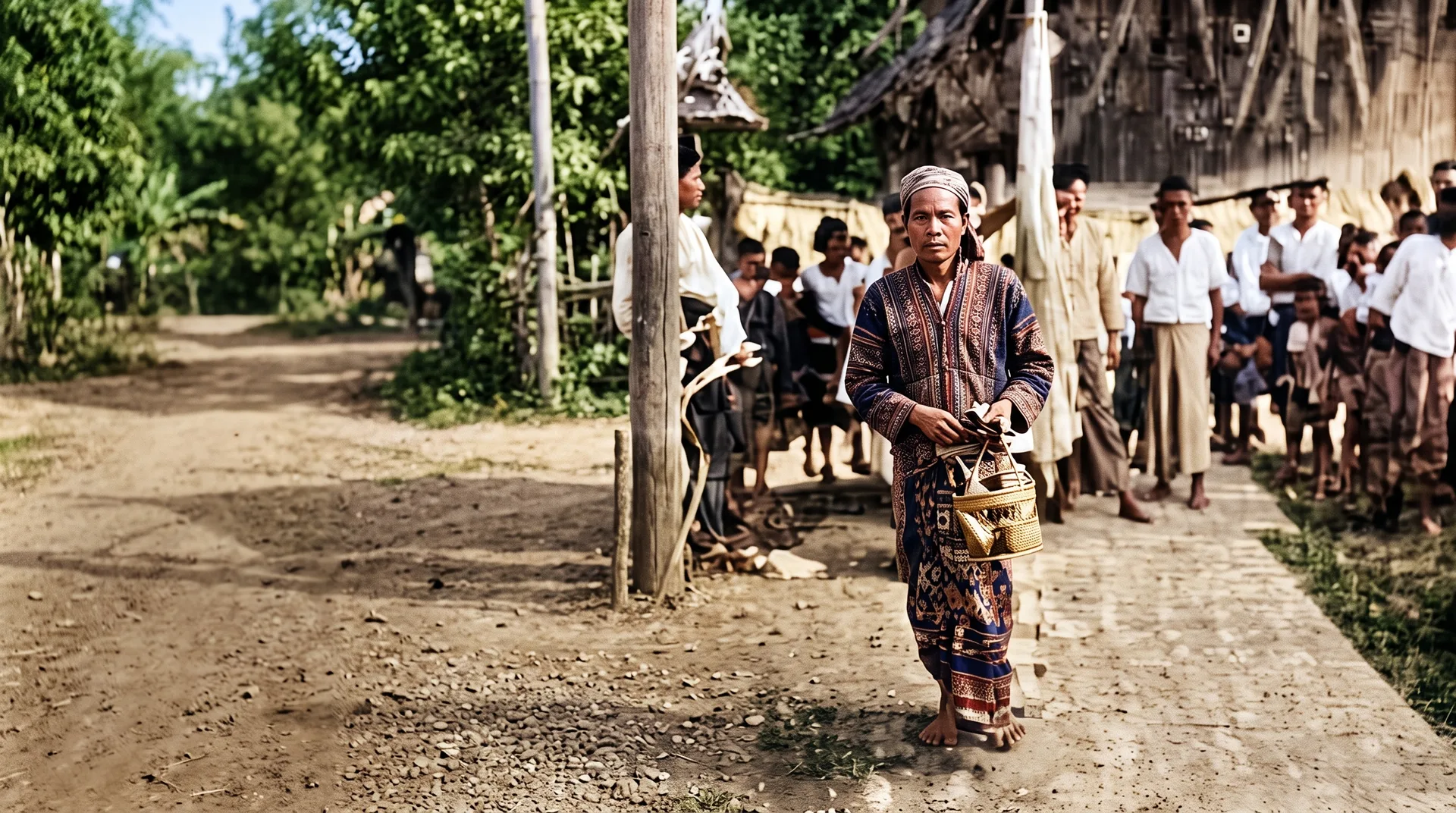
The images on this website include both genuine photographs and images restored using AI technology from old black-and-white photographs, so readers can see the atmosphere of those eras more clearly and vividly.
Privacy Policy / นโยบายความเป็นส่วนตัว
Last updated: 26 April 2026 | อัปเดตล่าสุด: 26 เมษายน 2569
This site contains affiliate links to Agoda, Viator, and Trip.com. When you click these links and make a booking, we may earn a commission at no extra cost to you. Hotel prices (Agoda) and tour prices (Viator) shown on this site are live prices pulled directly from our partners; Trip.com prices require clicking through to the partner's own site. Affiliate cookies are only set when you click these links directly.
คุกกี้สถิติและการวิเคราะห์ (Analytics Cookies): วิเคราะห์แนวโน้มการเข้าชมหน้าเว็บเพื่อปรับปรุงคุณภาพเนื้อหา ผ่าน Google Analytics (G-CSV1H77PY8)
We use cookies and similar technologies to enhance your browsing experience:
Preference Cookies: Remember your selected language and cookie banner consent status.
Analytics Cookies: Help us understand audience engagement and improve article quality via Google Analytics.
5. นโยบายโฆษณา Google AdSense / Google AdSense Advertising Disclosures
เว็บไซต์นี้ใช้บริการโฆษณาจาก Google AdSense เพื่อสนับสนุนการดำเนินงานและการผลิตเนื้อหาคุณภาพ เพื่อให้เป็นไปตามข้อกำหนดและนโยบายความเป็นส่วนตัวของ Google เราขอแจ้งให้ผู้ใช้ทราบดังนี้:
ผู้ให้บริการภายนอก ซึ่งรวมถึง Google ใช้คุกกี้ (รวมถึง DoubleClick cookie) เพื่อแสดงโฆษณาตามประวัติการเข้าชมเว็บไซต์นี้หรือเว็บไซต์อื่นๆ ในอินเทอร์เน็ตของผู้ใช้ในอดีต
การใช้คุกกี้เพื่อการโฆษณาช่วยให้ Google และพาร์ทเนอร์สามารถแสดงโฆษณาที่เกี่ยวข้องและตรงกับความสนใจของผู้ใช้ อิงตามประวัติการเข้าชมเว็บไซต์ของเราและ/หรือเว็บไซต์อื่นๆ ในเครือข่ายอินเทอร์เน็ต
ผู้ใช้มีสิทธิ์เลือกปิดการใช้งาน (Opt-out) โฆษณาที่ปรับแต่งตามโปรไฟล์ความสนใจส่วนบุคคลได้ทุกเวลา โดยเข้าไปที่ Google Ads Settings หรือเข้าไปที่เว็บไซต์ www.aboutads.info เพื่อปิดการใช้คุกกี้ของผู้ให้บริการภายนอกสำหรับการโฆษณาตามความสนใจ
This website partners with Google AdSense to display advertisements. In strict accordance with Google AdSense Publisher Policies, please be advised:
Third-party vendors, including Google, use cookies (including the DoubleClick cookie) to serve ads based on a user's prior visits to this website or other websites across the Internet.
Google's use of advertising cookies enables it and its partners to serve personalized ads to users based on their visits to our site and/or other sites on the Internet.
Users may opt out of personalized advertising at any time by visiting Google Ads Settings. Alternatively, users can opt out of a third-party vendor's use of cookies for personalized advertising by visiting www.aboutads.info.
Terra Lanna Travel Chiang Mai — เชียงใหม่, ประเทศไทย
Terms of Service / ข้อกำหนดการใช้งาน
Last updated: 25 September 2026 | อัปเดตล่าสุด: 25 กันยายน 2569
1. เกี่ยวกับบริการของเรา / About Our Service
Terra Lanna Travel Chiang Mai ("เรา", "Terra Lanna") ให้บริการเว็บไซต์ที่รวมหลายส่วนเข้าด้วยกัน ได้แก่ ที่พัก Nampiangdin Boutique Hotel ทัวร์ฟาร์มออร์แกนิกที่ลำพูน โปรแกรมทัวร์คัดสรร ไดเรกทอรีโรงแรมพร้อมราคาสดจากพาร์ทเนอร์ บล็อกเรื่องราวเชิงวัฒนธรรมล้านนา และ "ห้องสมุดล้านนา" ซึ่งเป็นคลังหนังสือประวัติศาสตร์/วัฒนธรรมล้านนาที่แปลและเรียบเรียงขึ้นใหม่ การใช้งานเว็บไซต์นี้ถือว่าคุณยอมรับข้อกำหนดฉบับนี้
Terra Lanna Travel Chiang Mai ("we", "Terra Lanna") operates a website combining several parts: Nampiangdin Boutique Hotel accommodation, organic farm tours in Lamphun, curated tour programs, a hotel directory with live partner pricing, a Lanna culture blog, and the "Lanna Library" (ห้องสมุดล้านนา) — a collection of translated and re-edited Lanna history and culture books. By using this website, you agree to these Terms.
2. เนื้อหาบล็อกและห้องสมุดล้านนา / Blog & Lanna Library Content
บทความบล็อกและหนังสือใน "ห้องสมุดล้านนา" เป็นผลงานที่เรียบเรียง แปล และดัดแปลงขึ้นโดย Terra Lanna จากแหล่งข้อมูลประวัติศาสตร์/วรรณกรรมล้านนาสาธารณะ โดยมีเจตนาเพื่อการสานต่อและอนุรักษ์วัฒนธรรมล้านนาให้เข้าถึงได้ในหลายภาษา เนื้อหาที่แปล/เรียบเรียงใหม่นี้เป็นลิขสิทธิ์ของ Terra Lanna ส่วนผลงานต้นฉบับยังคงเป็นของผู้ประพันธ์/สำนักพิมพ์เดิมตามที่ระบุไว้ในแต่ละเล่ม รูปภาพประกอบบางส่วนเป็นภาพถ่ายจริง และบางส่วนสร้าง/บูรณะขึ้นด้วยเทคโนโลยี AI จากภาพถ่ายเก่าขาวดำ (ดูรายละเอียดที่หน้า About Us) เนื้อหาทั้งหมดจัดทำขึ้นเพื่อวัตถุประสงค์ด้านการศึกษาและวัฒนธรรม ห้ามคัดลอกหรือนำไปเผยแพร่ซ้ำเพื่อการค้าโดยไม่ได้รับอนุญาตเป็นลายลักษณ์อักษร
Blog articles and books in the "Lanna Library" are compiled, translated, and adapted by Terra Lanna from public Lanna historical/literary sources, with the intent of continuing and preserving Lanna culture in multiple languages. This translated/re-edited content is copyrighted by Terra Lanna; original source works remain the property of their original authors/publishers as credited within each volume. Some accompanying images are genuine photographs, while others are AI-restored or AI-generated from old black-and-white photographs (see the About Us page for details). All content is produced for educational and cultural purposes. Copying or commercial redistribution without written permission is prohibited.
3. การจองผ่านลิงก์พาร์ทเนอร์ / Bookings via Partner Links
Hotel (Agoda) and tour (Viator) prices shown on this site are pulled live from our partners, but the actual booking is completed on the partner's own website and is governed by that partner's own terms and cancellation/refund policy — not Terra Lanna's. We act only as an affiliate referrer and are not a party to that booking contract, and are not responsible for service issues, cancellations, or disputes arising from the partner. (See Privacy Policy for affiliate commission details.)
You may not use this website to: violate Thai or applicable law, scrape or bulk-extract content without permission, or attempt unauthorized system access.
We provide information on this website "as is" and make reasonable efforts to keep it accurate and current, but do not guarantee that content, prices, or availability are correct, complete, or error-free at all times. To the maximum extent permitted by law, Terra Lanna is not liable for indirect, incidental damages, or loss of profit arising from use of this website or our partners' services.























 ภูมิปัญญาดินอินทรีย์ · 4 นาที